
Table of Contents
Are you on the lookout for scams so you don’t become a victim of one? If not, you probably should be. Scammers are everywhere in the crypto space, just like they are in traditional finance as well. However, what about phishing scams in general?
Phishing is a type of scam where criminals send fake messages, like emails or texts, to try to trick potential victims into providing sensitive information like passwords. In the crypto space, crypto phishing scams are designed to try to get potential victims to provide their private keys and seed phrases. Once they have those, it’s over. They can gain access to your crypto and steal it all from you. Crypto scams that involve phishing go beyond traditional phishing scams that involve email by including fake websites, wallet exploits, impersonation, and malicious smart contracts that are all designed to steal your crypto.
How Crypto Phishing Works
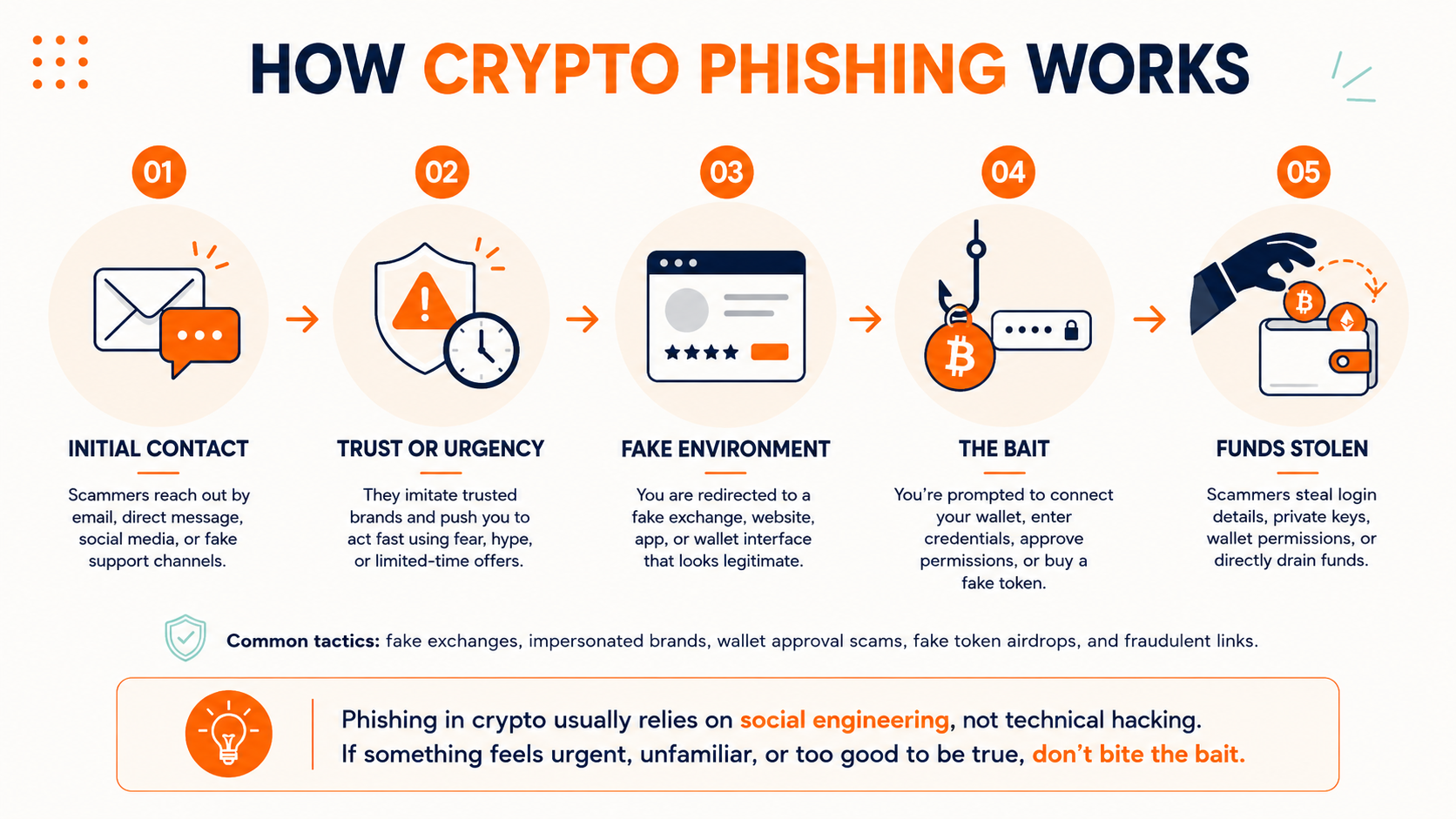
So how does phishing work in crypto you might ask? Well, it often works through social engineering rather than technical hacking. First the scammer contacts you through email or direct messages. They next try to build trust or create urgency tactics designed to make you feel a sense or urgency to buy a cryptocurrency or whatever they are aiming to get you to do. Then they redirect you to a fake environment like a fake exchange or something. Finally, after they have redirected you to the fake environment they are able to steal your credentials, private keys, or wallet permissions.
Often phishing scams mimic trusted brands. They may impersonate reputable cryptocurrency services like well known exchanges and drive users to click on links that direct them to fraudulent websites. They may even airdrop tokens to users’ wallets, encouraging users to purchase their fake token. After users have accessed the sites or purchased tokens, the scammers steal their login credentials and steal funds from their wallets. Think of phishing scams like you think about regular fishing. The scammers are fishing for victims, so make sure you don’t bite the bait or else you could become a victim.
The 10 Most Common Crypto Phishing Signs (With Examples)
The following signs represent the most frequent red flags seen in real crypto phishing scams. So keep them in mind when you are interacting with people you don’t know in the crypto space. Staying aware could be the difference between keeping your crypto or losing it to a scammer.
Urgent Messages Demanding Immediate Action
Scammers love this tactic. The often use a sense of urgency in order to try to get potential victims to make quick decisions without thinking. They know that if they give you time to think about the decision, you may be more likely to back out or recognize the danger signs that what they are offering is likely part of a scam. They may try to trick you into thinking that your account will be suspended if you don’t take immediate action. A typical message goes like this:Warning: If you don’t do X immediately, your account will be suspended indefinitely. Act now to keep your account active.
It’s easy to fall into a trap when you think something bad will happen if you don’t take action and do what the scammer says.
Messages That Look Like Official Platforms
Scammers often impersonate well-known crypto platforms or exchanges. They may copy the branding and logos of a popular exchange. They know that you are more likely to take action if you think you are interacting with an exchange you know is legitimate. They may say something like:This is Sarah from Binance. Buy crypto today and receive a reward / free crypto after your purchase.
Fake Links and Slightly Altered URLs
In URL Spoofing, scammers create fake web addresses and web pages designed to look exactly like trusted websites and addresses. Small differences between the real addresses or websites can easily go unnoticed. Once users click on the fake site or address, they are redirected to phishing websites. A fake website impersonating binance may look like : http://www.binancee.com. The extra e at the end of Binance could be easily missed by someone trying to go to Binance’s website and this link would then take them to a phishing website.
Requests for Your Private Keys or Seed Phrase
No real source will ever actually ask for your private keys or seed phrase. This is why many in the crypto space that work at legitimate companies often state on their Telegram messaging handle that they will “never DM” because people who send direct messages are usually scammers. If you give your private key or seed phrase to anyone, you have given them access to full control over your funds. Often they will pretend to be customer support and ask for this data.Fake message: Hi Jake, this is Coinbase customer support. We need your seed phrase in order to help you with your support request.
“Too Good to Be True” Offers and Giveaways
Scammers often exploit users by offering unrealistic rewards or giveaways. They may offer a fake airdrop that is a lot of crypto, more than any exchange or crypto project would logically give away. They may also promise unrealistic high returns in a message like this:Hi Sam, If you buy this cryptocurrency and stake it we guarantee that you will earn 30% in returns every day.
Legitimate opportunities never guarantee profits or require upfront transfers.
Unexpected Contact from “Support” or “Managers”
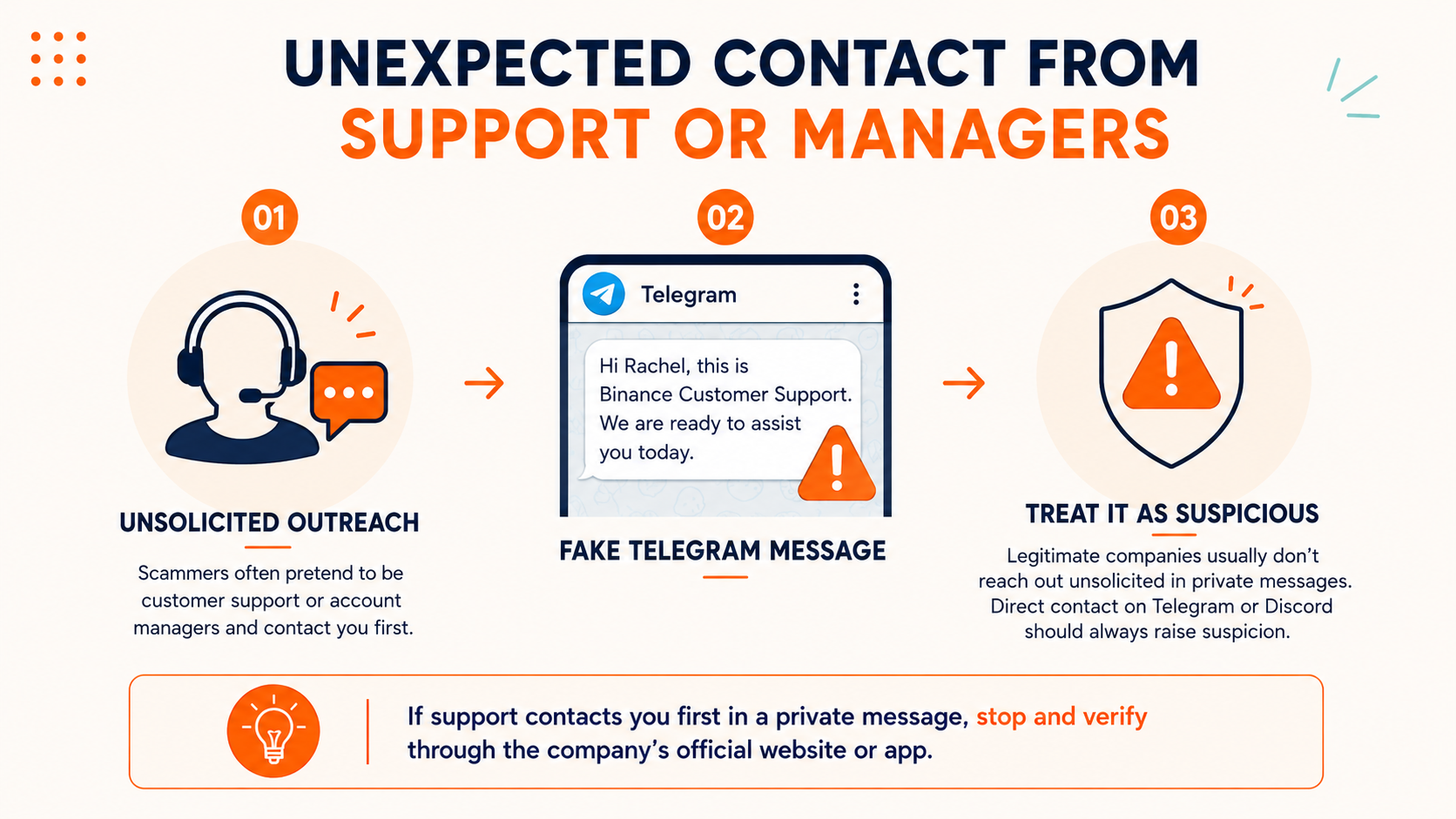
Scammers will often pose as customer support or account managers and contact you first. As mentioned earlier, legitimate companies usually don’t reach out unsolicited in private messages. Direct contact in telegram or discord should always be treated with suspicion.
Fake message in Telegram: Hi Rachel, this is Binance Customer Support. We are ready to assist you today.
Suspicious Attachments or Login Pages
Phishing attacks often involve fake attachments or login forms designed to capture user credentials. Users are often asked to download files or enter login information on suspicious pages. Scammers will reach out with an offer for free (fake) crypto but you have to enter your login information on a page first. Then you never receive any free crypto and your crypto is stolen using the login information you provided. Never provide your login information for any accounts to anyone. That information should be kept safe.
Poor Grammar or Slight Branding Mistakes
Many phishing attempts contain errors in grammar, formatting, or branding. These errors can signal a scam. However, some more advanced scams may be more professional. Make sure you pay attention to details when reading messages as errors can signal scams. If you see a message that starts like this, swim away as fast as a speedboat.Hi Todd. We are from custimer suport…
Requests to Approve Unknown Transactions
Crypto phishing often involves tricking users into approving malicious smart contract interactions. Wallet permissions allow you to pre-authorize a smart contract to complete transactions on your behalf. But make sure the transactions you are approving or allowing permissions to approve are legitimate. Approving unknown transactions can be dangerous as the transaction may be associated with a scammer. If you see this text: Please approve this transaction, make sure that the transaction is legitimate and a transaction that you know and have approved.
Messages Playing on Fear, Greed, or FOMO
Phishing scams often use psychological tactics. They focus on fear, greed, and fear of missing out (FOMO). Scammers are professional at manipulating emotions to try to get users to stop thinking rationally. Example: Don’t miss out on this once in a lifetime opportunity to invest in this cryptocurrency and become a millionaire. Only three hours left to invest. Click this link to start the investment process.
Make sure you pause and think before reacting to any message you see like this. They are trying to get you to purchase crypto out of a feeling of FOMO. Don’t fall for it like you fell for that handsome man or beautiful women you saw last week. Run instead.
How to Protect Yourself from Crypto Phishing
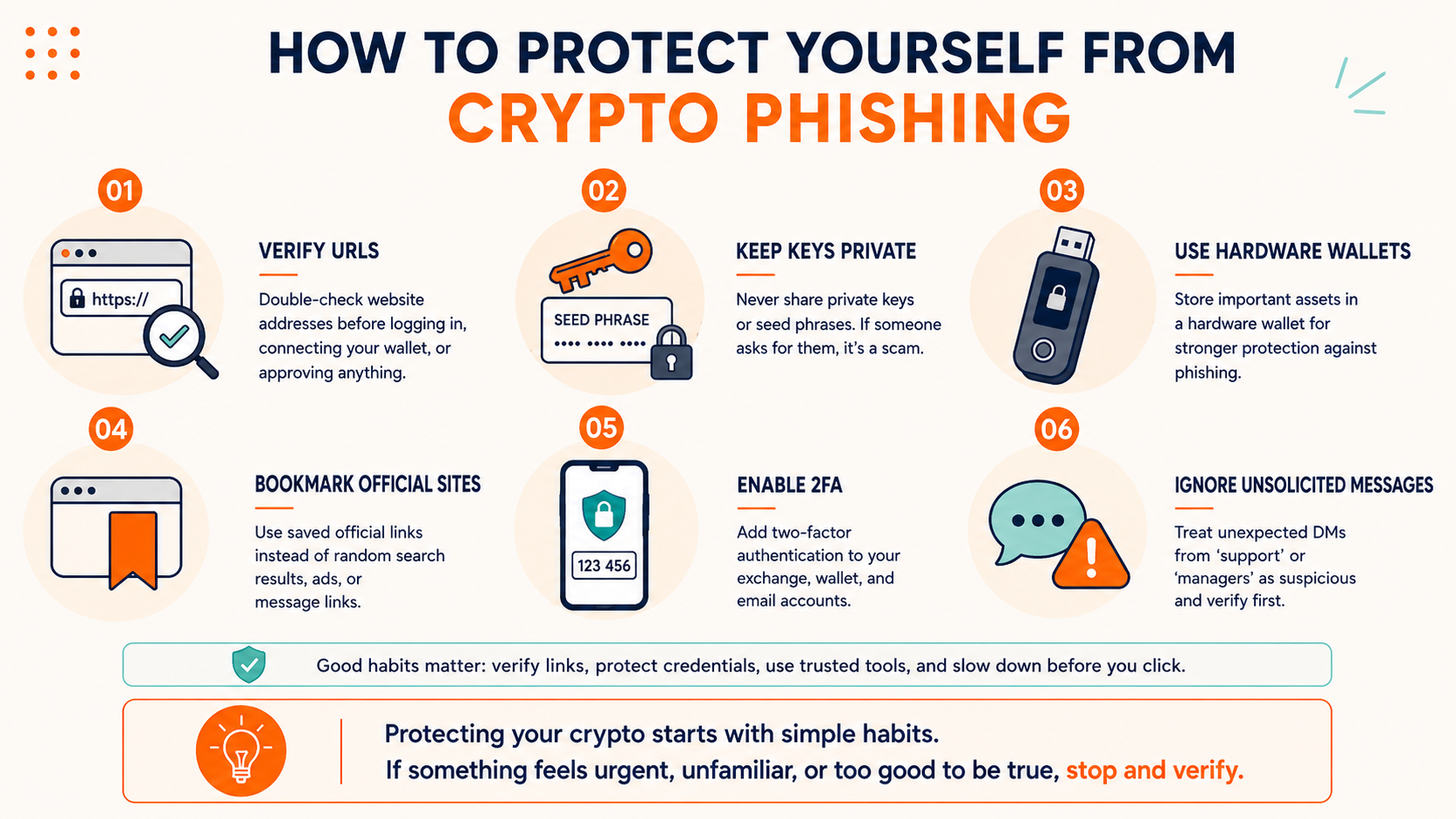
Avoiding phishing requires consistent good habits. Best practices to avoid phishing include verifying URLs, not sharing private keys (there’s a reason they are called “private” keys. You are supposed to keep them private.) Also use hardware wallets, bookmark official websites, enable 2FA, and definitely ignore unsolicited messages. You can apply these tactics immediately to protect yourself from crypto phishing scams and make sure your crypto remains…your crypto, and not somebody else’s.
What to Do If You’ve Been Phished
If you have been phished, be sure to act quickly. Immediately revoke wallet permissions, transfer your remaining funds to a secure wallet, contact the relevant platforms you use that may be able to help, and report the incident. There may be a chance to stop the scammer from stealing from other people if you take these steps and act quickly. It’s all about staying calm and taking action to create a potential solution to your problem.
Don’t Fall For a Phishing Scam: Protect Yourself By Staying Aware
The best way to protect yourself from becoming a victim of a phishing scam is to remain aware of the 10 signs listed earlier. If you know what to look out for, you can get better and better over time at spotting potential scams and avoiding them like you avoid the police. Practice good habits like using hardware wallets, enabling 2FA, and staying away from unsolicited messages etc. to protect yourself from crypto phishing scams. Keep your crypto and stay happy!
Disclaimer: The content provided in this article is for educational and informational purposes only and should not be considered financial or investment advice. Interacting with blockchain, crypto assets, and Web3 applications involves risks, including the potential loss of funds. Venga encourages readers to conduct thorough research and understand the risks before engaging with any crypto assets or blockchain technologies. For more details, please refer to our terms of service.