
Table of Contents
Copy and pasting wallet addresses is quite common in crypto, but unfortunately it can lead to irreversible mistakes. Sending funds to the wrong network or wrong wallet address often results in permanent loss. This article will show you how to avoid these risks. Just like riding a bike is dangerous when you don’t know how to do it correctly, sending crypto is dangerous when you don’t know how to do IT correctly too. Bad analogy? Well, you get the point.
Why Copy-Pasting Crypto Addresses Can Be Dangerous
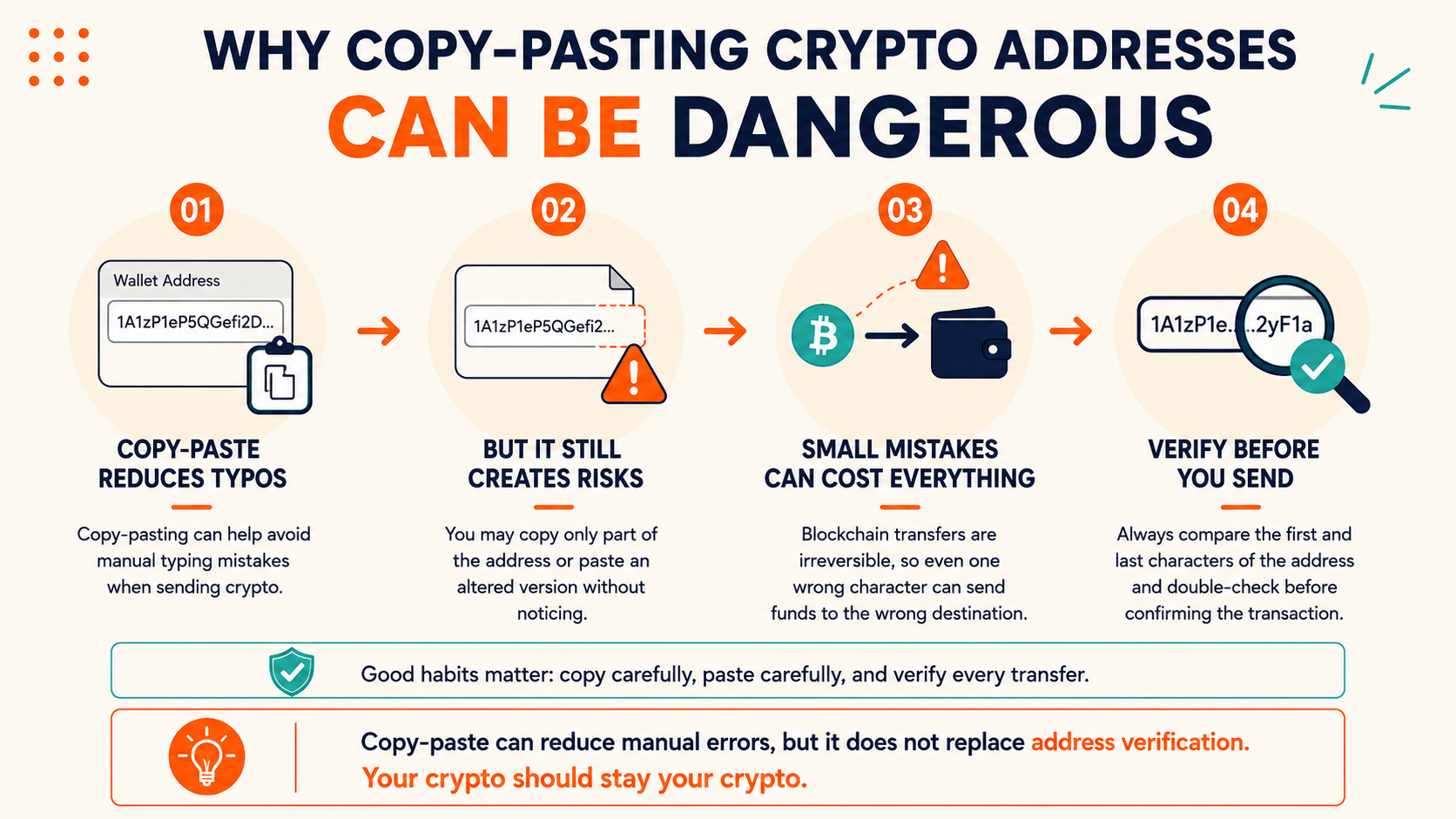
You may think about going with the copy-paste method because it reduces manual errors, and you would be correct in that assumption. Manually entering each digit can easily cause errors if you accidentally enter the wrong one and don’t realize it before completing the blockchain transfer. However, the copy-paste method still creates risks. Remember that even small mistakes can lead to irreversible transactions and the loss of all of your crypto. It’s possible to accidentally copy only part of the crypto address or accidentally add a digit before pasting. That’s why you need to take extra care when sending crypto and focus on address verification always before completing a transaction.
Human Errors and Clipboard Issues
It’s easy when copy-pasting to copy incomplete or incorrect addresses or even overwrite clipboard data. After all, we are human, and humans often make mistakes. Maybe if you were a chipmunk you wouldn’t make the same mistakes, but because you are a human, you do. It’s just a fact of life. Additionally, long address strings increase the risk of unnoticed mistakes that can cost you all of your crypto.
Irreversibility of Blockchain Transactions
Keep in mind that once a crypto transaction is confirmed, it cannot be reversed. This means that mistakes usually mean permanent loss of funds. If you enter the wrong address and that transaction is confirmed, the crypto will be sent to the wrong address never to be seen again. It’s like you sent your crypto into a void and it disappeared and you can never, ever retrieve it.
Understanding Blockchain Networks and Address Compatibility
Wallet addresses are tied to specific blockchain networks and there are many networks. Confusion between networks or entering the wrong network that is not tied to your wallet address is a common cause of lost funds.
Differences Between Blockchain Networks
Networks like Ethereum, Bitcoin, and BNB Chain are all different. They are completely separate systems from each other and transactions only work within the same network. For example if you send Bitcoin on the BNB Chain you are almost certain to lose your crypto, because you should send Bitcoin on the Bitcoin network. There are also different blockchain types, Layer 1 and Layer 2, where layer 1 are changes made on a primarily blockchain, and layer 2 are blockchains that take on much of the work of primary blockchains, then send the work back to the primary chains.
Token Standards and Compatibility
There are also different token standards. Token standards are the rules for how the digital assets will operate on the blockchain. ERC-20 is the ruleset for Ethereum, TRC-20 for the Tron blockchain, and BEP-20 for Binance Smart Chain. This is another area to be careful of if you are using cryptocurrencies. Watch out! Using the wrong standard can make funds inaccessible.
Why Some Addresses Look Similar Across Networks
Unfortunately there are some confusing aspects between the different networks that can confuse users. Some networks use similar formats such as beginning the address with ( 0x…). It emphasizes that the value is written in hexadecimal format, but because it is used often it can be confusing. It’s important to remember that similar appearance does not mean compatibility. Here’s a table to help you sort out the differences between the different networks and token standards:
Common Mistakes When Copying and Pasting Wallet Addresses
One common mistake is to copy an address that wasn’t the one you intended to send funds to. It can be confusing because it can look very very similar and it could even be in your wallet history. This can happen when cybercriminals create crypto addresses with a customized degree that look as close as possible to the ones in your transaction history. Then they poison your history with small transactions. Then you mistakenly select the criminal’s similar looking address and send your funds to their address instead.
You can also make the mistake of coming into contact with clipboard malware. It can arrive through fake or pirated software downloads, email attachments that execute code, and more. You get the idea. Anyway, once it is installed on your device it can be used to steal your crypto if you copy and paste a crypto address without reading every character.
Copying Incorrect or Outdated Addresses
Users often copy the wrong address from their history or reuse old addresses. Copying outdated or saved data can cause you to send crypto to the wrong address.
Using Untrusted Sources
Copying addresses from emails, chats, or fake websites can lead to someone stealing your funds. Users need to remember to verify where they got the address and make sure it’s from a trusted source.
Malware and Clipboard Risks
As mentioned, malware can replace copied addresses, causing you to send crypto to the wrong address without knowing it. Make sure you check that the address is the correct one AFTER pasting.
Verifying a Wallet Address Before Sending
Verification is the most important step when sending crypto. It’s important for users to build the habit of verifying every wallet address before sending their crypto.
Manual Verification Techniques
Users should try checking the first and last characters of the address to make sure the address is the correct one. You can also verify via a second device if possible to make sure you have input the right address.
Using QR Codes and Whitelists
Using QR codes can reduce manual errors when copying addresses. A whitelist is also a good option. A crypto whitelist is a list of addresses you have approved. Your system will block any address that isn’t on the whitelist, preventing you from sending to an unauthorized address.
What Happens If You Send Crypto to the Wrong Network
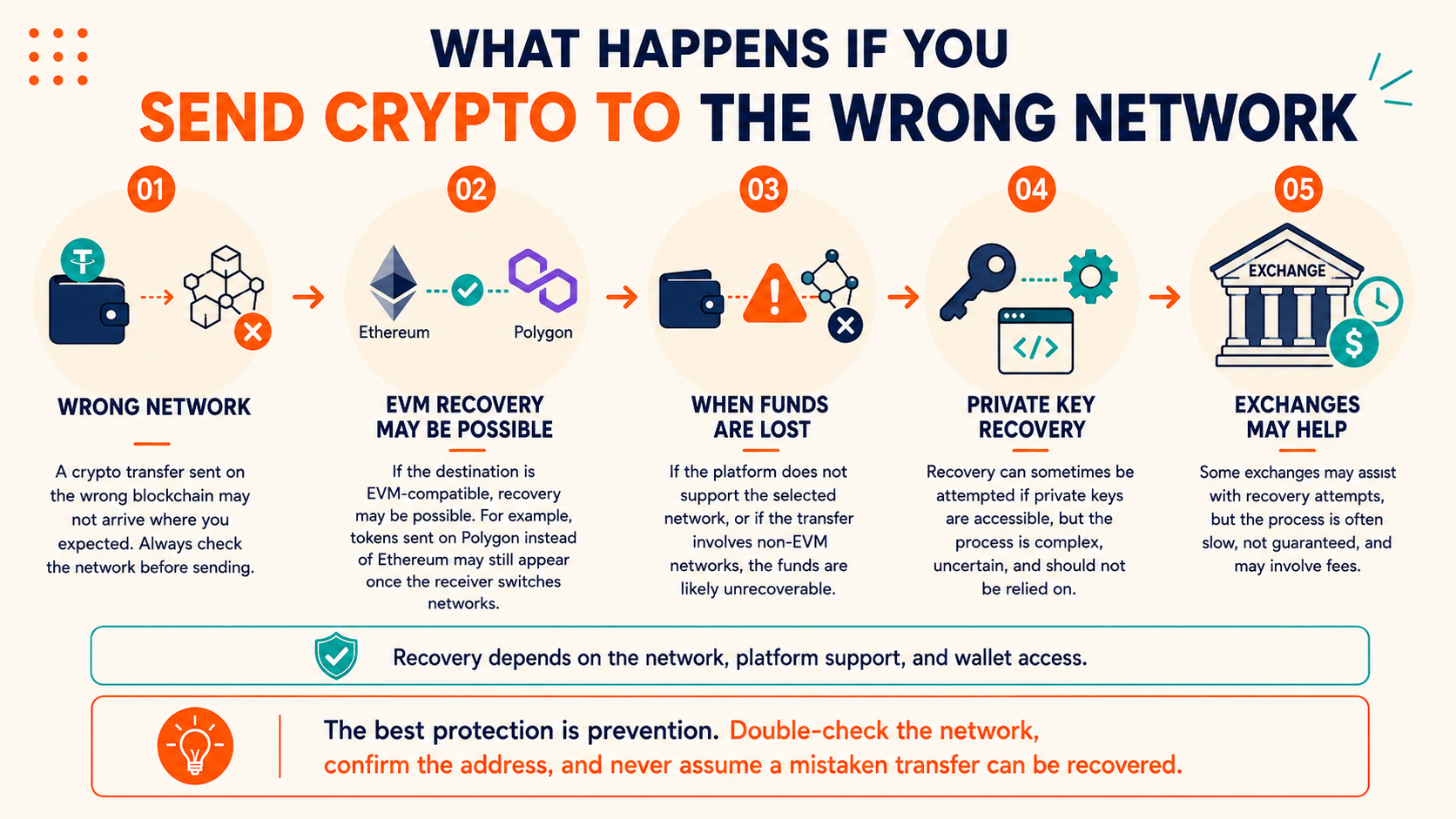
If you send crypto to the wrong network, most of the time it’s lost. It a network is EVM compatible, or uses the same technical configuration as Ethereum, it may be possible to recover them. For example, if you meant to send tokens to a friend on Ethereum but sent on Polygon instead, all your friend needs to do is switch to Polygon, and the tokens you sent should be there. However, if you are dealing with non-EVM tokens and networks, it is likely your tokens are lost forever.
When Funds Are Lost
If platforms do not support the selected network, your funds are likely unrecoverable. It sucks, but it is what it is. That’s why it’s important to always check the network you are sending to and make sure you are copying the right address.
When Recovery Is Possible
Recovery may also be possible if private keys are accessible, however this is a complex process and uncertain, so you shouldn’t count on it.
Role of Exchanges in Recovery Attempts
Exchanges have sometimes been known to assist with crypto recovery attempts. However, the process is often slow, not guaranteed, and may involve fees. Meaning, you may have to pay the exchange to assist you in the recovery.
Best Practices to Avoid Sending Crypto to the Wrong Address or Network
Always make sure you check the address before and after copying and before you paste the address. This can help you catch any errors before they happen.
Safe Transaction Habits
Be sure to verify both the address and the network before sending crypto. Make this a habit that you complete every time you think about sending crypto. You also may want to try sending a small test transaction first. That way, if it’s the wrong network or address, you can limit the losses.
Security and Platform Use
It is recommended that you only use trusted wallets. Do your research and choose a wallet that has good reviews and seems to be commonly used. Also, make sure you enable 2FA to help keep your crypto, accounts, and devices secure.
Conclusion
The sad truth is, small errors in crypto can often lead to major losses. Carefully verify each transaction and address before you move your crypto to prevent losses. Make sure you understand the different networks and which one you are using. Be responsible when handling your crypto and you will avoid crying over lost funds in the end. To keep things happy and positive to end the article, and because I mentioned one earlier, here’s a picture of a chipmunk.
Disclaimer: The content provided in this article is for educational and informational purposes only and should not be considered financial or investment advice. Interacting with blockchain, crypto assets, and Web3 applications involves risks, including the potential loss of funds. Venga encourages readers to conduct thorough research and understand the risks before engaging with any crypto assets or blockchain technologies. For more details, please refer to our terms of service.