

Table of Contents
Every four years, the FIFA World Cup captures the whole world’s attention, and this year’s edition makes no difference. Entire countries pause to support their national team, jerseys pop out in the streets way more than usual, and chants are being heard all around the world.
That said, if you’ve been following the 2026 FIFA World Cup games, across the US, Canada, and Mexico, you’ve probably noticed some familiar names from the crypto ecosystem among the official sponsors and advertisers such as Kraken or Kalshi.
This has become pretty common in various sports actually. But if you think the relationship between the world's favourite sport and blockchain technology stops at these marketing deals, we’ve got news for you.
Behind the scenes of spectacular goals, dramatic penalty shootouts and endless debates over who's the best player, Football is increasingly implementing blockchain technology for various reasons such as improving ticketing systems, payment infrastructure, launching digital collectibles, running fan engagement platforms or even authenticating match-worn shirts.
Let's dive in.
Crypto Payments and Football Clubs' Involvement in Web3
Blockchain payments are finding genuine utility. This is particularly during major sporting events where millions of people buy tickets, teams’ merchandise and more from all around the world.
Traditional international payments can still involve high fees, harsh currency conversions and banking delays (yes, those issues still exist). But the good news is that Bitcoin and stablecoins (like USDT and USDC) offer an alternative that allows fast global transactions at any moment.
So, during major sports tournaments like the FIFA World Cup, where demand spikes significantly over a few weeks, those advantages become particularly valuable. But more than being used for online payments, in the recent years, several clubs have taken a step further with crypto.
In England, Oxford City FC became one of the first football clubs to allow supporters to buy tickets, food and drinks using the Bitcoin Lightning Network. Instead of paying with a debit card or Apple Pay, fans can choose to simply tap a Lightning-enabled wallet and complete the transaction with their crypto funds.
In France, Paris Saint Germain (the back-to-back Champions League Winner) partnered with Matchain to launch a collaborative hub a couple of years ago, with the goal to shape the future of Web3 in sports. Since then, they've been pretty active in the ecosystem, even participating in some of the most prestigious events like the Paris Blockchain Week.
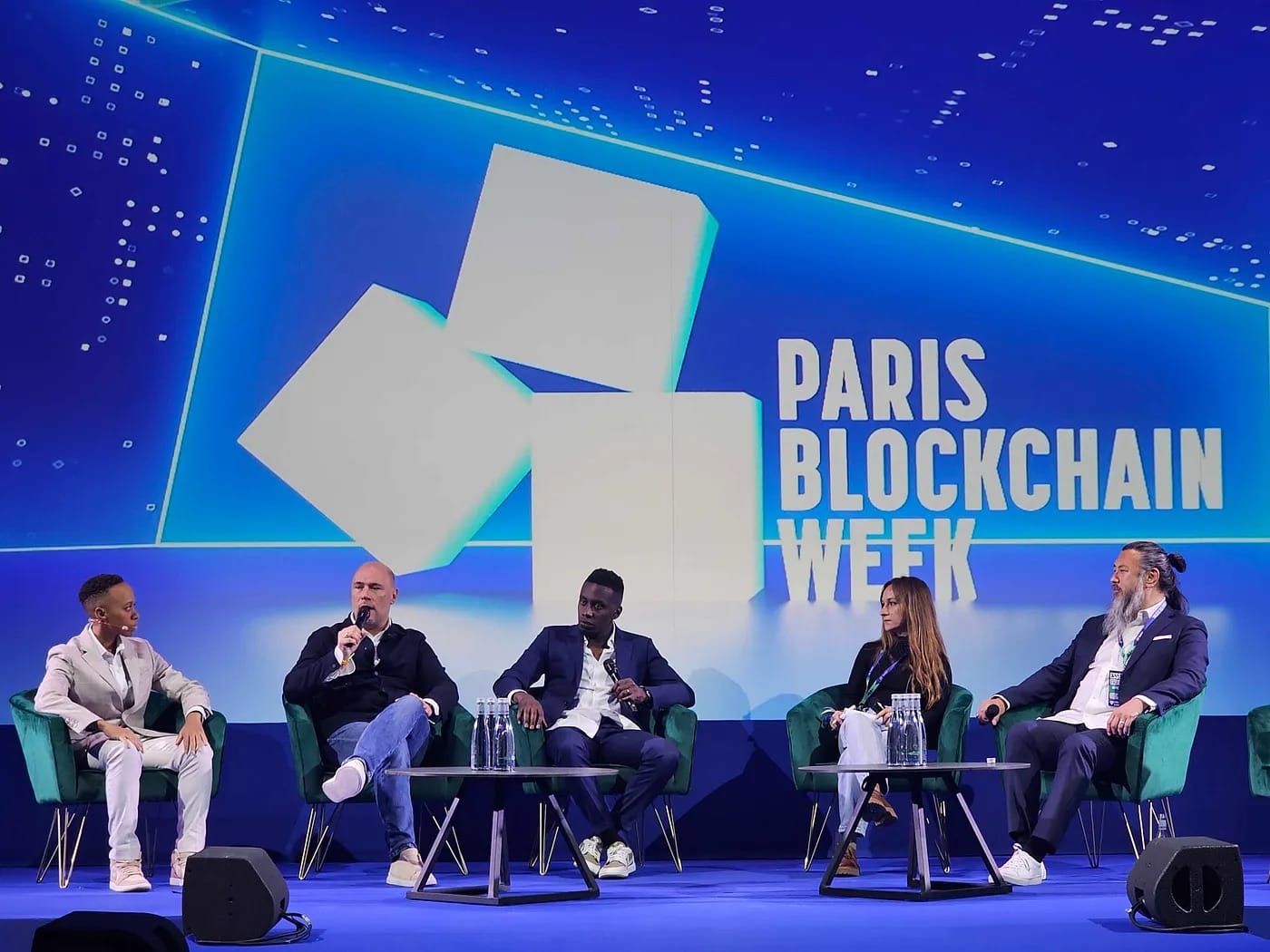
In Spain, Athletic Bilbao partnered with the crypto payment provider B2BinPay to show how digital currencies could become part of the matchday experience at San Mamés Stadium.
In Bulgaria, the club Botev Plovdiv has gone even further, appointing a dedicated “Bitcoin Officer” to oversee the club’s broader crypto strategy.
It’s true that these projects remain relatively small today, but still, they demonstrate that crypto is moving beyond the simple investment aspect and more into everyday payments.
Who knows, maybe one day paying for your snack at half time with crypto could feel just as normal as paying with Apple Pay.
A Trustworthy Authentication System for Match-Worn Shirts
Football memorabilia has become serious business. If you are not familiar with the term, it refers to tangible objects or collectible items from the sport’s world that hold historical, emotional, or financial value (autographed items, equipment, awards, etc).
Focusing on match-worn shirts from legendary players, they can sell for tens or even hundreds of thousands of euros. For example, Diego Maradona’s jersey from the famous “Hand of God” match sold for more than £7 million in 2022. Yeah, that much. And as you know, wherever there’s value, counterfeiters tend to follow.
Authenticating sports memorabilia has traditionally relied on certificates, expert opinions and paper documentation. The problem is that all of those can potentially be forged.
That’s where the blockchain comes in. It offers a different approach. Companies such as MatchWornShirt are combining physical products with blockchain technology through what the industry calls “phygital” authentication.
Basically, they’re using encrypted NFC chips embedded directly into match-worn shirts (a technology developed by Fabricks). When a person taps the shirt with a smartphone, it instantly opens a blockchain-backed certificate of authenticity.
And it doesn’t just confirm ownership. It can also hold a more detailed record including:
- Which player wore the shirt
- Which match it was used in
- Match statistics and details
- Previous owners and transfer history
In a way, it’s like giving every shirt its own permanent passport that cannot be forged. Unlike a paper certificate that can be copied or lost, blockchain creates a tamper-resistant record that travels with the item throughout its lifetime.
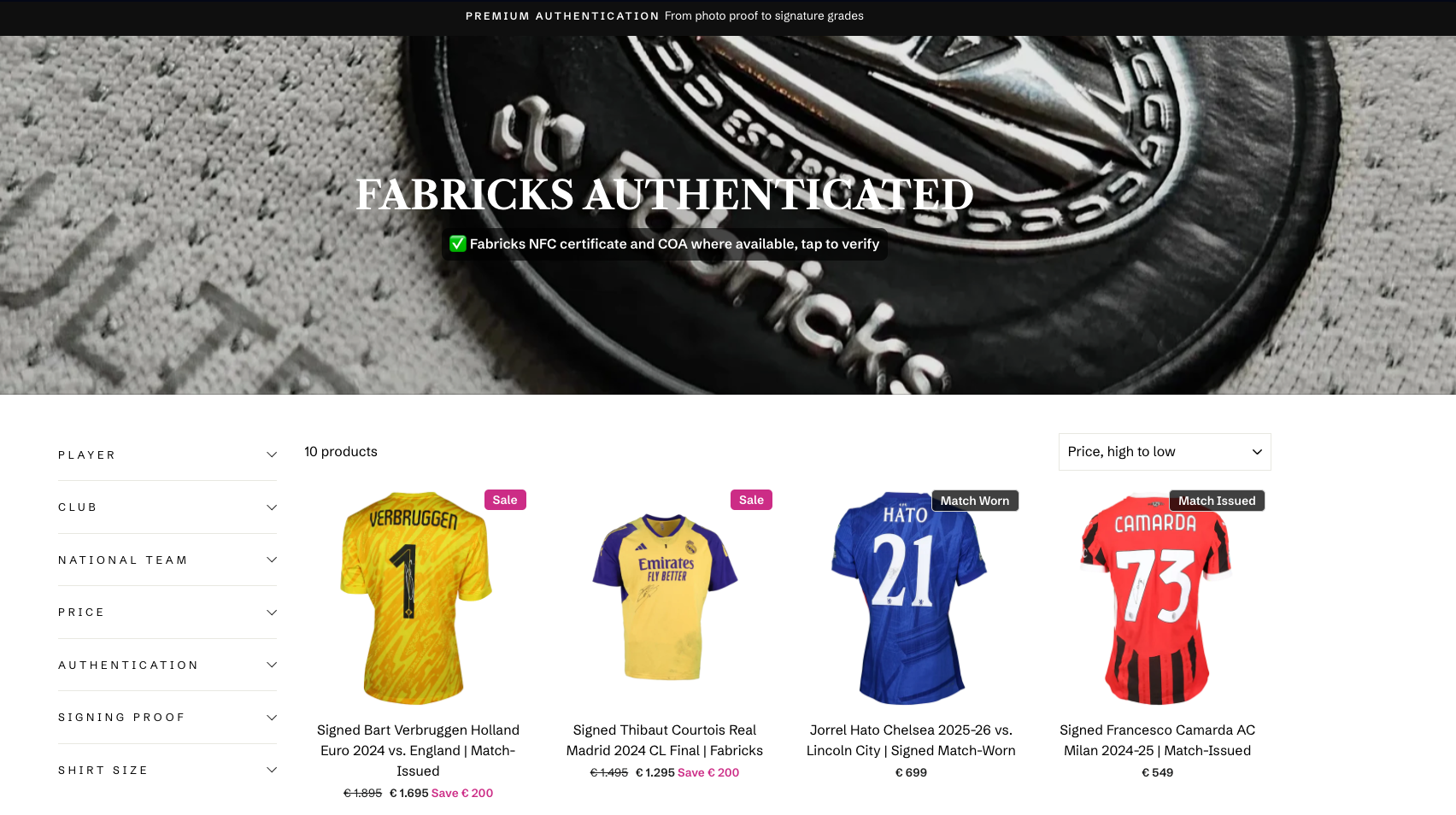
As collectors increasingly look for certainty when buying these expensive memorabilia, blockchain has the potential to become the industry standard for proving authenticity. And of course, this usage can be extended (and is already) to many other sectors.
Smarter Ticketing for the World’s Biggest Tournament
Trying to buy World Cup tickets can be quite tricky and even stressful as millions of supporters want to experience these games. That affluence of people can lead websites to crash under enormous demand, bots scoop up inventory, and of course, counterfeit tickets would inevitably appear on secondary marketplaces.
But again, good news, blockchain could help address all three problems.
FIFA understood it. The organization has begun integrating a blockchain infrastructure into its digital ecosystem, and ticketing emerged as one of the most practical applications.
Unlike traditional databases, blockchain creates a transparent ownership record that makes every ticket traceable throughout its lifecycle. That opens several possibilities.
First, counterfeit tickets become significantly harder to create because each digital ticket has a unique and verifiable identity. So, you don’t have to worry about being scammed when buying a ticket anymore.
Second, leveraging programmable smart contracts allow the organisers to control resale conditions. Instead of just banning resale, they can protect it by capping resale prices, restricting transfers or automatically returning tickets to official marketplaces in some cases.
This also directly addresses one of football’s biggest headaches… ticket scalping.
As you can imagine, the demand for World Cup tickets is unlike almost any other sporting event. Because of this, secondary markets often take advantage of it and inflate prices dramatically (sometimes to tens or hundreds of thousands) which leaves genuine supporters unable to afford the experience of the tournament.
And well, even though blockchain doesn’t magically eliminate scalping, it provides organisers with tools that simply weren’t available before and open solution opportunities.
One of them is FIFA Collect’s Right-to-Buy (RTB) programme, which grants priority access to purchase tickets for a specific event when holding the related NFT. And FIFA didn’t stop there.
FIFA’s Own Blockchain and its Purposes
Yes, FIFA has its own digital platform built on a blockchain infrastructure powered by Avalanche technology and named FIFA Collect.
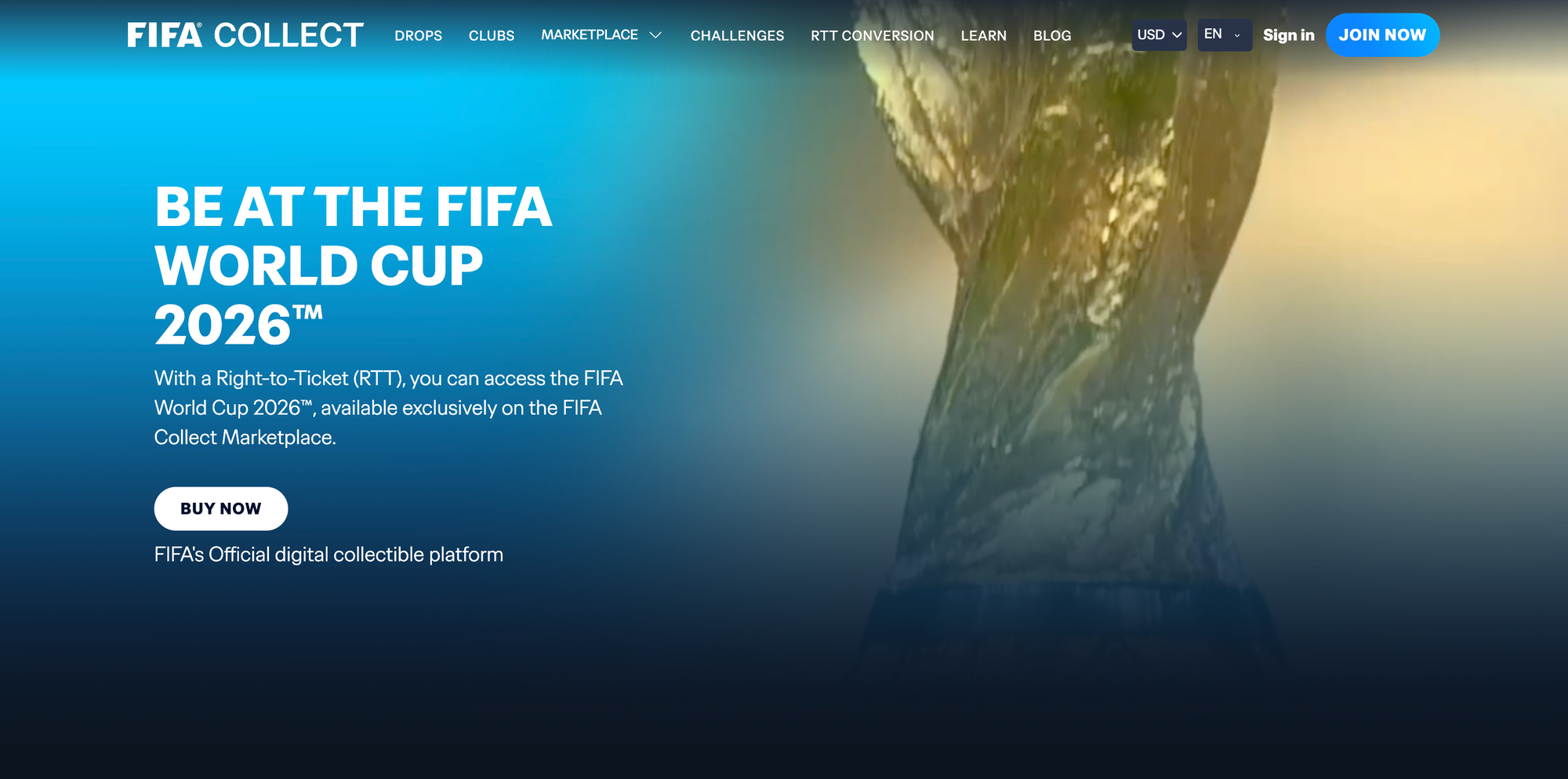
Rather than relying entirely on third-party blockchain providers, FIFA is investing in infrastructure it can continue building on for years to come.
Originally, this platform operated on Algorand, but the migration to Avalanche allows the platform to work with widely used wallets such as MetaMask, which is naturally making onboarding significantly easier for most of the users.
And more importantly, FIFA now controls the infrastructure supporting its digital ecosystem and sees a plethora of opportunities created across various applications such as ticketing, as we already mentioned, but also membership programmes and fan rewards, licensed digital experiences and gaming, and of course, more digital collectibles.
The Football Digital Collectibles
Maybe you remember the football Panini stickers. They used to be in almost every school playgrounds during any World Cup competition, and fans were hoping to complete their album before the tournament ended.
Well, digital collectibles are kind of the modern evolution of that tradition. Through FIFA Collect, supporters can officially own licensed player cards, match highlights or iconic moments, and even exclusive tournament memorabilia.
Yes, you could think that these are just like any screenshots or downloaded videos of these players, moments or items. But the difference is that blockchain collectibles have verifiable ownership, allowing fans to buy, sell and trade them within an official ecosystem. For collectors, this is a major advantage.
And FIFA isn’t alone in that area. The French startup Sorare has built one of the largest blockchain fantasy football platforms in the world where users collect licensed player cards, build fantasy teams, and compete against each other based on real-world performances.
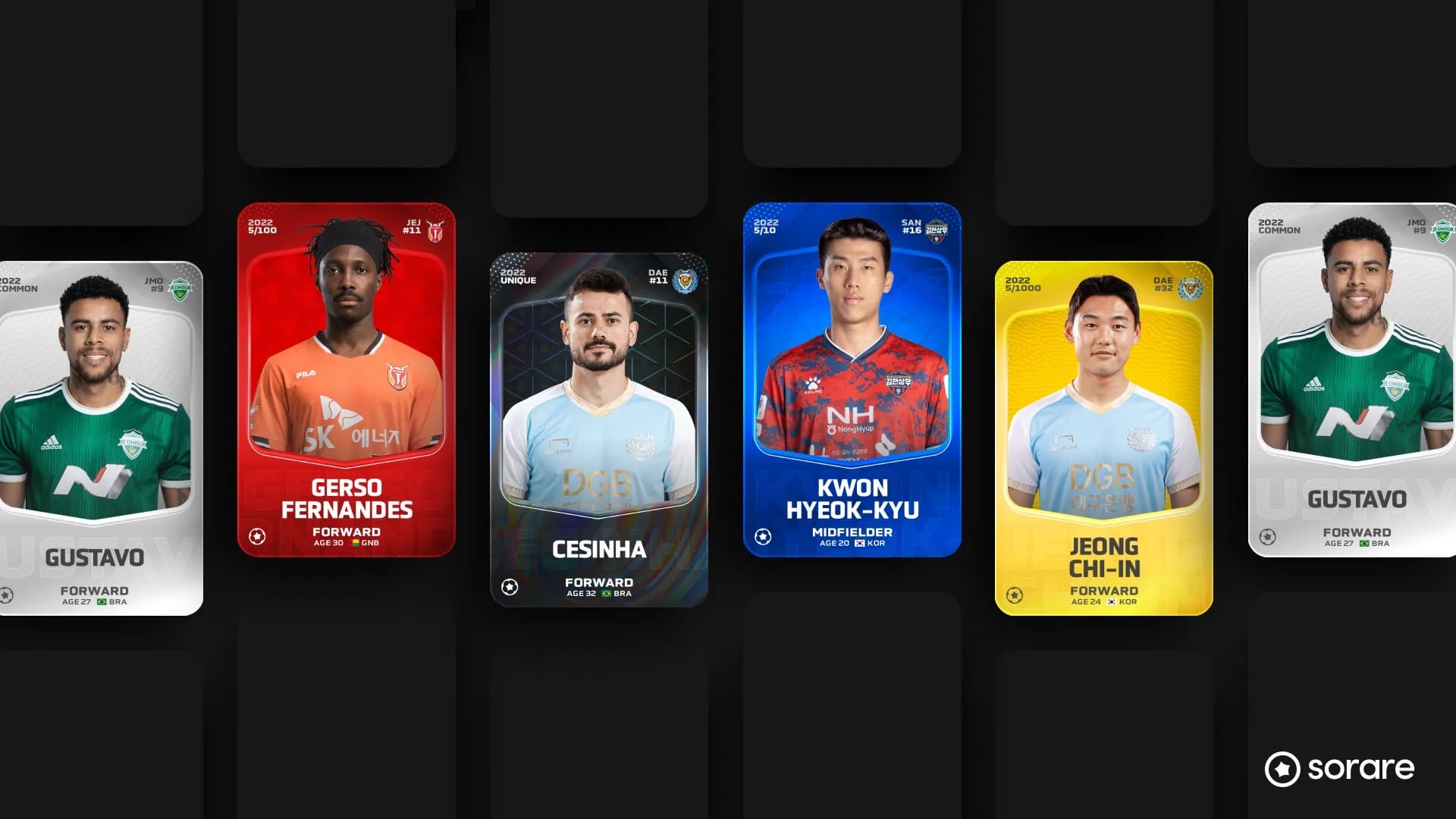
It’s fantasy football but with real digital ownership. Rather than simply paying and using virtual assets inside a game, users own tradable cards that they can sell to someone else for a real value.
True digital ownership might be one of blockchain’s biggest contributions to the sport world.
Giving Supporters a Stronger Voice through Tokens
Club memberships have taken a new form. Platforms like Socios.com have partnered with many of the most prestigious clubs including Manchester City, Paris Saint-Germain, Juventus or FC Barcelona, and even several national teams, to launch blockchain-based fan tokens.
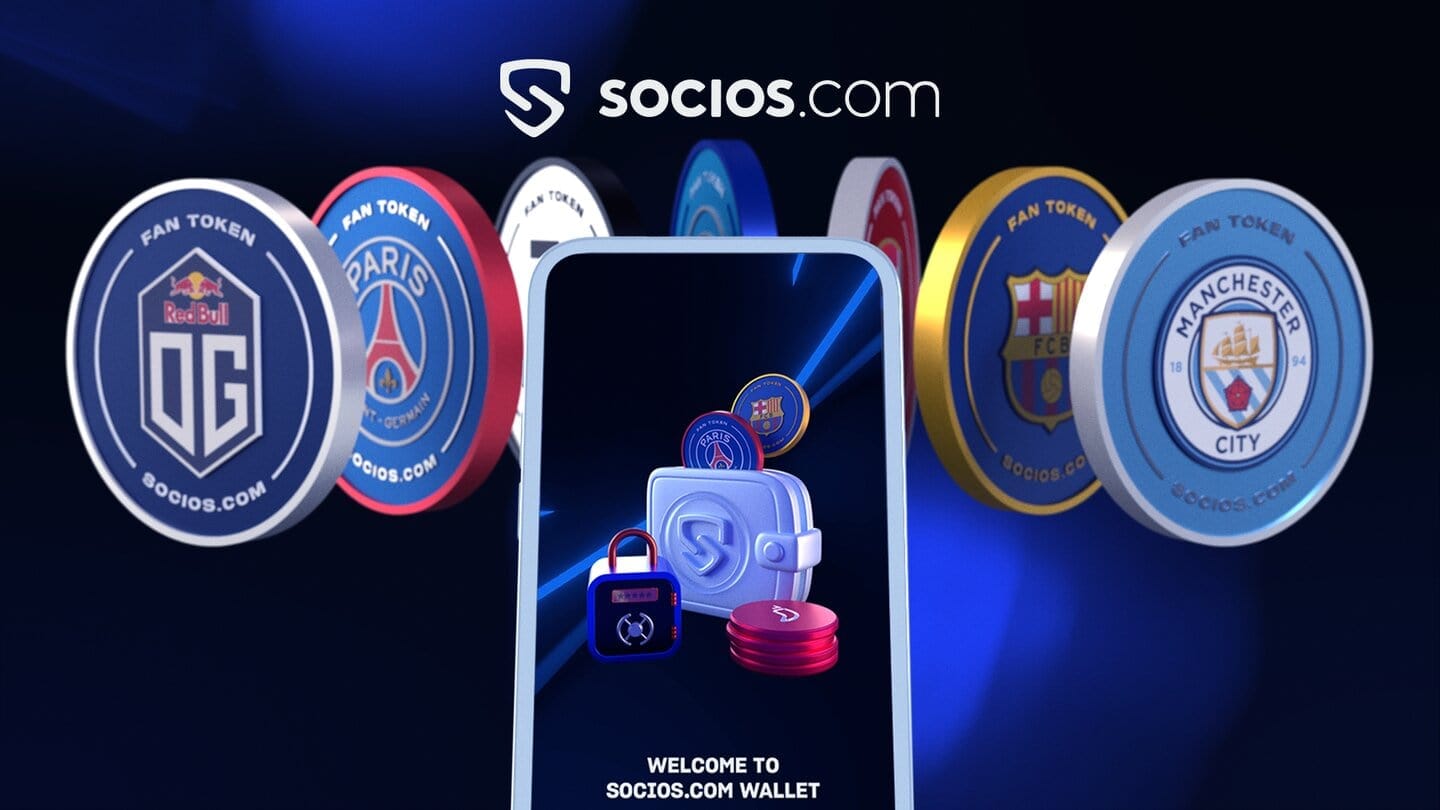
These tokens don’t give supporters ownership of clubs, but they do unlock new forms of participating and having an impact in its activities. Fans can access VIP experiences, win signed merchandise, unlock exclusive content or earn loyalty rewards, and vote on club polls to make their opinion heard.
It’s a true club membership card with a few additional perks. But don’t forget, they’re still tokens and this means they’re tradable.
Of course, football emotion doesn’t translate into market stability, and fan token prices tend to react heavily to match results. A surprise victory can boost the value up while a painful elimination can do the opposite, and seasonality also has an impact.
The activity around Chiliz (the ecosystem powering most of the fan tokens) usually increases during the major international tournaments because supporters engage more actively with their favourite teams.
This emotional connection makes fan tokens unlike almost any other crypto asset… driven not only by markets, but by passion.
Memberships That Last a Lifetime
As mentioned, fan tokens can be perceived as the new membership card for football fans, but there actually can be more on that side of things.
If we rewind a bit, traditional football memberships haven’t changed much for decades. You usually receive a card, accumulate loyalty points, and sometimes gain priority access or special prices for tickets.
Blockchain can modernise that entire experience, leveraging fan tokes yes, but also digital identity. Imagine if you could automatically keep track of every match you’ve attended, every shirt you’ve purchased, every victory you’ve celebrated with your club. For some fans, this can mean a lot.
This is why we could see emerging blockchain-powered membership programmes, giving access to attendance badges (as NTFs), exclusive content, anniversary rewards, priority ticket access and more.
For clubs trying to build stronger global communities, those are interesting opportunities.
Football on Prediction Markets
Of course, we had to mention prediction markets as football fans have always enjoyed making predictions over who will win, and even betting on them.
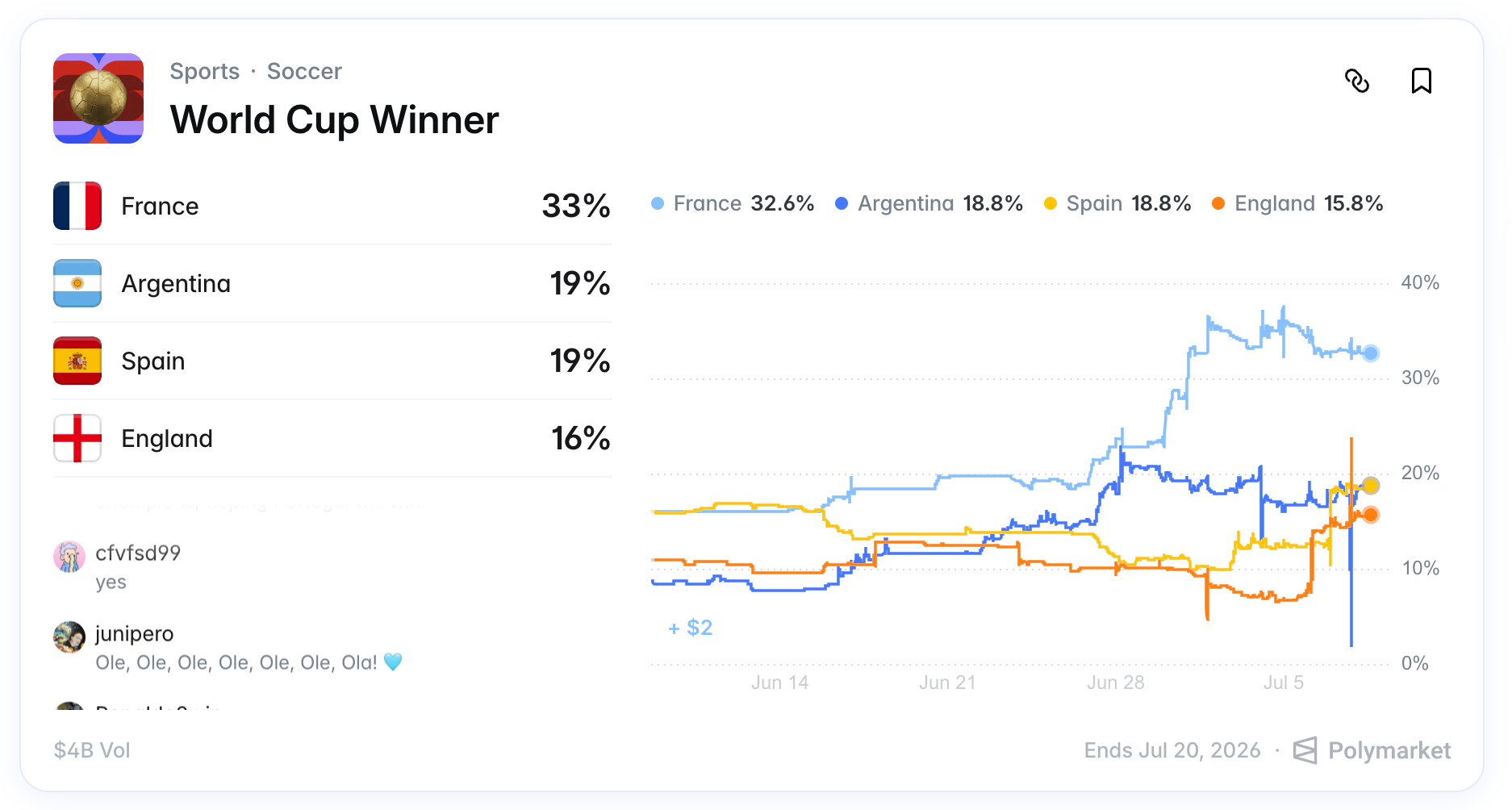
However, the blockchain ecosystem gives this kind of predictions (and every kind actually) a transparent settlement mechanism. In a nutshell, decentralised prediction markets, like Kalshi or Polymarket, use smart contracts to automatically distribute the winnings once the official outcomes are confirmed.
With such a major and international event as the FIFA World Cup, the overall volumes on Prediction Markets have started to increase in the month prior to the tournament as people started to speculate on the outcomes, and of course have skyrocketed after the start of the competition.
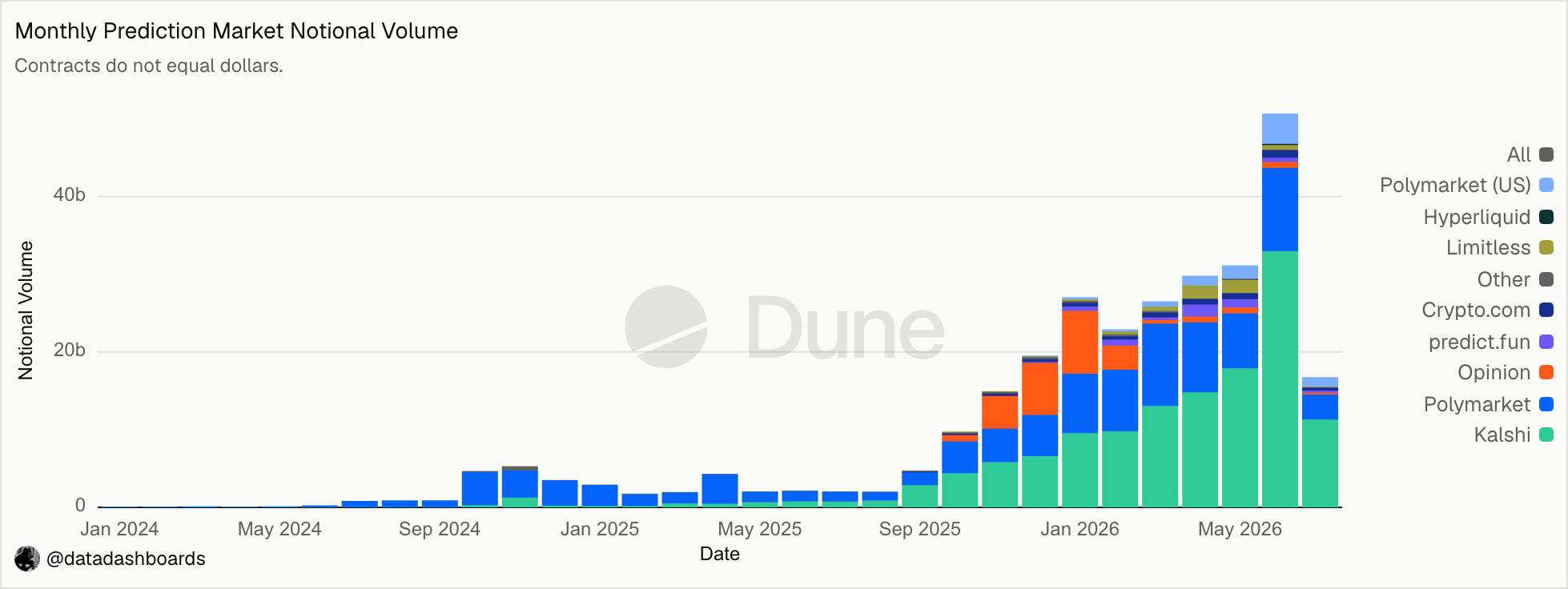
One thing though, predictions on those markets can of course be as classic as trying to guess who will win the World Cup, who’ll finish as the top scorer, what team will win that game, and so on.
But they can get way more specific or crazier than this.
For this year's World Cup, the most surprising prediction is probably the one over “Will Ronaldo cry at the World Cup?” Yes, people speculated about it.
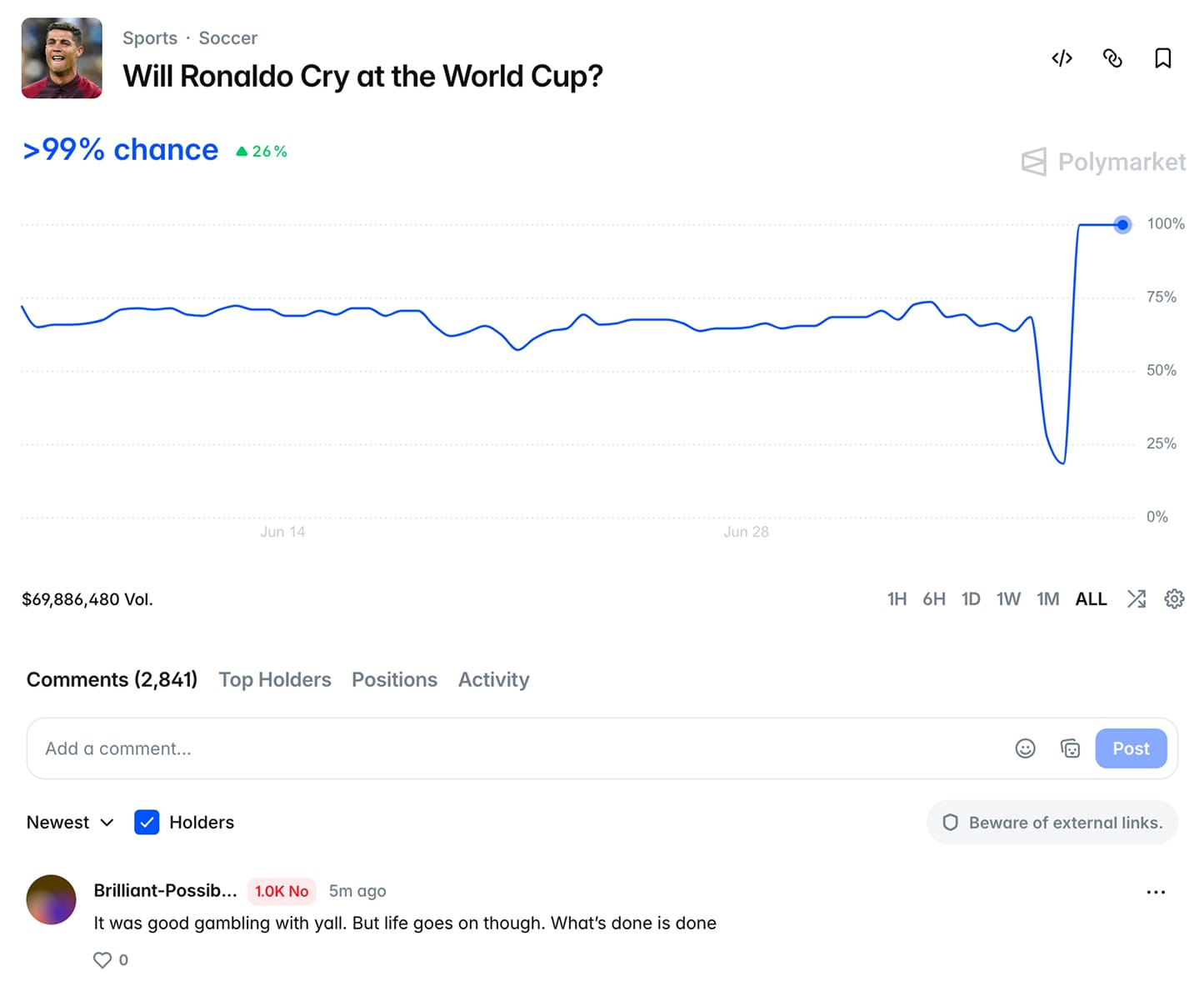
And as you can see it has been a pretty popular prediction with a volume nearly hitting $70M and more than 2,800 comments on the page. It even went to the point that people were debating if this specific event happened, searching all over internet for a visual proof of a tear from an official broadcast.
If people can imagine it, people can create a prediction market about it.
Final Whistle
The Football world has always embraced innovation, from television broadcasts to goal-line technology or VAR, and blockchain is emerging as the next chapter.
We’re still at the experimentation stage. Not everything will be adopted and we’ll see some projects disappear after a season or two. But others might quietly become part of the everyday football life, maybe without supporters even noticing. That’s often how the best technology works.
The future of football is about making the fan experience smoother, safer and more connected.
Whether this means paying for a meal at the stadium with crypto, proving that this shirt from your collection really was worn in a Champions League final, accessing World Cup tickets through a digital collectible or earning lifelong rewards for supporting your club, blockchain is moving from the sidelines to the center of the pitch.
The Football game remains beautifully human, but the experience is getting on-chain.
Disclaimer: The content provided in this article is for educational and informational purposes only and should not be considered financial or investment advice. Interacting with blockchain, crypto assets, and Web3 applications involves risks, including the potential loss of funds. Venga encourages readers to conduct thorough research and understand the risks before engaging with any crypto assets or blockchain technologies. For more details, please refer to our terms of service.