
Table of Contents
On July 1st, Robinhood officially launched Robinhood Chain, its own Ethereum Layer-2 blockchain built for on-chain finance.
With it, their main goal is to bring tokenized stocks, ETFs and other real-world assets (RWAs) on the blockchain, making them available for 24/7 trading, self-custody, and use across DeFi applications.
It’s one of Robinhood’s biggest endeavours. However, it didn’t really go as expected.
So, what exactly is Robinhood Chain?
Robinhood Chain is an Ethereum Layer-2, meaning it’s a blockchain built on top of Ethereum that processes transactions faster and at a lower cost while still benefiting from Ethereum’s security (thanks to Arbitrum’s technology).
Rather than simply launching tokenized stocks on an existing blockchain, Robinhood decided to build its own infrastructure.
“Why this choice?” you may ask.
Well, owning directly the blockchain gives the company much more control over how everything works, from transaction costs and settlement to compliance and future product development. It’s actually a similar strategy to what Coinbase did with Base, although Robinhood has taken a more focused approach by building specifically for financial assets instead of creating a general-purpose blockchain.
The chain is also fully compatible with Ethereum, allowing developers to build applications using familiar tools and connect products like decentralized exchanges, lending protocols and wallets from day one.
The vision to bring Wall Street on-chain
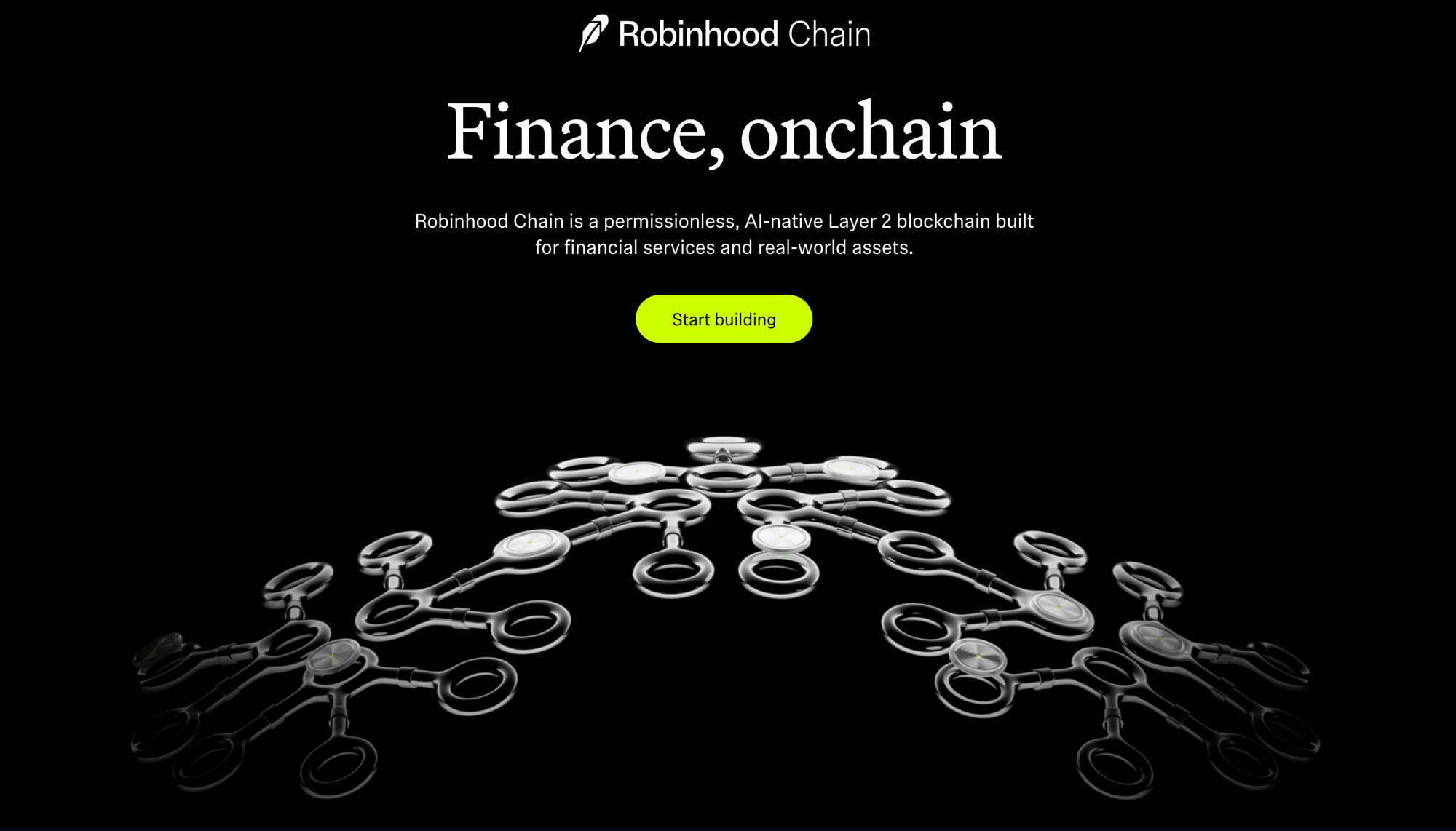
The company wants Robinhood Chain to become the infrastructure for tokenized real-world assets (RWAs). In a nutshell, these assets are traditional financial assets that exist in the real world, like stocks and ETFs, but tokenized and brought on-chain to benefit from the blockchain technologies’ advantages.
However, Robinhood’s Stock Tokens don’t represent actual ownership of company shares. Instead, they provide economic exposure to the underlying asset, meaning users benefit from price movements but don’t receive shareholder rights such as voting.
By being on-chain, these assets can be traded 24/7, stored in self-custody wallets, and eventually integrated into DeFi applications. Imagine using tokenized Apple shares as collateral for a loan or earning yield on a portfolio without relying on a traditional broker.
That’s the long-term vision.
But… the crypto world had other plans
Yes, the Robinhood Chain was originally designed and presented to the world for tokenized stocks. Though, the crypto community found another use for it.
Since launch, more than 99% of all trading volume on the network has come from memecoins. Yes, that much.
The biggest success story has been CashCat (CASHCAT), a token that is inspired by Robinhood’s former mascot. This token exploded by more than 5,500% in just one week, which consequently helped kick off a wave of speculative trading across the network (classic memecoins thing).
One early trader reportedly turned $85 into nearly $2 million (also a classic memecoins thing, but this can happen because the related risk of losing everything is high too, it goes both ways), so the hype didn’t stop there.
Following CashCat’s success, tens of thousands of new memecoins were launched on Robinhood Chain, creating a surge in trading activity that quickly became the network’s main source of volume. And the CEO actually embraced it.
While we’re building robinhood chain to be the best chain for RWA … it works great for memes too
— Vlad Tenev (@vladtenev) July 8, 2026
Who knows, maybe Robinhood will end up being the new Solana.
A successful launch
Memecoins have stolen the spotlight, but they also helped make the numbers behind Robinhood Chain’s launch pretty impressive. During its first week, the network recorded:
- More than 17 million transactions
- Almost 350,000 wallet addresses
- More than $1 billion in decentralized exchange (DEX) trading volume
Analysts also estimate the blockchain quickly surpassed $3 billion in weekly DEX trading volume, placing it among the most active Layer-2 networks shortly after launch.
The ecosystem itself arrived well prepared, launching with integrations from major crypto projects including Uniswap, Morpho, Chainlink, BitGo, Alchemy, 1inch, Lighter and several other DeFi protocols.
For a brand-new blockchain, that’s quite an impressive start.
What’s next?
Regardless of the nature, the early activity shows there’s plenty of demand for Robinhood Chain, and now, the challenge is to turn this initial excitement into long-term adoption of tokenized financial assets.
Robinhood’s initial vision was not to become the go-to place for memecoins, but to become the home for tokenized stocks and other real-world assets, bringing blockchain’s benefits to traditional assets.
Let’s now see if that vision can become reality.
Disclaimer: The content provided in this article is for educational and informational purposes only and should not be considered financial or investment advice. Interacting with blockchain, crypto assets, and Web3 applications involves risks, including the potential loss of funds. Venga encourages readers to conduct thorough research and understand the risks before engaging with any crypto assets or blockchain technologies. For more details, please refer to our terms of service.