
Table of Contents
If you are into Crypto, you are not only smart, but you are emotionally mature, navigating the crypto world is not for the weak. Imagine that you’ve been smart, you’ve invested wisely, and your crypto portfolio is looking healthier than a fresh plate of Mediterranean tapas.
But one morning, you try to log in, and... error. Your password doesn't work.
In the traditional banking world, a mistake like this means an annoying phone call to support and a temporary reset link. But in the wild world of crypto, things are a bit more serious.
In crypto, you are your own bank. If a hacker manages to breach your defense and sweeps away your funds, there is no one to call nor button to press for undo. Once they are gone they are gone.
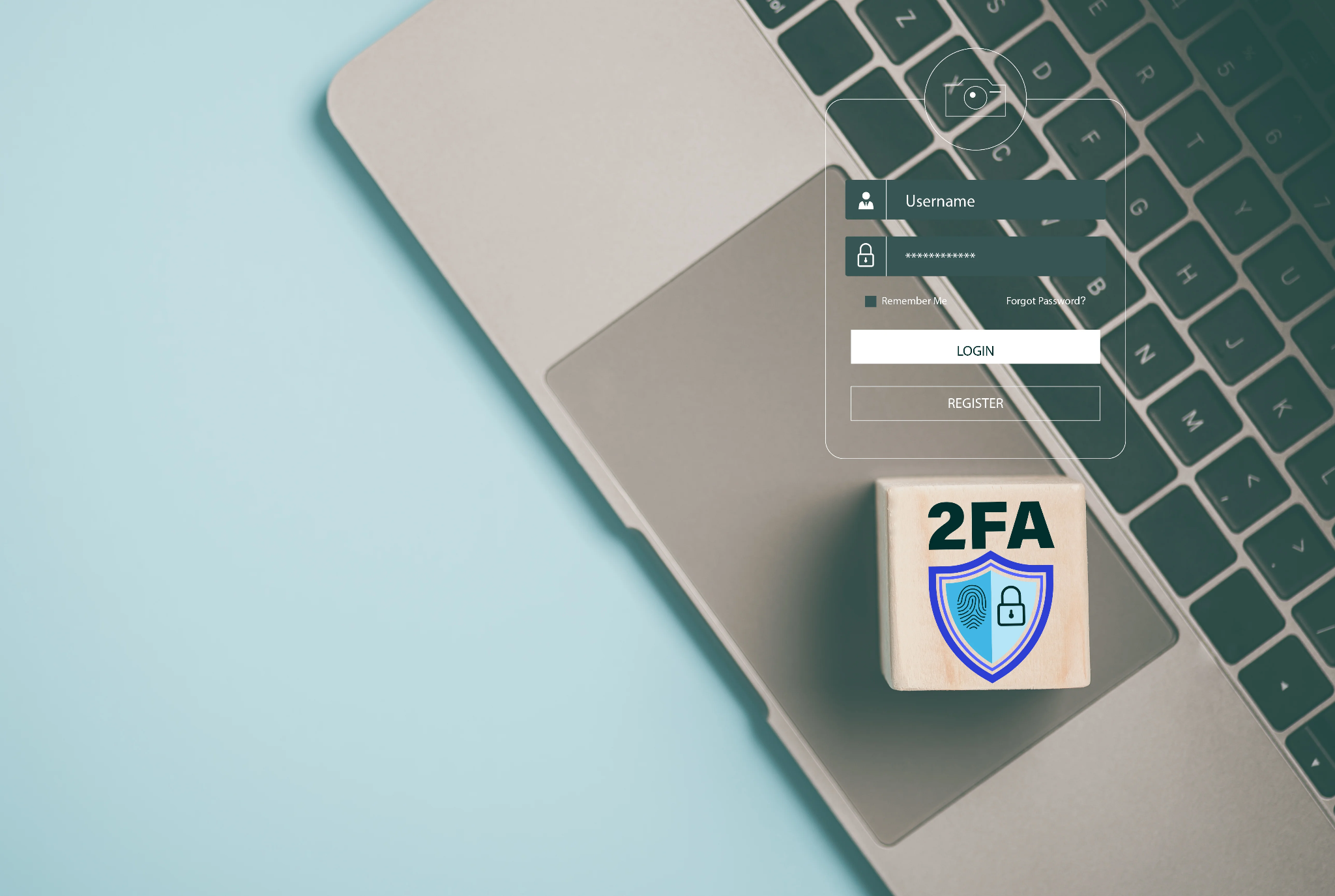
Protecting your crypto requires multiple layers of defense beyond just a strong password.. Source :
Because passwords alone are only as effective as the word can be, we use Two-Factor Authentication (2FA) to strengthen the security. It is that crucial second layer of defense designed to prove that you are really you.
However, not any 2FA is good 2FAS. Unfortunately, assuming all security methods are equal creates a massive false sense of security. Using an outdated method to protect your digital assets is like locking your front door but leaving the keys dangling under the welcome mat.
To be safe, it’s important to understand the three major pillars shaping today’s security landscape.
What is 2FA and what are the main types of 2FA today?
In plain English, 2FA just means adding a second lock to your digital front door. Instead of relying purely on a password to prove who you are, 2FA requires you to provide two completely different pieces of evidence before granting access to your crypto.
Security experts divide human identity into three distincts factors. Understanding what these are will give you a clearer understanding of why 2FA is so powerful.
- Something you KNOW: This is your traditional password, PIN, or passphrase.
- Something you HAVE: This is a physical object in your possession like your smartphone, a hardware key, or a specific SIM card.
- Something you ARE: This is your unique biology—your fingerprint, facial scan, or retina pattern.
Hackers are incredibly good at guessing, phishing, or buying leaked passwords on the dark web. But even if a hacker in another country steals your password, they still can't touch your crypto unless they also verify that second factor.
Think of it like a bank vault. The password is the combination to the digital lock, but the 2FA is the physical key held by the guard. You need both to get inside and with just one, you cannot get in.
What are the main types of 2FA today?
Technology has evolved, and today, you will generally run into three main options when trying to secure your accounts. You need to understand that not all 2FA methods are created equal. Security stands between how tightly you lock things down and how easy it is to access it every single day.
- SMS-Based Codes
We have all been there. Where you type in your password. In a matter of seconds, you receive a one-time code on your phone from a text message. You then quickly copy and paste this code into the screen, and just like that you are in. This is SMS-based Two-Factor Authentication, and it is by far the most widely used form of security on the planet today.
- Authenticator Apps
Often referred to by security geeks as TOTP (Time-based One-Time Password). If SMS is the old-school lock on the gate, Authenticator Apps are the high-tech biometric turnstiles. Examples include Google Authenticator, Microsoft Authenticator, and Authy.
Authenticator apps are basically digital shape-shifters, cooking up fresh, 6-digit login codes directly on your phone every 30 seconds using its internal clock. Because these codes self-destruct almost instantly, sneaky hackers cannot reuse an old code to access your crypto.
Unlike SMS, which relies on a network to send you a code, authenticator apps generate their security codes completely locally on your physical device. They do not need a cellular network, an internet connection, or a SIM card to work once they are set up.
- Passkeys (passwordless authentication)
If we are being honest, inventing, remembering and typing out complex passwords is an absolute headache.
Backed by tech giants like Apple, Google, and Microsoft, passkeys allow you to log into your crypto accounts seamlessly without ever using a password. Instead of typing out letters and symbols, you log in using a secure, digital key that lives inside your hardware.
Instead of jumping through hoops to prove your identity, you simply unlock your passkey and access your crypto using your device as you do every single day.
- A quick glance at your screen via Face ID or facial recognition.
- A simple tap of your thumb using Touch ID or a fingerprint scanner.
- Your personal device PIN, the exact same code you use to unlock your phone.
By pairing advanced cryptography with your unique biology or local PIN, passkeys ensure your funds are only accessible by you on your physical device, This leaves zero passwords for hackers to steal.
How secure is SMS 2FA?
At least everyone knows how to open an sms, It is therefore the ultimate crowd pleaser. Since it atleast does the great job of blocking lazy internet thieves who just happen to guess a weak password.
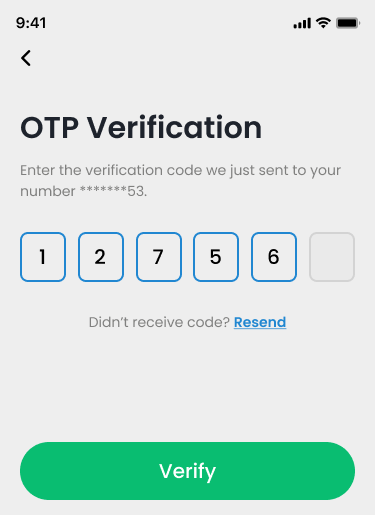
Having SMS 2FA turned on is a million times better than having no security at all. However, When you only use SMS 2 Factor Authentication for your crypto wallet, you are accidentally opening the door to some tricky security blindspots:
- SIM swapping attacks: A hacker doesn't even need to touch your physical phone to steal your texts. They just call your mobile carrier, pretend to be you, and trick an agent into moving your phone number over to their SIM card. Suddenly, your phone goes silent, and all your secret login codes start flying straight to the hacker’s device.
Just like that, they have control of your crypto wallet and that will be goodbye to your cryptocurrency.
- Interception or rerouting of SMS messages: You would agree that the global routing network that beams text messages across the planet is actually pretty old-school. It lacks modern, airtight encryption, which means sophisticated cybercriminals can occasionally intercept your 2 Factor Authenticator codes right out of mid-air while they are in transit.
- Reliance on telecom providers: Choosing SMS, means you trust your phone provider, automated texting networks, and even the staff working at your local mobile storefront. If any single one of those external links makes a mistake, your digital front door swings wide open.
Your cryptocurrency lands on another person's hands, it´´ worth thinking if SMS 2FA is actually enough security for your assets.
- Social engineering vulnerabilities: Because text messages rely so heavily on human networks, hackers don't need to be master coders. They just use high-pressure phishing texts or clever social engineering tricks to talk retail employees into handing over your account access.
SMS 2FA is just fine for securing your favorite food delivery app or clothing profile. But for your crypto portfolio? It is definitely the weakest shield on the block.
Authenticator Apps: Why are they considered the standard?
If you have ever If you have ever set up security on a crypto exchange, a banking app, or even a gaming account, you will always be directed towards downloading an authenticator app.
Security-focused platforms recommend this option because it gives you strong protection while still being easy to use every day.
Advantages of the Authenticator Apps.
- Codes are generated locally and not transmitted
Codes are generated right on your phone's internal chip using clever time-based calculations, absolutely nothing is ever transmitted over the airwaves. No data is traveling through space for a hacker to intercept.
- It is not tied to a phone number.
Unlike text messages, your authenticator app is completely detached from your cell provider. In this light, Sim-swapping attacks therefore are useless. A hacker could hijack your phone number tomorrow and they still wouldn't see your codes.
- Resistant to many network-based attacks.
Authenticator apps are resistant to many network-based attacks. The app works 100% offline, so it doesn’t rely on mobile networks. This helps protect you from data leaks, cell tower tracking, and unauthorized access from telecom providers.
Limitations of Authenticator Apps
Even though Authenticator apps gives you an upgrade in protection and security, they still have some limitations:
- Vulnerable to phishing: These apps are good at math, but they can’t tell if a website is fake. If you type your code into a scam website, a thief could grab it and quickly use it to get into your real crypto account before the code expires.
- Risk of getting locked out without a proper backup: Your security data is stored only on your device.If your device takes a swim in the ocean or gets crushed by a car, your funds could be gone forever.
Ultimately authenticator apps offer strong, high-level security while still being easy to use every day for most investors.They are much safer than text message codes and balance solid protection with simple, practical use.
What are passkeys and why are they considered the future of security?
Passkeys is a security means that completely moves away from passwords. Instead of forcing you to memorize long, confusing strings of text that can easily be stolen, passkeys turn your physical device into your master key.
Here is how it works; Passkeys work by storing a complex digital key securely inside your phone or computer’s security chip. When you log in, you don’t type anything, instead, you confirm your identity using Face ID, Touch ID, or your device PIN.
Unlike passwords, no secret information is sent or stored on a crypto exchange’s servers. Your device simply proves you have the key by completing a local check, while keeping your actual credentials private.
Advantages of Passkeys
- phishing-resistant by design: Passkeys are mathematically attached to the specific website or app that created them, they cannot be tricked. Even if you accidentally click a fake copycat link, your device will recognize it's a fraud and refuse to hand over the key.
- No password to steal or reuse: Since there is no actual password written down or sitting in a database, there is nothing for a hacker to steal in a corporate data breach. You can also completely forget about the danger of hackers trying your old, leaked passwords on your new accounts.
- Pure Frictionless Speed: Logging in becomes an absolute breeze. You just click Sign In, scan your fingerprint, of your face and you are instantly through the door - easy peasy.
Limitations of the passkey.
Even though passkeys are easily the coolest new tech in town, they still have a couple of real-world growing pains you should keep in mind:
- Not fully supported everywhere: Even though major crypto apps are rushing to add them, some smaller, niche crypto wallets and newer altcoin exchanges haven't upgraded their systems to support passkeys yet.
- Tied to ecosystems/devices: Passkeys usually stay locked inside the specific system you already use, like Apple's iCloud or Google Password Manager. While crossing over to a different brand is getting easier, it can still feel a bit clunky. For example, using an iPhone-made passkey to log into a Windows laptop forces you to slow down and scan a QR code with your phone.
SMS vs. Authenticator Apps vs. Passkeys: What’s the Real Difference?
When it comes to protecting your crypto, not all security options are equal. Consider the table below to help you choose the best security measure that is not only security worthy but that is easy to use on your day to day living.
Which option should you choose?
To be honest, navigating security rules can be a little bit overwhelming, but protecting your coins should not be compromised for comfort. Choosing the right security setup depends on your experience level and how much crypto you are protecting.
While every method has its place, the ultimate goal is to move away from cell networks and use tools that lock your security directly to your physical devices
- If you are an absolute beginner , Start with authenticator apps. Don't overcomplicate things. Downloading a free app gives you an immediate, massive shield against hackers without being hard to use. It cuts out phone network risks while you get used to managing your accounts.
- If only SMS is available, use it, but treat it as temporary. Some protection is always better than leaving your front door wide open. If a platform hasn't upgraded its tech yet, turn on text codes for now, but swap it out for a safer method the very second the platform updates.
- For crypto exchanges and wallets, Avoid SMS entirely. When it comes to your actual money, text messages are an absolute no-go. Crypto accounts are prime targets for cybercriminals. Using SMS here leaves you wide open to a SIM-swap attack, so lock these down with an app or passkey immediately.
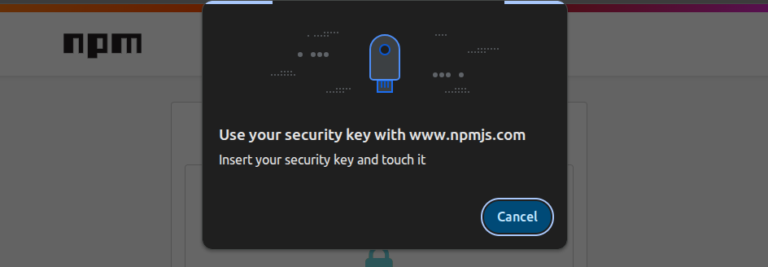
- For maximum security, Prefer passkeys or combine with hardware keys. If you are holding serious crypto assets, you want the best armor available. Activating a passkey stops phishing attacks in their tracks. For total lockdown, pair your accounts with a physical hardware security key (like a YubiKey) so no one can log in unless they are physically holding that exact USB key.
Conclusion
At the end of the day, protecting your digital assets means making yourself too difficult a target for hackers to bother with. Shifting your defense away from vulnerable cellular networks and onto your own hardware is the single biggest upgrade you can make.
By matching your defense strategy to your actual portfolio size, you can easily keep your funds locked down tight without turning your daily login into a massive headache.
Disclaimer: The content provided in this article is for educational and informational purposes only and should not be considered financial or investment advice. Interacting with blockchain, crypto assets, and Web3 applications involves risks, including the potential loss of funds. Venga encourages readers to conduct thorough research and understand the risks before engaging with any crypto assets or blockchain technologies. For more details, please refer to our terms of service.