
Table of Contents
If you want to create a portfolio of profitable assets, when selecting them, take into account how they performed over a multi-year period. A simple metric investors use is the average annual return. The AAR represents an asset’s historical average return, usually over three-, five-, and 10-year periods.
It combines returns from several years into one figure, so it becomes easier to see how well the asset, such as a mutual fund, is doing. This is a useful method of investment appraisal; however, it can be misunderstood if volatility and compounding are ignored. It’s also vital to know the difference between the AAR and the annualized return.
What Is Average Annual Return?
The average annual return measures the money made or lost by a mutual fund over a given period. It reflects the arithmetic average of yearly returns and does not include sales charges or portfolio transaction brokerage commissions. The three components that contribute to the AAR are as follows:
- Share price appreciation—unrealized gains. The stocks that make up a portfolio have prices that change over a year and proportionally affect the fund’s AAR.
- Capital gains—realized gains. These are distributions generated from the sale of stocks. Shareholders can receive them in cash or reinvest them in the fund capital.
- Dividends—money paid from company earnings. They lower the portfolio’s net asset value and add to the AAR of a mutual fund. They also can be taken in cash.
This figure shows the average of the results from each year, not the actual rate at which money grew over time. In fact, investors should also look at the consistency of its total returns. So, the metric has advantages and limitations.
How Do You Calculate Average Annual Return?
The calculation is quite basic, and most likely, you will not need to calculate this metric manually, as it is often presented on investment platforms in the description of the fund’s historical performance.
Simple Formula
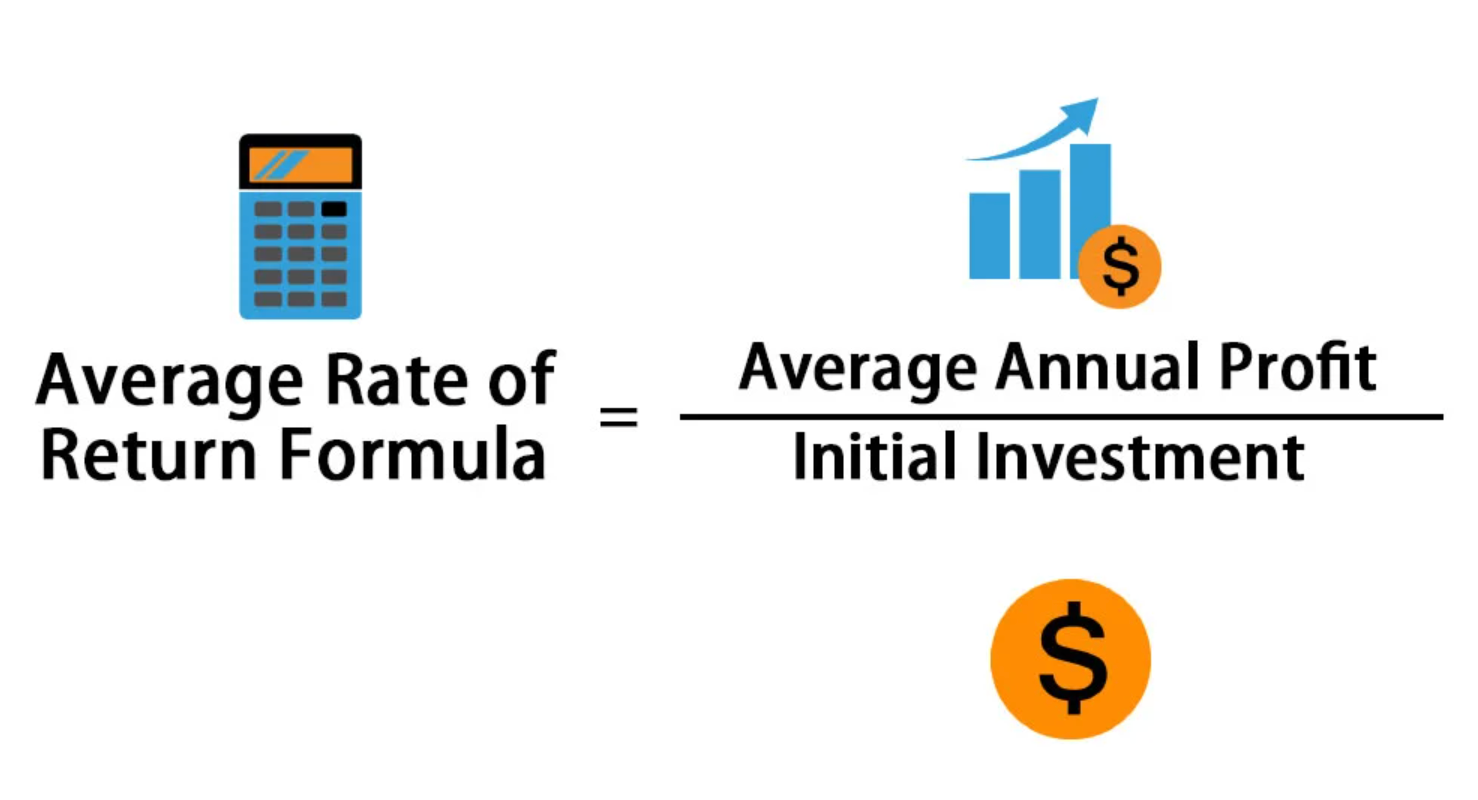
Still, knowing the formula builds confidence when comparing assets. If you cannot find the relevant data published and you want the average to be calculated by hand, take the two steps:
- Add the annual returns for each year in the period.
- Divide the total by the number of years.
Example Calculation
Here’s how exactly the calculation works in practice, considering gains and losses. Suppose a fund had these annual returns over 3 years: +10%, −5%, and +15%. Add them: 10+(−5)+15 = 20. Divide by 3 years: 20/3 = 6.67%. This is the AAR.
What does the result mean? The data lets investors identify great assets through benchmark comparison. For example, if it is 5%, the AAR of 6.67% will indicate that this fund performs slightly better than the industry standard.
Are there disadvantages? Yes, because your $100 investment won’t reach $106.67 in a year, even though it seems mathematically logical. Your asset will grow less than this. To get clear, real numbers, check annualized return.
The Difference Between Average Annual Return and Annualized Return
The AAR calculation method is simplified. It does not use a geometric mean. Meanwhile, the annualized return figure is more accurate. The average annual return is a simple arithmetic average, and the annualized return reflects actual compounded growth over multiple years.
The formula is: [(1+r₁ ) x (1+r₂) x (1+r₃) x ... x (1+rᵢ)]^(1/n) − 1
- r—the annual rate of return (ARR)
- n—the number of years in the period
Let’s see what this means using our prior example of a fund that had these annual returns of +10%, −5%, and +15% over 3 years.
Firstly, investors use each year’s return as a decimal (10% = 0.10) and add 1 to each to turn them into growth factors like 1.10. Secondly, they multiply growth factors. Thirdly, they raise the result to (1/n). Here n is 3 years, so they average the compounded growth: 1.20175 ^ 0.333 ≈ 1.06319. Lastly, the number is converted back to a percentage: 1.06319 − 1 = 6.32%.
The annualized return here is slightly less than an AAR of 6.67%. It’s important to know that the two metrics cannot be treated as interchangeable.
Why Can Average Annual Return Be Misleading?
Unfortunately, the easiest and fastest way to evaluate assets is not always the best. The average annual return does not reflect market swings—considerable ups and downs, also known as “volatility”. It does not take return order or the effect of compounding into account as well. So, two mutual funds can have the same AAR percentage but produce different actual outcomes over time. Often the annualized return is more accurate.
How Can You Use Average Annual Return to Compare Investments?
For screening the past performance of different assets, funds, or strategies over matching periods, the AAR can be a useful first-level comparison tool. And here it’s crucial to make a proper comparison: consider time like 3–5 years, risk level, and other factors. You should check:
- Time frames. Compare 3-year AAR of Fund A vs. 3-year AAR of Fund B.
- Standard deviation. Assess volatility, as high swings mean higher risk.
- Benchmarks. Subtract costs and check if the asset beats the market index.
When Should You Look at Other Return Metrics Too?
AAR has limits because it doesn't take into account compounding or yearly changes, so it might not show the whole picture. Investors should also look at other metrics, like:
- Yearly returns
- Cumulative return
- Internal rate of return
- Return on investment
- Volatility and maximal drawdowns
The choice of figures for your detailed analysis depends on what you are trying to evaluate. But the comparison outcomes will surely become more useful when metrics are viewed together rather than one by one.
What Does Average Annual Return Really Tell You?
If you were looking for a simple way to evaluate historical performance of an asset over several years, check out the average annual return. It’s clear, easy to understand, commonly published in the public domain, and it averages out short-term market fluctuations.
But the metric has limitations and does not tell the whole story. It does not reflect either volatility or real growth, as it is purely an arithmetic mean. It is most useful as a starting point for comparison, not as a complete measure of investment quality.
So, we recommend checking not only the AAR but also total gains or losses, annualized returns, and other parameters for the comprehensive investment appraisal.
Disclaimer: The content provided in this article is for educational and informational purposes only and should not be considered financial or investment advice. Interacting with blockchain, crypto assets, and Web3 applications involves risks, including the potential loss of funds. Venga encourages readers to conduct thorough research and understand the risks before engaging with any crypto assets or blockchain technologies. For more details, please refer to our terms of service.