

Table of Contents
It is a general urge for investors to do something during sharp market downturns. Watching your portfolio drop day after day triggers a primal, urgent instinct. You want to take preventive action. Whether it is selling off a sinking stock, slashing your risk, or moving everything into cash to "save what is left,".
But on Investing, feeling anxious when your hard-earned money is on the line is entirely normal and human. Fear itself is not the problem. The danger is that decisions made in a panic usually happen at the worst possible moment, selling when prices are at their lowest right before they bounce back.
By scrambling to escape short-term pain, we unintentionally destroy our long-term plans and gains.
Why Market Drops Trigger Panic
As you see your portfolio in a bad shape, your brain sees a threat to your survival. Humans are wired so that the pain of losing money hurts twice as much as the joy of making it. So when the market dips, your brain goes into full-blown panic mode to protect you.
In this panic, your feed increases anxiety, media headlines turn into a total horror show, jacking your anxiety up to a ten. At the same time, seeing everyone else panic-sell makes you feel like you missed the memo, making it almost impossible not to follow the crowd.
Panic selling at that moment feels logical because it offers you a chance to remove discomfort quickly, to be able to say "I could save a little".
Why Panic Selling Often Leads to Bad Decisions
A panic selling can turn it into permanent financial damage. When you take the decision and hit the sell button during a crash, you do not do it because your core investment strategy changed or because a company suddenly went broke. You are doing it purely to make the emotional pain stop. Which is an expensive way to buy peace of mind.
But the nightmare doesn't end once you cash out. By stepping to the sidelines, you just got yourself a brand new problem: deciding exactly when to jump back into the market. Good luck timing that perfectly.
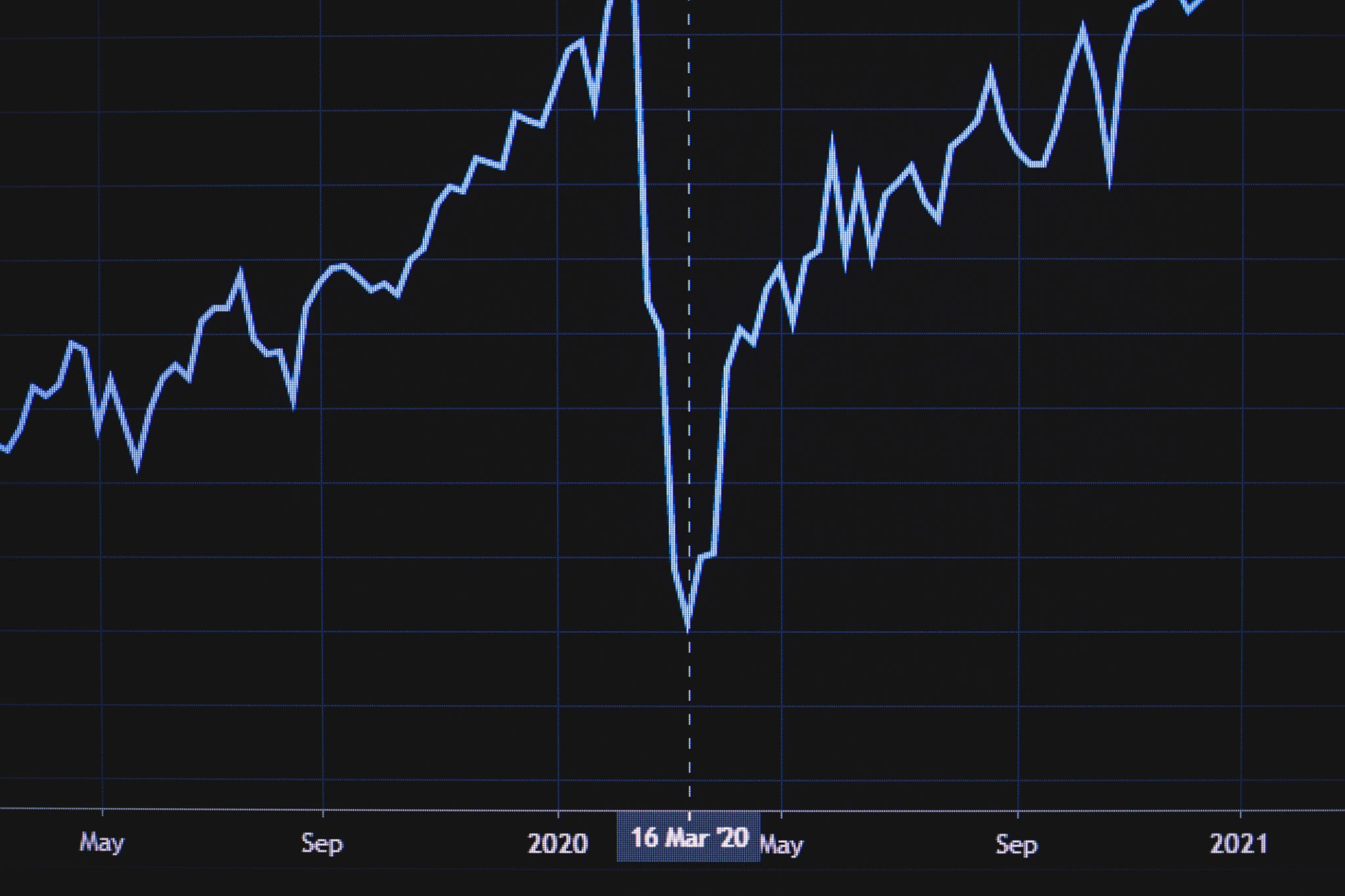
Imagine you are now waiting for the perfect time to reinvest, you will inevitably miss those first explosive days of the rebound. By the time you finally feel safe enough to buy back in, prices will already be much higher meaning you sold low and bought back high. You successfully skipped the recovery, which is the exact opposite of how building wealth works.
What Makes Investors Sell at the Wrong Time?
When the market starts to tumble, our brains leave us, all we have is our emotions, the pain of losing. Lets see a psychological breakdown of why our brains betray us the moment the market takes a downturn.
Loss Aversion
Psychologically speaking, humans are incredibly dramatic when it comes to losing. The pure agony of losing $1,000 feels twice as brutal as the thrill of making $1,000. When your portfolio takes a dive, that emotional pain takes the steering wheel.
You don’t hit the sell button because a cold, rational analysis told you it was a smart move, you do it purely to stop staring at those bleeding red numbers. Just to get it over wit.
Negative Headlines and Crowd Behavior
During a crash, your media feeds are filled exactly with what you would rather not see. Everyone around you, from talking heads on TV to random accounts on social media. When everyone is talking about the collapse where your money is, doing nothing feels terrifying.
In this situation, it is hard and painful to stay calm, so you just bail out by selling.
Short-Term Focus
The second the market enters a freefall, your long-term perspective completely evaporates. Your twenty-year financial plan becomes a twenty-minute panic attack.
You totally forget why you bought those assets or built that portfolio in the first place. Instead of focusing on where your money will be a decade from now, your brain locks onto the daily price tickers, treating every single tick downward as a personal emergency. The big picture gets totally blacked out by the panic of the present.
So we can see that panic selling results from our desire to react according to the signals our brain is sending.
How to Know If You Should Act or Wait
Now that we already know why people may panic sell, the next question would be, when do I know if I should sell or wait?.
First you should know that "do not panic" doesn't mean you shouldn't do anything. When numbers start falling, as a strategic investor, you should revisit your thesis and ask yourself these questions:
- Has the core investment thesis actually changed? Did the company or funds you bought fundamentally break, or is it just caught in the crossfire? If the business is still solid, the price drop is temporary noise.
- Is the whole market down? If every single asset on your screen is bleeding, your investments aren't failing, you are experiencing a normal market cycle.
- Was my position too big to begin with? If a drop in one specific asset is keeping you awake at night, it might mean you overexposed yourself. Betting too much on one horse makes the rides way too bumpy.
- Do I actually need this cash right now? If you need this money for rent next month, it never should have been in the market in the first place. If you don't need it for years, a bad afternoon shouldn't make you panic.
- Does this still match my original risk profile? Did you think you had a high risk tolerance until you actually saw the red numbers? A market drop is a clear truth for how much volatility you can actually handle.
What to Do Before Selling in a Downturn
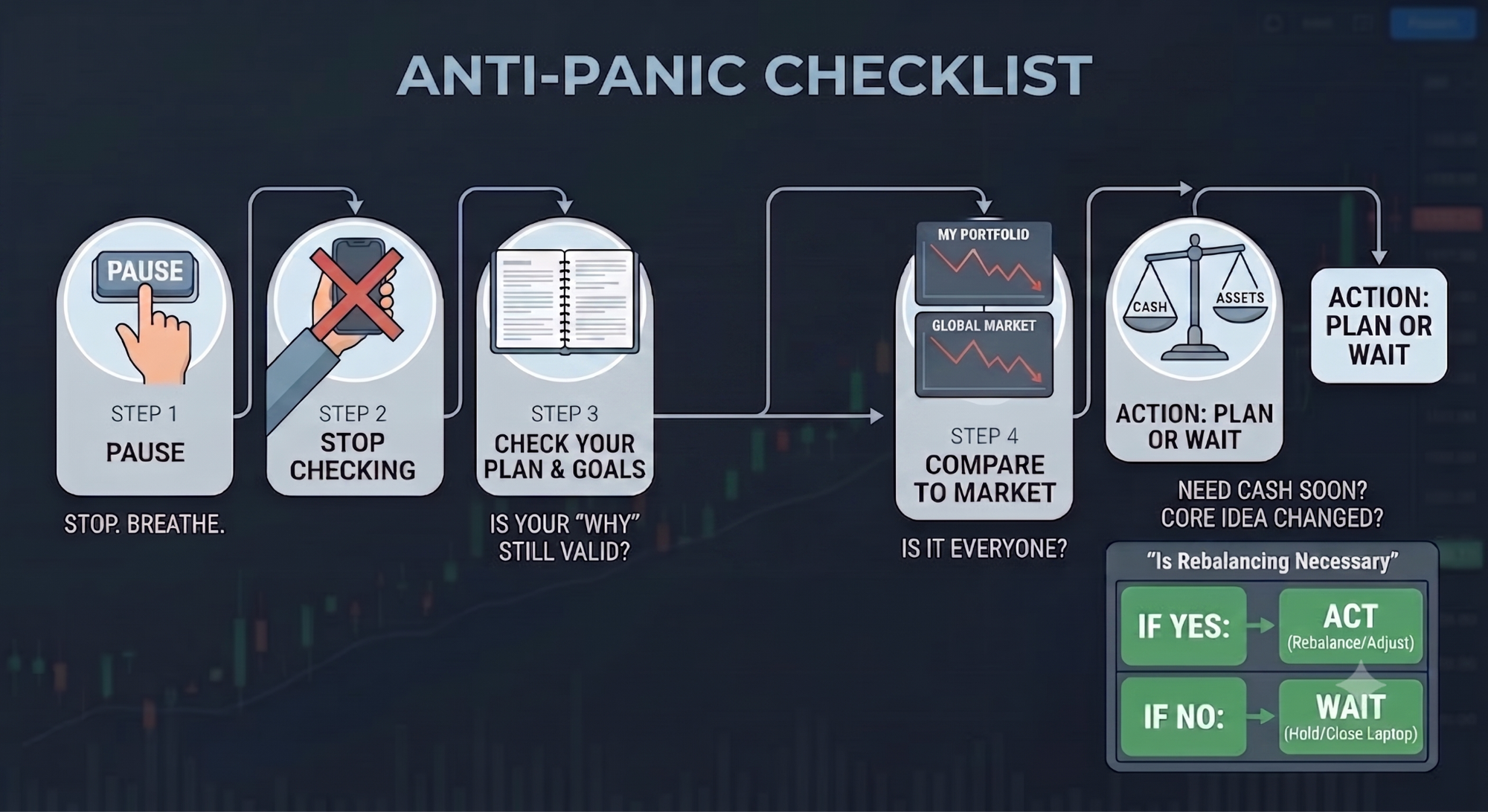
Selling in a downturn may not be totally bad. But if this is the action you need to take, it should not be under panic.
Consider this practical checklist .
How Portfolio Design Can Reduce Panic
Another good move that would reduce panic would be your portfolio design. Building a portfolio that won't give you a heart attack.
Imagine your portfolio only has two or three risky assets. When the market goes down, your account balance drops hard and fast. One bad news headline can cause huge losses. This pushes you into a panic, and you end up making bad choices with your money.
A diversified portfolio design fixes this problem. By spreading your money across different types of investments, you make sure that a crash in one spot does not ruin all of your savings. There is a good chance that if one is falling another one is probably rising. This compensates and you do not run into a panic and end up selling at the wrong time.
Consider using diversification, asset allocation, a cash buffer, periodic rebalancing, and clear risk limits to reduce your investment stress. By setting up these pieces ahead of time, you always know exactly how much market volatility you are ready to tolerate. Build the shock absorber now so you don't break your neck later.
How to Prepare Before the Next Drop
The best time to build a protective shield is before the market starts to fall. You cannot be building a shield when the market is already falling. Be ready before it even begins.
In advance, define your goals, investment horizon, and the maximum drop you can handle. Write down your rules for rebalancing, how much cash to keep in your buffer, and the exact conditions that will make you buy or sell.
When a crisis actually hits, you will not need to invent a new strategy from scratch. Instead, look at the situation and compare it to the plan you already prepared.
Conclusion
Panic Is human, but it should not run the portfolio. Be an investor with a mindset that expects fear but rejects panic. You need to realize that feeling afraid during market drops is normal, but panic selling may turn temporary drops into permanent damage.
You must also remember that a good strategy does not promise you will never feel scared. When a crisis actually hits, you should not let your emotions run your actions. Instead, trust your financial plan to avoid making permanent decisions from a temporary emotional state.
Disclaimer: The content provided in this article is for educational and informational purposes only and should not be considered financial or investment advice. Interacting with blockchain, crypto assets, and Web3 applications involves risks, including the potential loss of funds. Venga encourages readers to conduct thorough research and understand the risks before engaging with any crypto assets or blockchain technologies. For more details, please refer to our terms of service.