
Table of Contents
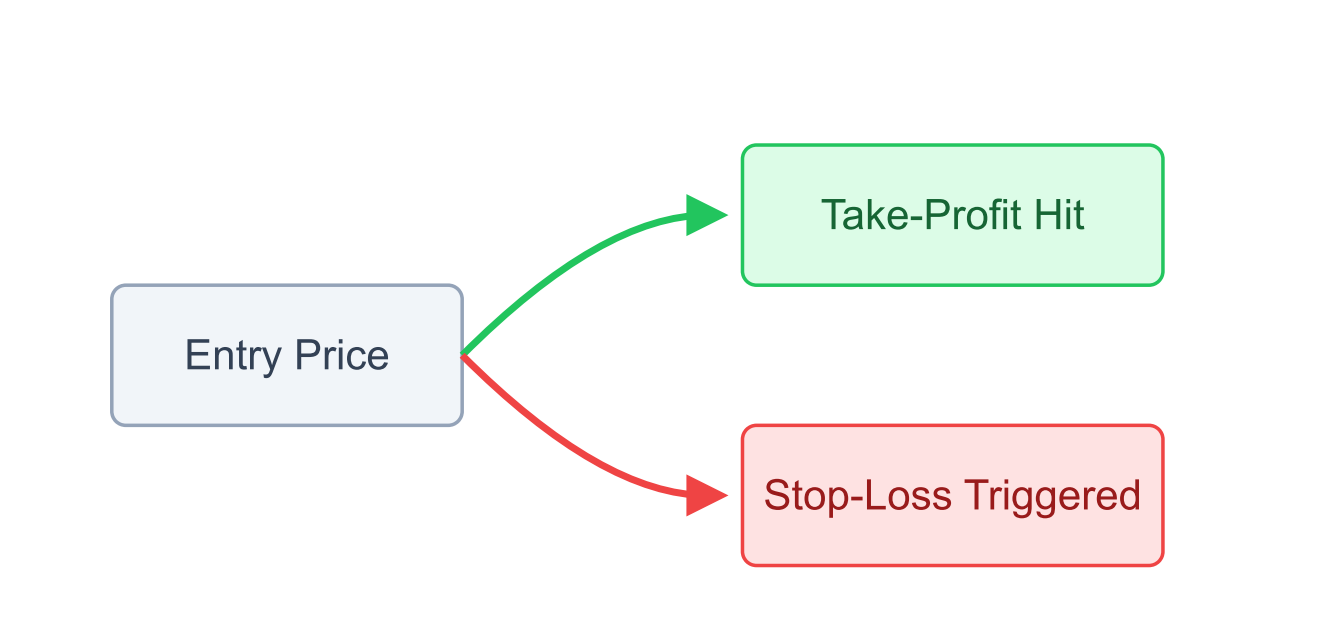
For many traders, stop-loss (SL) and take-profit (TP) orders are some of the earliest concepts they are introduced to. At their absolute core, both of these are conditional exit instructions. A stop-loss is purposely designed to cap your downside. It acts as an emergency brake if the market turns against you.
Meanwhile, a take-profit order does the exact opposite. It closes out your position at a chosen, favourable level. You lock in those gains automatically. In the real world, they may not close your positions at the exact trigger price you set because of how volatile the market can be on some days.
However, they remain very vital tools in risk management that every trader needs in their arsenal against the volatile and deeply unpredictable market. So, let's explore exactly how they work.
How a Stop-Loss Order Works

A stop-loss order is simply a conditional exit instruction that works like a trigger. When you set a stop-loss order, you are essentially telling your broker or exchange, If Bitcoin price drops to $75,000, close my position. The price '$75,000' is your trigger.
But here is where a massive misunderstanding happens. Activating the trigger does not magically sell your asset at exactly that price. Once the trigger is hit, your instruction instantly converts into a regular market order. It is then thrown into the order book to find the next available buyer.
You need to heavily distinguish the quoted stop level from the actual price available in the order book when execution occurs. They are often two different things. If the market is tanking fast, the next available buyer might be significantly lower than your trigger.
The order just wants to get you out, regardless of the price. This is why that quoted number is just an alert system and not always set in stone. So, while you may have wanted out at $75,000, your order may just be closed at $74,950 or $74,985.
How a Take-Profit Order Works
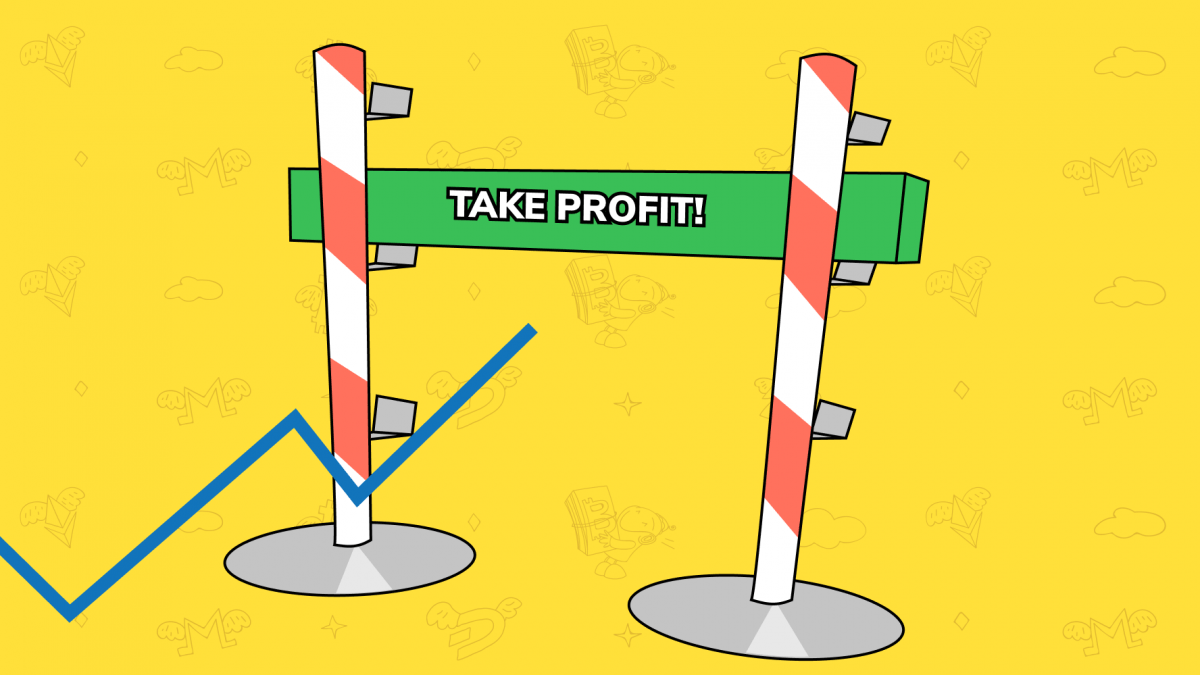
A take-profit order is the opposite of a stop-loss. If you hold a long position (profiting when prices rise), you place this order above the current market price. If you hold a short position (profiting when prices fall), you set it below.
Usually, this triggers a limit order. Using the same example, you are telling the exchange, "Sell my BTC, but only when it hits $75,000." If you choose a limit order take-profit, your trigger price can just sit there without getting unfilled.
If the price lightly kisses your target but there aren't enough buyers at that level to absorb your BTC, your order remains pending. Always verify the specific mechanics with your provider before committing real capital.
Stop, Stop-Limit, Trailing Stop and Bracket Orders
When it comes to closing a trade with SL and TP, there is more than one way to go about it. While some options prioritise the speed of closing a position, others lean more into price control. You have to decide which trade-off you are willing to accept.
Before diving into complex setups on any app, verify which of these specific order types are available for the specific Venga product you are trading.
A stop-limit order is particularly tricky. You set a trigger, but instead of a market execution, it fires off a limit order. If the market is plummeting, your limit order might just sit there like a ghost. The price dropped too fast, bypassing your limit entirely.
The trailing stop is excellent for letting winners run. It drags your exit point higher as the asset climbs. However, set it too tight, and normal market noise will shake you out before the real move even happens. You trade execution certainty for price control, or vice versa.
Setting Levels From a Trading Plan
Successful traders are known for applying effective risk management to all their trades. Stop-loss and take-profit orders are important tools that help you base your exits on cold, hard data, not gut feelings.
The markets, on a day-to-day basis, are entirely too different from one another to apply a one-size-fits-all percentage. These risk management tools help you remain grounded as you take every single trade. So, to apply them properly, you need to use these three educational approaches:
- The Invalidation Point: Where does your trade thesis completely fall apart? If you bought because of an upward trend, put the stop just below where that trend structurally breaks.
- Volatility-Based Distance: Give the trade room to breathe. Use tools like the Average True Range (ATR) to place your stop outside the normal, everyday price wiggles.
- Fixed Monetary Risk: Decide exactly how many dollars you are willing to lose. Then, calculate your stop distance based on that exact dollar amount.
Position Size and Maximum Loss
This is where the math of risk management gets real. Your entry, your stop distance, and your amount at risk are mathematically locked together. Imagine you have a $500 maximum risk threshold. You enter an asset at $50. Your logical stop is at $45. That is a $5 risk per unit.
Calculation: $500 (Max Risk) / $5 (Risk per unit) = 100 units.
You can safely buy 100 units. But remember, this is just theoretical math. The markets on a daily basis, especially crypto, can be really choppy and unpredictable.
Your realised loss might be quite different. A sudden market gap, heavy slippage, trading fees, or platform liquidation rules can quickly push your actual loss past that planned $500 limit.
Reward-to-Risk Is an Estimate
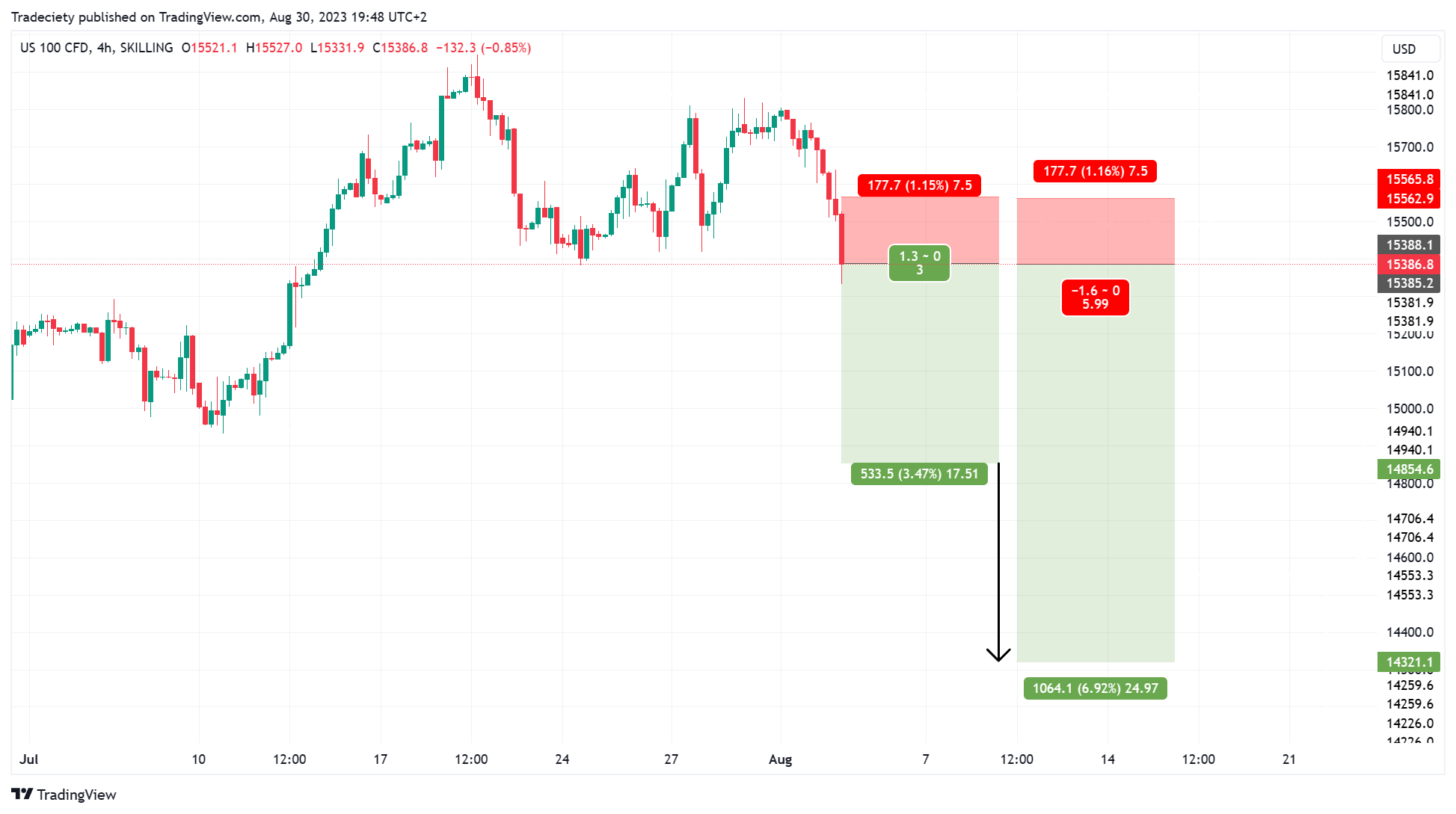
If there's any one thing traders love to brag about, it's the reward-to-risk ratio on their winning trades. They set a take-profit order at $135 and a stop-loss order at $45. That creates a neat, planned 3:1 reward-to-risk ratio. It looks brilliant on paper.
But a planned ratio is just a hypothesis. It doesn't mean the trade is inherently profitable. Your actual outcome is determined by cold realities: the probability of the setup, the actual fill quality you get, and the accumulated costs of doing business.
A perfect ratio means nothing if the market probability is against you. Always treat stop loss and take profit levels as moving targets in your overarching strategy, not guarantees of wealth.
What Can Go Wrong After the Order Is Placed
Opening a position and setting your stop-loss and take-profit orders is just half the step. After you've set your preferred trigger prices on the exchange servers, a dozen different market mechanics can completely derail your plans. There is no such thing as being too safe from market mechanics.
Let's talk about market gaps. If an asset closes at $100 on Friday and opens at $80 on Monday, your $90 stop gets triggered instantly at $80. You suffer massive slippage. Rapid markets and temporary price spikes are equally dangerous.
A momentary glitch or a massive "fat finger" sell-off can trigger a stop-loss order cascade. Prices plummet for just a second, hit your stop, and then bounce right back up. You are left out of the trade, staring at a loss while the asset climbs.
This is why separating the risks of market orders from limit orders is so vital. The major risks you might face after placing an order are:
- Market Order Risks: A market-based stop guarantees you exit, but exposes you to terrible pricing in thin liquidity and against catastrophic slippage.
- Limit Order Risks: A limit order protects your price, but in a rapid market, you might suffer a partial fill or completely miss if the price moves too quickly.
- Platform Outages: Exchanges crash during high volatility. If the engine goes offline, your conditional orders are effectively frozen.
In a normal setting, you're likely not to face these risks often. However, they remain a possibility, regardless of the platform you place your trades on, and as such, you should be prepared for them should they happen.
Worked Scenario: Planned Exit vs Actual Fill
Let's use an example scenario on a hypothetical crypto order book to illustrate this. Assume it is September 20th, 2026. You are trading a hypothetical coin called Zenith (ZEN). You bought 10 ZEN at $1,000 each, making it $10,000 in total.
You have a policy that allows you to lose a maximum of 5% of your entire portfolio, which is $500 in this example. So, you placed a stop loss order at $950.
Planned Loss: $50 per coin x 10 coins = $500.
Then, a large whale releases ZEN into the world. The price is reduced immediately. When you hit $950, your stop is hit and your market sell order is executed. However, the order book is very light.
That is what is on offer from the bid side:
- 2 ZEN available at $948
- 5 ZEN available at $940
- 3 ZEN available at $925
Your order eats through them all and you have your order filled. Let's figure out the actual cost.
- 2 ZEN x $948 = $1,896
- 5 ZEN x $940 = $4,700
- 3 ZEN x $925 = $2,775
Total Revenue: $9,371.
You did not have an average price of $950 for your execution. It was $937.10. This means that you lost an additional $129 to unplanned slippage. Next, let's add a hypothetical transaction fee of 0.2% on the $9,371 amount being exited (approx. $18.74).
Using this example, you lost more than the $500 you initially set as your stop loss because of the volatility of the market.
Your original Investment: $10,000.
Final Revenue after fees: $9,352.26.
Realised Loss: $647.74.
Please note that these examples above are just hypothetical and not a true representation of what always happens in the market. Unless actual product data is provided, do not emulate current Venga pricing based on this.
This is precisely why a strict stop-limit order can be problematic in crypto. But if you were asking for precisely $950, you may have only sold 2 coins before that price was completely away from you.
The truth behind the closing of your book is, in essence, defined by order book liquidity. The higher the liquidity of the exchange you choose to trade on, the closer the closing price will be to the exit price you set in your stop-loss and take profit orders.
When These Orders May Not Fit
Like other risk management tools, patterns, and indicators, stop-loss and take-profit orders are not magic bullets. They are simply tools that should be used by a trader to make better judgments in the market, and not to be relied on blindly.
In the real world, there are times when a standard stop-loss order is actually detrimental to your portfolio. This is why a trader should know when to either turn off a stop-loss order or give them more room to breathe.
Take long-term holdings, for example. If you are holding an asset for five years, setting a tight stop makes you incredibly vulnerable to short-lived, meaningless price wiggles. You will simply get shaken out.
Another time when a trader may need to adjust or turn off their stop-loss orders is when trading illiquid assets. If you are trading an asset that only a handful of other retail traders are trading, your automated exit will cause massive damage to your own price when it finally triggers.
Another example is markets with discontinuous pricing. For example, there are certain weekend OTC markets that render your standard stops nearly useless. There are also indices on certain brokers that follow this trend. In these markets, the price doesn't flow like in a regular market; it jumps. Wherever the price lands, that becomes your automatic exit price, assuming there is enough liquidity at that point also.
Sometimes, trading strategies simply have no tested exit logic tied to a specific price. They rely on time or fundamental data. In these cases, concepts like hedging or options contracts might serve as better alternatives to rigid price stops.
Conclusion: Automation Does Not Remove Judgment
The automation that stop-loss and take-profit orders give is fantastic, but it does not remove the need for your own human judgment. They are conditional orders, which means they perfectly control the attempt to exit the market.
They control the precise moment your intent is broadcast to the exchange. What remains entirely uncontrolled is the market's reaction to your order. You cannot control liquidity, you cannot prevent gaps, and you cannot force another human being to buy your asset at your preferred price.
Before placing any order, you absolutely must understand your platform's specific routing rules. You need a feel for the daily liquidity. Above all, understand your maximum affordable loss. Because when the screen goes red, no algorithm can save a poorly sized position.
Disclaimer: The content provided in this article is for educational and informational purposes only and should not be considered financial or investment advice. Interacting with blockchain, crypto assets, and Web3 applications involves risks, including the potential loss of funds. Venga encourages readers to conduct thorough research and understand the risks before engaging with any crypto assets or blockchain technologies. For more details, please refer to our terms of service.