Table of Contents
Savvy investors are often concerned about the safety of their money. They take into account not only the risk of an asset or the possibility of losses but also how assets are regulated.
Below we will examine how two types of investment products, exchange-traded funds and cryptocurrencies, are regulated. We won’t ask you to learn every law but explain why it’s crucial to know how legal your investments are and what restrictions apply. Here you’ll find instructions for safe investment in ETFs and crypto.
What Does Regulation Mean?
Investment regulation refers to a system of rules that govern the creation and use of various investment products and instruments. They define:
- Who can issue financial products
- Who can buy, sell, or hold assets
- What information must be disclosed to investors
- Who supervises operations
- How investors are protected
- What the issuer’s or platform’s responsibilities are
- What restrictions apply to market participants
It is not just bureaucracy. The regulation process establishes transparency through mandatory disclosure requirements and reporting obligations, liquidity through exchange listing standards, and custody procedures through asset holding regulations. The documents provide complete information about what an ETF or crypto asset entails, their permitted and prohibited use cases, and details about responsible authorities.
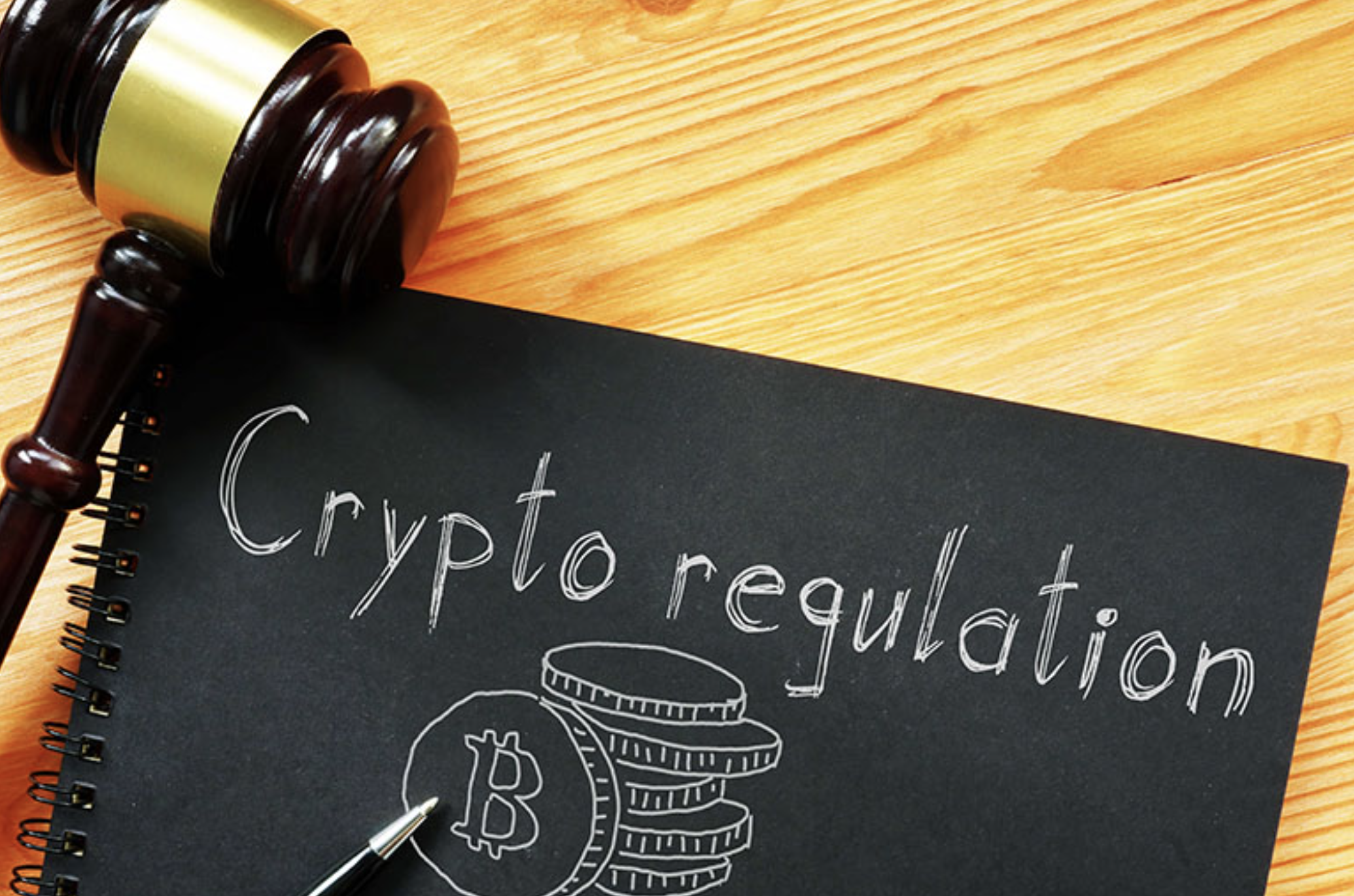
Thanks to regulation, investors get confidence. They understand how easily and safely they can trade or hold different assets and make informed decisions about whether to invest or not. This context applies to both traditional products and newer ones like crypto.
How Are ETFs Regulated?
Exchange-traded funds are the most popular version of a broader group called exchange-traded products (ETPs). Funds have evolved from index-tracking products to a major investment category that today offers investors exposure to various underlying assets like commodities, bonds, sectors, and more. This option offers three key perks to investors: diversified portfolios, low expense ratios, and easy access to their funds.
The US Securities and Exchange Commission (SEC) oversees exchange-traded funds through the Investment Company Act of 1940 and legal guardrails under the Securities Exchange Act of 1934.
European ETFs operate in accordance with the Markets in Financial Instruments Directive and the Undertakings for Collective Investment in Transferable Securities.
The most important thing to understand is that in different countries, special government agencies have strictly defined the following:
- Fund structure with certain rules on diversification, leverage limits, and mechanisms.
- Complete prospectuses, daily holdings reports, and performance information.
- Exchange standards for operations, listings, surveillance, and trading.
- Rules that govern supervision, audits, product restrictions, and other matters.
Of course, regulators have also clearly identified the types of ETFs. Government agencies oversee long-standing spot ETPs, complex futures-based ETFs, and, more recently, approved crypto ETFs that provide exchange-traded exposure to digital assets.
Who Oversees ETFs?
The US market of exchange-traded funds depends on the SEC. It oversees fund registration and investor protection. When it comes to listing and trading rules, ETFs consult major exchanges such as the NYSE and Nasdaq for guidance.
The European regulatory framework relies on the European Securities and Markets Authority and local bodies like the Commission de Surveillance du Secteur Financier.
ETFs are usually seen as structured and institutionalized products within the financial system because they are under strict oversight and follow the long-established rules of the securities markets.
What Investor Protections Usually Apply to ETFs?
ETFs generally offer:
- Standardized audits and regular disclosures to prevent fraud and misconduct.
- Custody requirements that only allow qualified custodians to hold assets.
- Trading under standards with continuous monitoring of prices to avoid manipulation.
- Limits on conflict of interest, ethical considerations, and the promotion of fair dealing.
The regulatory setup helps improve conditions for investment and issuer-to-holder communication but does not exclude market risk or the possibility of a loss.
Regulators simply help to make the market more transparent and honest, but they do not affect the properties of assets. For example, they won’t lower the roll costs and tracking error risk related to a particular futures ETF or the volatility of spot Bitcoin ETFs. They can only help investors in simple decision-making rather than guarantee returns.
How Is Crypto Regulated?
There’s no single framework. Crypto like Ether and various altcoins has historically developed and gained global popularity faster than regulators could respond. The bureaucratic system is considered slow and simply cannot keep up with the changes in the new market.
But governing authorities are busy contemplating common concerns. These can include finding the best means of licensing digital assets, safeguarding users, and mitigating fraudulent activity. They work on regulation of issuance, distribution, use, staking, lending of tokens, as well as introducing and enforcing crypto taxes.
And their attempts are starting to pay off. There are already many examples of crypto exchanges and service providers that require KYC and AML procedures, recordkeeping, disclosures, and sometimes capital or custody safeguards to work legally.
In the US, the SEC applies laws to some cryptos like collectibles, tools, stablecoins, non-security assets, and crypto-related products like crypto ETFs, while the CFTC oversees digital asset derivatives and anti-fraud enforcement and also clarifies the application of laws.
Regulators not only apply existing financial laws to digital assets but also create new ones. For instance, in 2025, there was a major federal movement regarding stablecoins and the introduction of the GENIUS Act and proposals for market structures like the CLARITY Act.
In the EU, authorities require licensing, disclosure, reserve backing for stablecoins, and customer due diligence. The rules for authorization, transparency, and supervision must be followed by providers of crypto asset services and issuers of asset-referenced tokens and e-money tokens. Plus, stablecoins often attract extra attention because they look like payment products.
Key regulators include the European Securities and Markets Authority, the European Banking Authority, BaFin in Germany, and AMF in France. Meanwhile, the FCA and HMRC oversee the market in the UK, focusing on taxation, AML policies, fraud prevention.
Further, countries in Asia are developing crypto-related legislative processes and licensing frameworks. For example, Hong Kong has created a licensing system for virtual asset trading platforms and stablecoin issuers. What’s more, licensing standards, AML protocols, and consumer protection measures are being implemented in many other countries like Brazil, Argentina, and some African nations like Nigeria.
Why Crypto Regulation Varies This Much
Innovative digital tokens fall under different regimes depending on jurisdiction and type. This is due to the fact that assets of various kinds like Ether and Bitcoin, NFTs, stablecoins, utility and governance tokens, crypto ETPs, and tokens linked to real-world assets are classified in different ways:
- As assets outside traditional securities frameworks
- As securities and commodities subject to SEC-like rules
- As part of dedicated digital asset regulation
Centralized trading platforms and decentralized exchanges are also governed not in the same way. The reason behind it is that CEXs hold user funds and offer fiat on-ramps, so regulators treat them like traditional intermediaries, while DEXs run on smart contracts with no central operator, so regulators cannot apply the same rules.
What Does MiCA Change For Crypto in the EU?
The main European regulators together oversee MiCA (Markets in Crypto Assets) implementation. This is a set of rules that builds the complete legal framework for most cryptocurrency-related operations in the European Union.
Why did it appear? MiCA exists to prevent financial risks like scams, money laundering activities, market manipulation, and insider trading caused by rapid cryptocurrency development and a lack of transparency. It strives to make sure that users and holders are informed about the characteristics, functions, and risks of crypto.
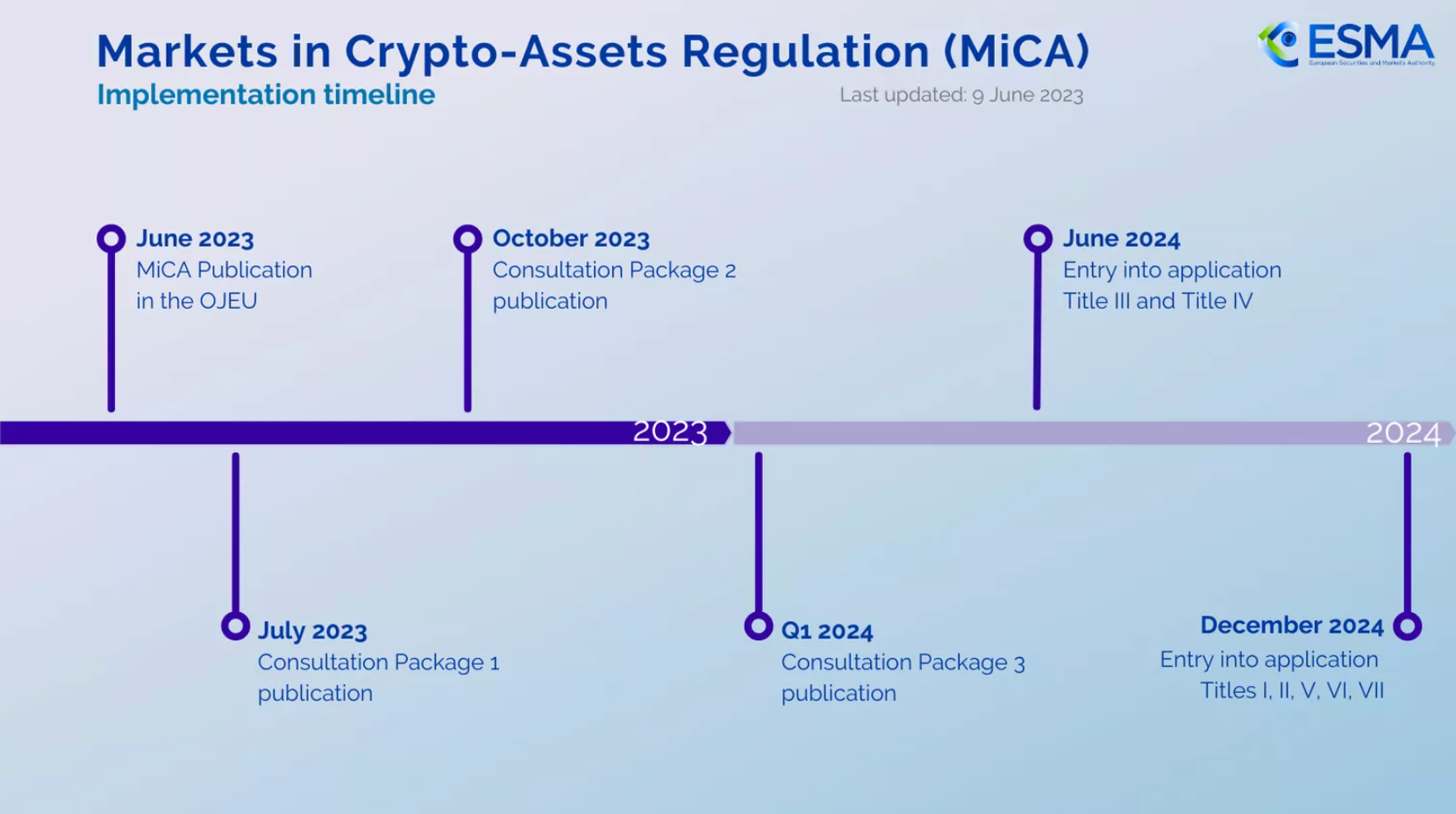
Where is it used? The 27 EU member states, including Austria, Spain, Cyprus, Germany, Ireland, and Malta, must follow MiCA regulations.
MiCA is not about prohibitions. It helps a lot. For example, the EBA gives permission for crypto asset service providers and issuers to operate. To be legal, they must follow organizational, operational, and prudential requirements.
They must publish white papers, detail functionality, maintain reserves, perform KYC, and build IT system defenses against hacking attacks. While it requires effort, it is doable. If these companies, trading venues, or wallets get licensed, they can provide services throughout the EU without unique permissions from each country. They can implement innovative practices, provide complex modern services, and attract investments in a secure environment.
MiCA has a valuable practical impact. It brings more consistency and clearer standards compared to the previous fragmented approach. Users get a better understanding of various dangers, and they only use services that have obtained proper licenses.
ETF vs. Crypto Regulation: What Is the Main Difference?
Now let’s move to a comparison. Below we will show how controlled ETFs and crypto assets like Ether and Bitcoin are and what to consider if you are a trader or investor.
In short, ETFs are regulated as investment products within a mature and uniform system, while digital asset oversight is new, fragmented, and jurisdiction-dependent.
Does Regulation Make One Option Safer Than the Other?
No, the regulatory approach has no impact on the quality of any asset. ETFs and crypto are not getting better or worse purely due to rules and laws, but they may simply be more suitable for you, and strict regulations may be one of the reasons why.
ETFs deliver dependable security measures through auditing and insurance. However, funds charge customers fees and do not allow for direct asset ownership. Plus, financial markets are not open 24/7 for trading, and you’ll need to adjust to the schedule of exchanges.
Crypto offers users the ability to control their funds, literally own assets, and access investment opportunities globally at any time. It also allows for diversification: you can trade spot Bitcoin or futures-based options, HODL various altcoins, or benefit from yield farming.
Regulation does have an impact on transparency, service provider obligations, and oversight mechanisms. At the same time, even regulated ETFs and cryptocurrencies within new frameworks can be unstable and hence carry market risk. So, you should choose financial products following your objectives and risk tolerance. Do your own research and analyze each asset separately.
What to Check Before Buying an ETF or a Crypto Product?
If you are building a portfolio, you should look beyond the product name and regulatory context and evaluate whether the asset is the right choice for you. First, determine what your goal and overall strategy are, if you can handle volatility, and what your investment period is. If you are sure that ETFs or crypto are suitable for you, then start choosing tickers.
Finding a Suitable ETF
Generally ETFs suit conservative strategies. Here’s what to look at when choosing between SPY, VOO, QQQ, TLT, BND, XLE, etc.
- Fund structure and type (physical or synthetic)
- Desired exposure (broad market, bonds, sector, crypto)
- Listing exchange, for example, NYSE, LSE, or Euronext
- Costs, expense ratio, tracking error, and bid-ask spread
- Liquidity (average trading volume, assets under management)
- Performance and historical returns relative to benchmark
- Disclosures and reports related to risks, fees, and taxes
Selecting a Crypto Product Right for You
It’s considered that crypto fits aggressive investors. When picking a digital asset like ETH, BTC, USDT, or DeFi options, pay attention to:
- Type (Bitcoin, Ether, stablecoins, memecoins, utility tokens, crypto ETFs)
- Purpose (store value, use smart contracts, make payments, stake or lend, etc.)
- Listing exchanges, such as Coinbase, Binance, OKX, Bitfinex, and others
- The provider’s registration and compliance with MiCA or US laws
- Tokenomics, trading fees, charges, withdrawal costs, staking rewards
- Liquidity (trading volume and efficiency of converting crypto to fiat)
- Disclosures like white papers, transparent terms of service
How Could ETF and Crypto Regulation Evolve Next?
Regulations do not stay static and change depending on the needs of market participants and the rise of new technologies. Regarding ETFs, the development of asset tokenization may affect the regulation. The SEC approves the introduction of tokenized versions of major funds and equities. In 2025, the SEC simplified the approval process for crypto ETFs for Solana, XRP, Litecoin, Dogecoin. Other bills that could help standardize the legal guardrails for cryptocurrencies and ETPs are also under consideration.
The SEC, ESMA, and exchanges are likely to focus on openness and investor protection. For example, by requiring issuers to describe the asset storage procedure, valuation, pricing mechanisms, related parties, and fees in detail. But overall, ETF regulation is expected to remain a mature framework with incremental refinements. Core rules will stay largely consistent.
With crypto, the regulatory environment development scenario is completely different. Most likely, we’ll see the strengthening of the control system, accompanied by active measures taken by regulators in various countries. In the EU, this includes further development of MiCA, while in the US, it involves ongoing clarification of classifications for assets.
It is possible that Know Your Customer and transaction control requirements for exchanges and wallets may tighten to prevent fraud. Plus, the issues of transparency in stablecoins reserve management are currently being discussed. And as DeFi continues to grow in popularity, there is a need to adapt regulatory approaches for this sector. However, it is unlikely that there will be global unity in the regulation of cryptocurrencies in the short term.
Why Does Regulation Matter So Much for Investors?
To wrap it up, it’s important to say that ETFs and crypto should not be evaluated only by returns, convenience, or popularity. In fact, regulation also influences the investor experience. It clearly states how legal your investments are, what protection measures apply, and who oversees the product.
Thanks to rules and reports, you can learn more about asset types, their properties, risks, the reputation of the platform, and its reliability. You can also use proven and licensed platforms, which is a great advantage.
Although regulations do not completely eliminate risks and do not make different assets worse or better, we recommend taking them into account when making investment decisions. Choose assets that are suitable for you in terms of features, risks, and investment horizon, but also look at how understandable, transparent, and audited the asset is.
Disclaimer: The content provided in this article is for educational and informational purposes only and should not be considered financial or investment advice. Interacting with blockchain, crypto assets, and Web3 applications involves risks, including the potential loss of funds. Venga encourages readers to conduct thorough research and understand the risks before engaging with any crypto assets or blockchain technologies. For more details, please refer to our terms of service.