
Table of Contents
Who really owns my crypto? The question we all ask when we start hearing the complex routes of crypto.
In traditional finance, ownership is defined by record, your name shows up, your balance in account and a bank verifies and maintains control on your behalf.
Crypto does not answer yes to this rule, Here ownership is way beyond what you see on the screen, far from your name on a statement or a neat little balance in an app.
Ownership lies on the question "Who actually controls access?" Specifically, who holds the private keys that allow transactions to be signed and gives orders for funds to be moved.
Simply put, control is tied directly to keys, wallets, and custody arrangements. If the keys are lost, access to the assets is lost. If the keys are given to a third party, control is effectively transferred with them.
This raises a key question that runs through the rest of this article: what does it actually mean to own crypto if access depends entirely on keys, wallets, and custody arrangements?
What Is Custody in Crypto?
Custody in crypto refers to how digital assets are stored, accessed, and controlled. In other words, who actually has the power to move them.
Custody solely depends on who has control over the cryptographic private keys, these keys determine who can access and move funds on the blockchain.
The giant with the ability to command its movement is the one in control, not a bank statement that states your name and attaches a balance to it.
What Does It Mean to “Own” Crypto?
Yes! "Own" in quotes. You can not lay claims to a crypto that you do not have control over the private keys to them. That key is what allows transactions to be signed and funds to be moved on the blockchain.
If a user controls the private key, they can directly authorize transactions without needing permission from anyone else. The assets are fully accessible at any time, as long as the key is available.
What if this key is held by a service, an exchange or a custodian? The same answer applies. Then access depends on that third party. The user may see a balance and use an interface, but actual power sits with the provider.
Now it is clear that ownership is not what appears on paper or on app interface. He who has the power to act upon the funds, has custody. If you can’t act on it, you don’t really control it.
Why do Private Keys Matter So Much?
Simply put, private keys are the air crypto breaths. The uncomfortable truth is that the interface does not matter nearly as much as people think.
The keys let you send, receive, or spend funds. Without them, a wallet is basically just a fancy window showing numbers you can admire but can't control.
Imagine what happens if you lose the private keys. It is safe to say you can lose your assets. There is no reset button, no customer support nor clicking on "forgot password" and receiving the reset email.
However, in a custodial setup,users often never touch the keys, This means that the power sits on the shoulders of a third party (services, exchanges) while the user just interacts with the interface.
Private keys are the entire lock, key and the front door.
How Is Self-Custody Different From Third-Party Custody?
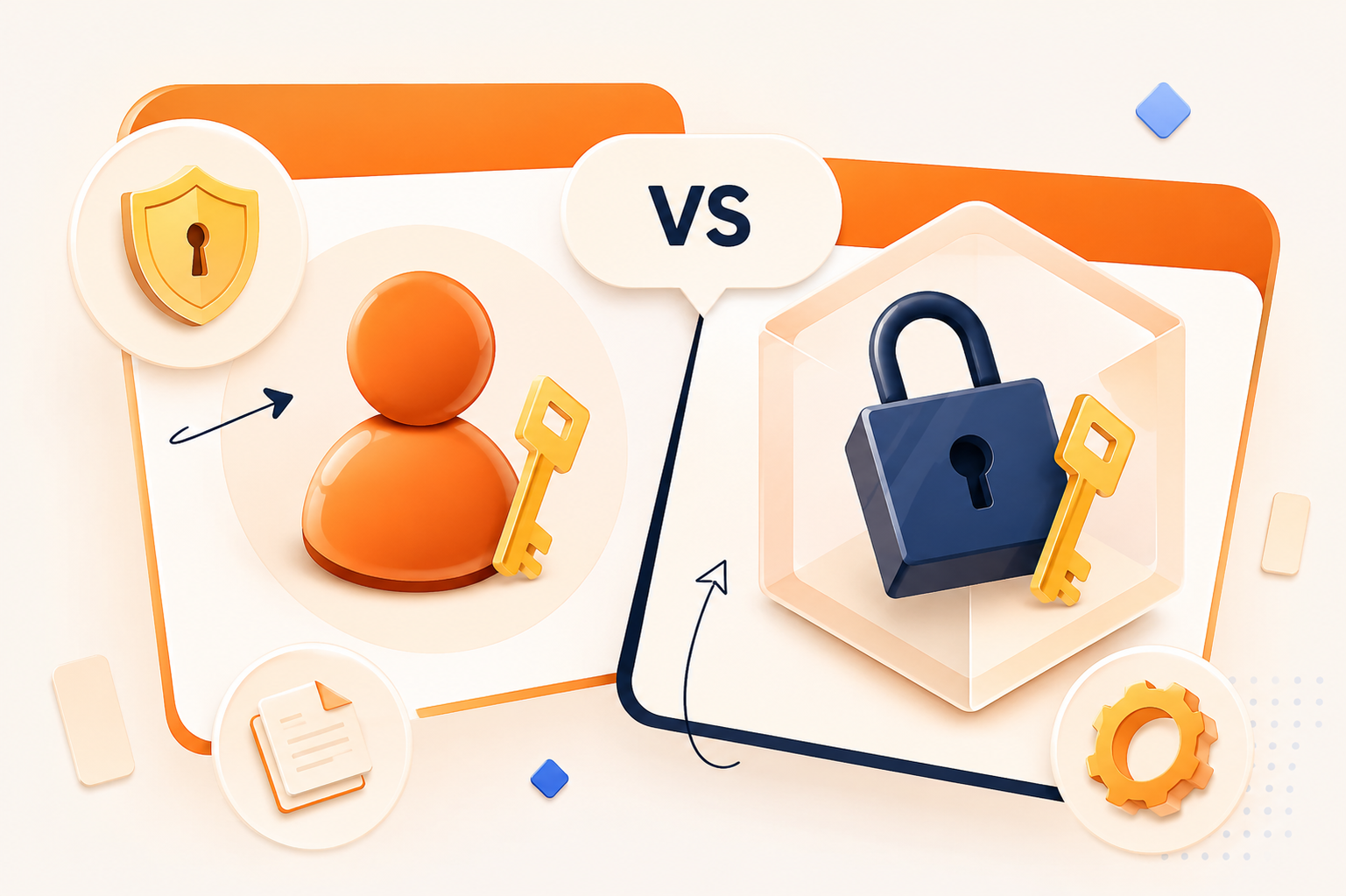
It is undisputable now who owns the assets, The one that holds the private key. A user can hold their private key or a third party can manage the private key. Let's look at these situations in detail.
Self-Custody
Just as it suggests, The user says "Thanks I will do it myself". Here the user holds their own private keys or seed phrase, giving them direct control over their crypto without relying on an exchange or third party to approve access.
An advantage of self-custody is that many in crypto consider this form of ownership as the clearest form of ownership. No intermediaries, no dependency, no one standing between the user and their assets.
But freedom comes with responsibility and crypto does not do training wheels,
Because the user takes this power, the full responsibilities fall on their shoulders. Access to assets relies on their infrastructure, security practices, operational stability, and policies.
If the platform experiences technical issues, freezes withdrawals, faces regulatory pressure, or suffers a security breach, users may temporarily or in extreme cases permanently lose access to their assets.
I bet being your own bank sounds exciting right up until you realize the bank’s security team is also you.
Before you get too overwhelmed, let us look at the other side of the coin.
Third-Party Custody
As seen earlier, third-party custody gives the control of the keys to a third party who can be an exchange, custodian, or service provider on behalf of the user.
This screams convenience. Users can log in with familiar account systems, recover passwords more easily, and avoid managing complex security processes themselves. The very best approach for beginners especially, at the same time making crypto feel far more accessible.
At the same time, convenience introduces dependence.
Since the provider manager manages the keys, what is expected? access to the assets depends heavily on their systems, security standards, and operational reliability.
If the platform experiences technical outages, pauses withdrawals, faces regulatory issues, or suffers a security breach, that will definitely have a direct infect on the users, they may not be able to access their crypto assets.
This undoubtedly means He who controls the keys does not only control the power but also bears the responsibilities to ensure things run flawlessly.
Hold up, your ownership doesn't magically vanish into thin air. But choosing a third-party custody means you have willingly handed the steering wheel to someone else.
In crypto, trust instantly becomes the only thing anyone is screaming about the second a platform goes down and takes your seamless access with it.
How Hot and Cold Wallets Shape the Custody Experience
It would be worth noting that custody does not end in who owns the key, controls the assets, It goes as far as answering the question how they are structured and how easily they can be accessed when needed.
Control is only as useful as the actions taken with that control, which brings us to wallets, the layer that shapes how custody is used.
What are crypto wallets?
A crypto wallet is a digital tool that lets you access and interact with a blockchain. Unlike a leather wallet that holds physical cash, a crypto wallet doesn't actually hold your money. Instead, it holds your private keys, the digital passwords that prove ownership and allow you to move your funds.
Hot wallets are those connected to the internet and they stay connected to the internet.
which makes them fast, flexible, and easy to use. Think apps like Venga, MetaMask or exchange wallets where you can send funds, swap tokens, or interact with DeFi protocols in seconds. That convenience is exactly the point.
Cold wallets on the contrary keep your private keys offline. Devices like Ledger or Trezor do not stay in the internet, they keep the private keys away from constant internet exposure.
However, the trade-off in ownership is a balancing act between speed, usability, and security, depending on how much convenience and protection a user is willing to prioritize.Faster access often means more exposure, while stronger security usually asks for more patience. Somewhere in between is where most wallet setups live.
Why is Custody important?
When you first stumble into crypto, picking a custody model feels like one of those boring setup screens you rush through without thinking. Easy to ignore, easy to underestimate, until something goes wrong.
This choice quietly controls everything: how safe your money is, whether you can get it back if something goes wrong, how fast you can move it, and who you’re stuck dealing with when things break.
It is a simple yet brutal trade-off, do you want full control and full responsibility, or do you want convenience and someone else holding the keys?
Custody is important because it is the footstool of your crypto assets.
What Should You Check Before Trusting a Custody Setup?
Choosing crypto custody should be done after a number of considerations. Do not get carried away by Sleek dashboards or big promises, Start with the basics that actually matter:
Are there hidden limits on withdrawals or how you can use your own assets once they’re in this custody?
How is security enforced, real protections like encryption and multi-signature setups, or just reassuring words on a landing page?
What happens if the provider gets hacked, shuts down, or simply freezes accounts?
Who holds the keys? If something goes wrong, do you recover your funds yourself, or are you waiting on a support team that may or may not be able to save you?
Before taking a move, you should know whether your assets are truly in your ownership or simply accessible at someone else’s discretion.
Conclusion
As we will conclude, in crypto ownership is not what you will see in an app, ownership is on what you can actually control. The closer you are to the keys, the closer you are to real ownership, and that means both greater control and greater responsibility.
Knowing how different the Self-custody is from the third-custody, this article leaves you in a better position to choose the ownership that sits well with you.
Disclaimer: The content provided in this article is for educational and informational purposes only and should not be considered financial or investment advice. Interacting with blockchain, crypto assets, and Web3 applications involves risks, including the potential loss of funds. Venga encourages readers to conduct thorough research and understand the risks before engaging with any crypto assets or blockchain technologies. For more details, please refer to our terms of service.