

Table of Contents
Compound interest is earning interest on the starting balance and previously added interest. Initially you may have guaranteed interest on a deposit. Say 10% for an example (it often isn't this high however). This is different from the reinvestment of uncertain investment returns, when you don't know how much you will earn on your money.
Simple Interest vs Compound Interest
Simple interest is calculated annually on the amount you deposit or owe. Interested in how compound interest works? With compound interest, interest earned is added to the principal, forming a new base on which the next round of interest is calculated. This can accrue daily, monthly, quarterly etc. Below is a table comparing simple interest and compound interest starting at 100 euros with a hypothetical rate of 10% interest over 5 years. Notice that the compound interest grows faster.
The Compound Interest Formula
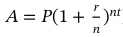
There is a compound interest formula to determine compound interest over time. Principal (P) is the amount of money deposited, invested or borrowed. The rate (r) is the percentage used to calculate the charges or earnings. The compounding frequency (n) counts how many times per year interest is calculated and added to the principal balance. Time (t) measures the duration of the investment. So the compound interest formula is:
Principal = 100Rate = 10%
Compounding frequency (n) = 1 Time (t) = 5 years(See the table above for the compound interest numbers according to the formula.)
The Rule of 72 as a Quick Estimate
The rule of 72 explains how many years it takes for your investment to double. It is a quick shortcut. For example, at a 10% return your money doubles in about 7.2 years (72/10=7.2)However, using the compound interest formula, 100 euros at 10% compounded annually takes exactly 7.273 years, making the rule of 72 slightly inaccurate. It's close, but not exact.
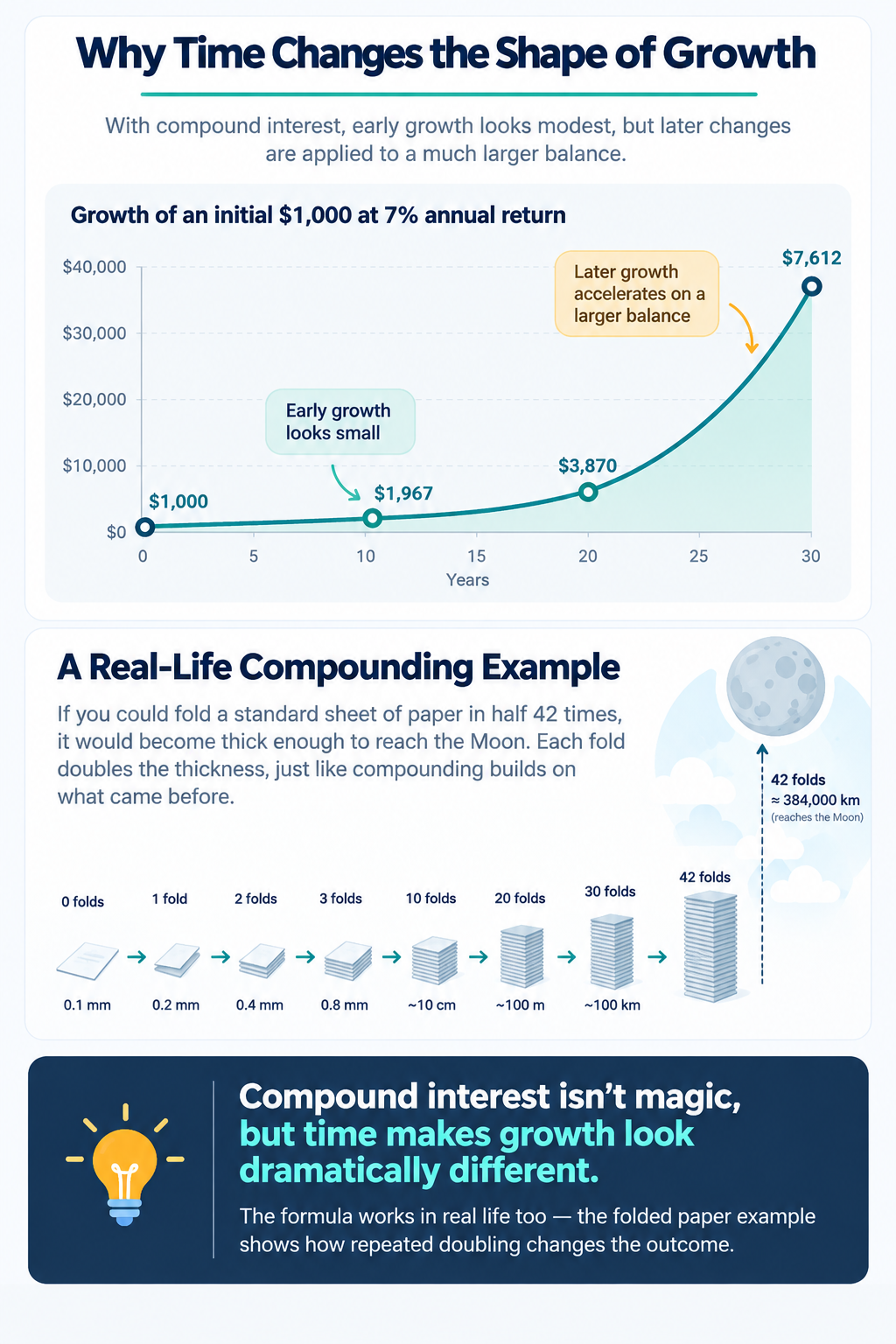
Why Time Changes the Shape of Growth
With compound interest, early growth looks modest but later changes are applied to a larger balance. A fun real life example of how compounding works has to do with folding a piece of paper. If you could actually fold a standard piece of paper in half 42 times, it would be thick enough to reach the moon! Isn't that crazy!? That is because the thickness of the paper compounds each time it is folded. Compound interest isn't magic, but it is amazing. As you can see, the compound interest formula works in real life examples too, like the folded paper example.
What Regular Contributions Change
If you input a lump sum as the initial principal and don't add any more money besides what is compounded, your money will take longer to grow. This is why many people choose to make regular contributions to their investments. Contribution timing and frequency impact the result. For example, if you contribute to your investment only twice, the result will be less over a couple years than if you contribute every month over that same time period.
Compounding in Investments Is Not a Fixed Interest Rate
Things like reinvested dividends, fund returns, and crypto rewards are variable and have product-dependent outcomes. This means the interest rate is not always fixed. It's sort of like a swim or running race. The amount of training and work you put in impacts your eventual result. If you eat poorly and never practice, you might be more likely to lose the race, but if you work out steadily and eat well you could be a contender. 🙂 It's also important to keep in mind that losses also compound, and the order of returns matters when money is added or withdrawn.
Negative Compounding: Debt and Repeated Losses
Just like it can increase gains, compounding can increase debt balances as well. Recovering from a percentage loss requires a larger percentage gain, because you have to overcome the loss and go back into the green from the red. For example if you lost 100 euros and then gained 100 euros you would still be at zero euros afer paying the loss. You need to earn more than the 100 euros to be in a positive again. If you earn back 105 euros you would be up 5 euros on your investment.
Fees and Inflation Compound Too
Here is an example in a table of how fees and inflation compound too.
Nominal balance compounds at the full stated growth rate, no drag. Balance after fee shows the fee compounding too. Purchasing power deflates the after-fee balance by inflation, also compounding annually.
How Taxes, Withdrawals and Missed Contributions Interrupt Growth
Money removed from the base reduces future compounding and tax timing depends on the product and Spanish rules. For example, say you had a scenario where you had a principal of 100 euros at 10% interest. After the first year you would have 110 euros and then the second year using compound interest would leave you with 121 euros. But say you took out 50 euros from the principal at the beginning. After the first year you would have only 55 euros and the second year you would have 60.50 euros. Removing money from the principal greatly impacts your overall returns.
Compounding Frequency: When It Matters
With daily compounding interest is added to your account every day, monthly it is added once a month, and annually interest is added to your account just once per year. Different financial products, banks, and other financial institutions use different rules to calculate your money. The legal contract says how your interest is calculated.
Limits of Compound-Interest Calculators
Compound interest calculators provide ideal projections but ignore things like market swings, taxes, and irregular deposits. Calculators use one percentage for every year. Tools calculate growth rates without factoring in taxes. Plus any fees are left out of calculator projections. Calculators cannot predict investment outcomes.They do not take into account volatility. Computers (in this case calculators) round numbers up or down during calculations, impacting the overall results.
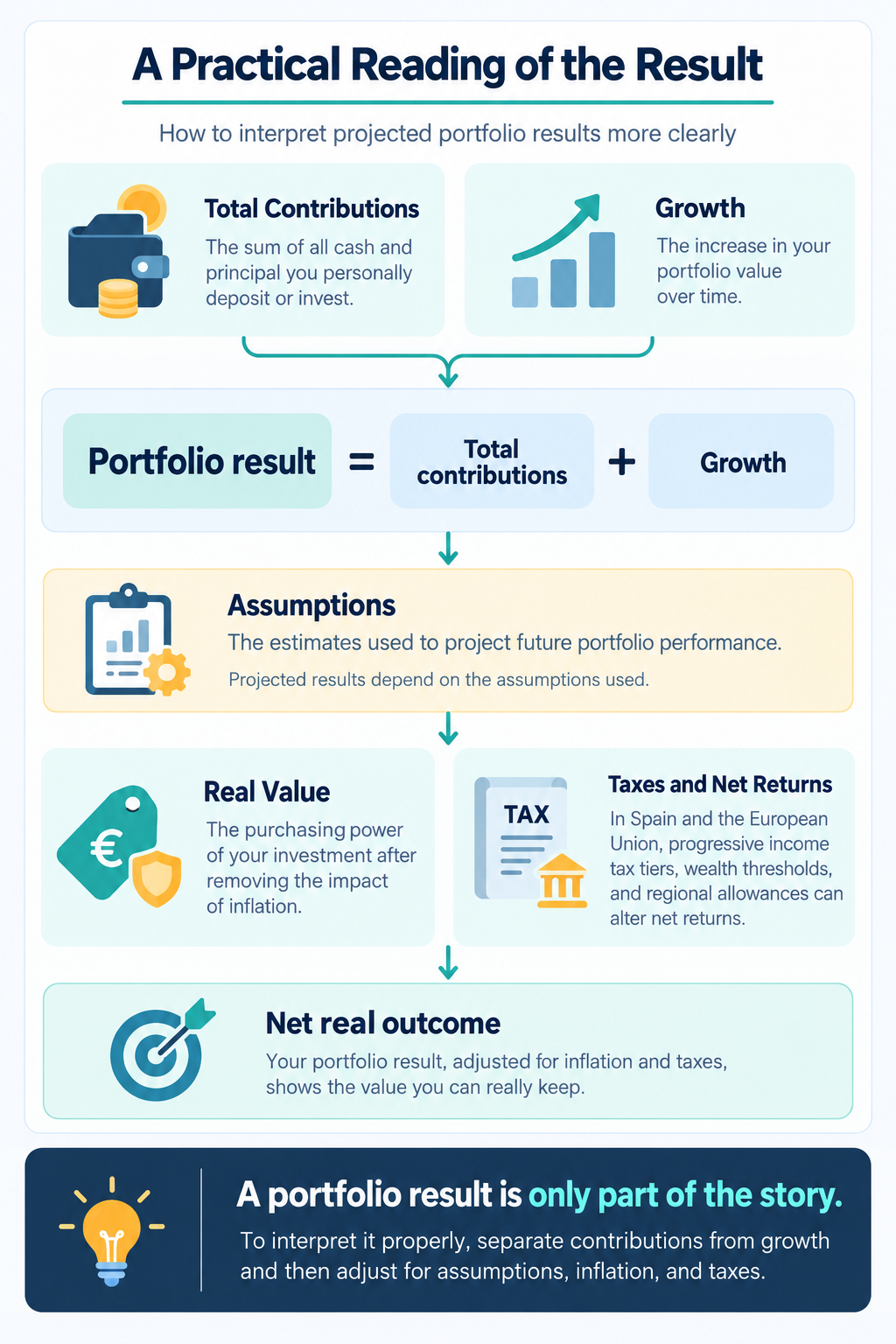
A Practical Reading of the Result
Total contributions are the sum of all cash and principal you personally deposit or invest. Growth is the increase in your portfolio value. Assumptions are the estimates used to project future portfolio performance. Real value is the purchasing power of your investment after taking away the impact of inflation. Spain and the European Union use progressive income tax tiers (PIT), wealth thresholds, and regional allowances that alter net returns.
Conclusion: Compounding Is Powerful Only Within Its Assumptions
Principal is the starting amount of money you invest or borrow. Rate is the percentage of interest. Time is the total duration that the money is invested.Reinvestment is putting earned income back into the account. Contributions are extra money you add to the account usually on a regular basis. Costs are the fees or expenses paid for a service. The compound interest formula is exact for its inputs, but investment returns and future behavior are uncertain.
Disclaimer: The content provided in this article is for educational and informational purposes only and should not be considered financial or investment advice. Interacting with blockchain, crypto assets, and Web3 applications involves risks, including the potential loss of funds. Venga encourages readers to conduct thorough research and understand the risks before engaging with any crypto assets or blockchain technologies. For more details, please refer to our terms of service.