
Table of Contents
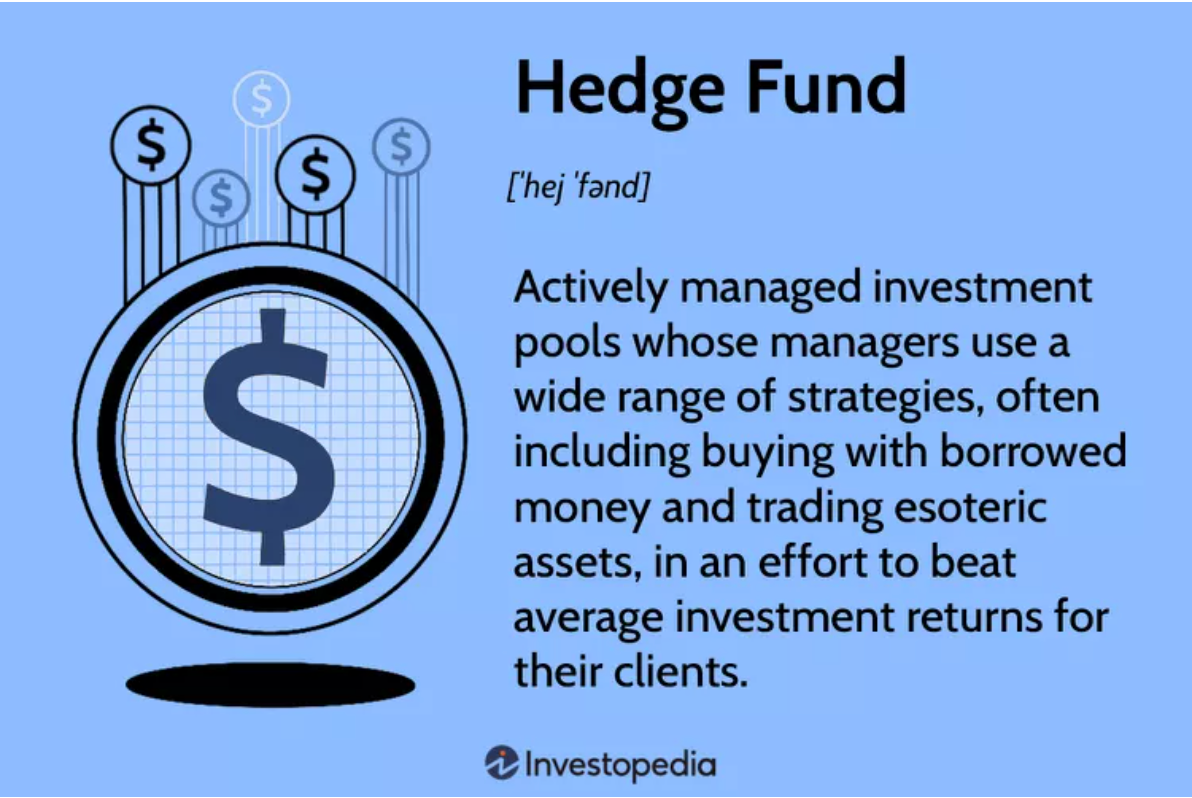
A hedge fund operates as a privately managed investment pool that brings together capital from accredited participants and puts it to work through diverse approaches, from short selling to arbitrage. The word "hedge" suggests risk reduction, but modern funds often pursue aggressive returns just as much as they protect against losses. Crypto strategies represent something entirely different. They act as methods of working with digital assets within a decentralized market, accessible to anyone with an internet connection. When people ask what are hedge funds in relation to digital assets, they often mistakenly compare a regulated financial structure with a set of technical tactics.
This article explains the core mechanics of both concepts. Understanding the distinction between a formal entity and an investment approach clarifies why they carry vastly different regulatory oversight, accessibility rules, and underlying asset classes. Both realms involve deploying capital and managing risk, but they function on fundamentally different levels of the financial ecosystem.
What Is a Hedge Fund?
A hedge fund functions as a pooled investment vehicle where multiple investors contribute capital into a single entity managed by a professional team. The fund manager deploys that money across various asset classes with one primary goal: generating absolute returns, regardless of broader market conditions. Unlike a standard index fund that tracks a benchmark, this structure aims to generate profit whether markets rise or fall.
The industry continues to grow, with projections showing total assets reaching $5 trillion by the end of 2027 following significant net inflows in recent years. Early funds used paired long and short positions to reduce market exposure. That origin remains visible today, but the category now includes macroeconomic trends, corporate events, and quantitative signals. The common thread relies on active management and strategic flexibility rather than a single rigid approach.
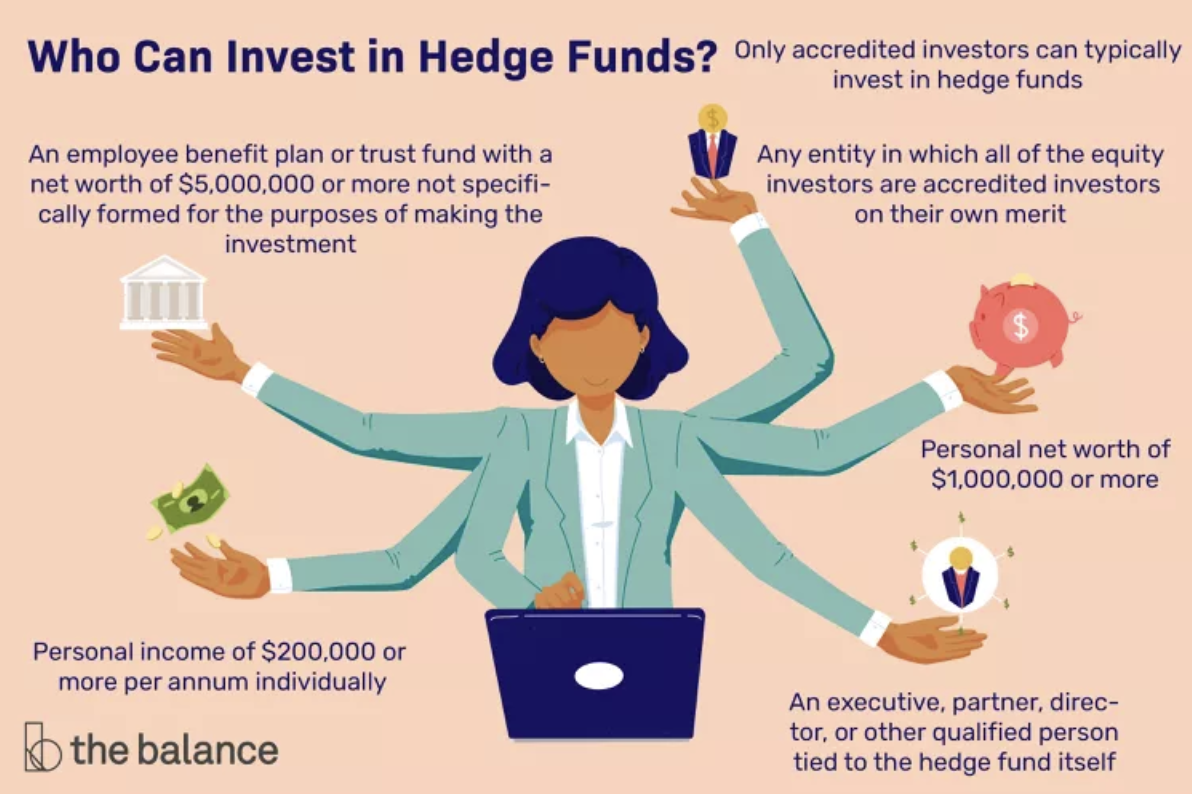
These vehicles target a specific audience. Access remains limited to accredited investors who meet strict income or net worth criteria. This exclusivity shapes the fund's structure, regulatory reporting, and overall approach to managing capital, keeping these products out of reach for the general retail market.
Key Characteristics of Modern Hedge Funds
Modern funds share several defining features that separate them from traditional retail products. Exclusivity stands out first; access requires accredited status, which in the U.S. typically means a net worth exceeding $1 million or significant annual income. Minimum investment thresholds often start at that same $1 million mark. They also utilize a wide range of investment strategies, combining long/short equity, global macro, or event-driven approaches within a single portfolio to diversify risk.
Fee structures remain complex. The industry standard often follows a "Two and Twenty" model, charging a 2% annual management fee on assets alongside a 20% performance fee on profits, though modern variations sometimes lower these rates to 1–1.5%. Furthermore, these entities frequently use leverage and derivatives. Borrowing capital amplifies positions, magnifying both potential gains and losses. Finally, the focus stays on absolute returns. The stated goal involves positive performance in any environment, distinguishing these vehicles clearly from standard mutual funds.
How Hedge Funds Work: The Role of the Fund Manager
The fund manager directs the entire operation. This professional develops the strategy, decides how to allocate capital, and manages the associated risks. Operationally, the structure divides into three functional layers. The front office handles trading and investment decisions, identifying opportunities and executing positions. The middle office manages risk reporting and accounting, while the back office oversees settlements, pricing, and regulatory compliance.
Capital allocation strictly follows the parameters set out in the offering documents, specifying permitted asset classes and geographies. Within those boundaries, managers use proprietary models to build positions. Risk management frameworks set strict limits on market exposure, liquidity, and counterparty concentration, ensuring the portfolio remains within acceptable volatility parameters.
Professional strategy development often revolves around the "Four P's": people, philosophy, process, and portfolio. Managers also frequently invest significant personal capital alongside their clients. This direct partnership model aligns interests and serves as a strong governance signal for institutional participants seeking reliable oversight.
Common Hedge Fund Strategies Explained
These vehicles deploy varied tactics to generate returns. Long/short equity remains one of the oldest and most widely used approaches, managing an estimated 29% of total industry assets. The fund buys undervalued stocks while simultaneously short-selling overvalued ones, aiming to profit from the price difference with reduced exposure to overall market direction.
Global macro funds take positions based on broad economic trends, such as interest rate movements, currency fluctuations, and geopolitical shifts. Rather than analyzing individual companies, these managers form views on entire economies. Event-driven strategies center on corporate events like mergers, bankruptcies, and restructurings, attempting to profit from subsequent price adjustments. Finally, arbitrage seeks to exploit pricing inefficiencies. The fund identifies temporary situations where closely related assets trade at different prices across markets, taking offsetting positions to profit when prices converge.
What Are Crypto Investment Strategies? Beyond "Buy and Hold"
Crypto strategies represent methods of engaging with digital assets to generate returns or participate in decentralized financial systems. The simplest version involves buying and holding assets like Bitcoin or Ethereum. However, by 2026, the market has evolved significantly, incorporating institutional-grade approaches, tokenization of real-world assets, and complex decentralized finance protocols.
Blockchain infrastructure enables functions that conventional markets lack: on-chain settlement, programmable contracts, and permissionless global access. Total value locked in decentralized finance surpassed $180 billion in early 2026, reflecting massive growth. Unlike formal funds, these approaches carry no mandatory structure or universally applied regulatory framework. Anyone with a digital wallet can execute a multi-protocol yield strategy, which provides broad accessibility but introduces novel technical risks.
Key Approaches in the Crypto Market
Participants utilize several core methods to interact with digital assets. Decentralized finance yield farming involves providing liquidity to lending platforms or automated market makers in exchange for rewards. Typical annual percentage yields in 2026 range from 6% on established stablecoin pools to 15–20% on higher-risk aggregator platforms. Staking requires locking up assets to support the operations of a proof-of-stake blockchain network. Base staking yields currently run around 6–7% on major networks, offering a generally lower risk profile than yield farming, though it involves lock-up periods.
Algorithmic and high-frequency trading uses automated systems to execute high volumes of trades based on market signals, removing emotional decision-making but requiring robust technical infrastructure. Finally, early-stage token investing allows participation in new projects before they reach broader markets, carrying high potential upside alongside significant failure rates.
Hedge Funds vs. Crypto Strategies: A Head-to-Head Comparison for 2026
The most common point of confusion involves treating these two concepts as equivalent options. A hedge fund describes a formal structure detailing how capital is organized, who manages it, and under what regulatory framework it operates. A crypto strategy describes a method detailing how assets are traded or deployed. Comparing them directly resembles comparing a bank to a savings habit — both relate to finance, but they describe entirely different mechanisms.
A direct comparison across practical criteria helps clarify these differences for anyone navigating both environments.
Regulatory Landscape: SEC Oversight vs. The DeFi Frontier
Traditional funds operate within a well-established regulatory framework. In the United States, they fall under the oversight of the SEC and CFTC, requiring strict compliance obligations, reporting standards, and investor protection rules refined over decades.
The regulatory environment for digital assets remains a work in progress. In March 2026, the SEC and CFTC issued a landmark joint interpretation clarifying that most crypto assets do not qualify as securities, establishing a five-part token taxonomy. However, investment contracts based on promises of future efforts may still attract securities law treatment. The European Union's MiCA regulation provides a comprehensive framework, while other jurisdictions develop their own licensing regimes. For participants, the practical implication means protections available in traditional investing rarely apply in decentralized environments.
Risk vs. Reward: Volatility and Potential Returns
Traditional vehicles returned an average of 10.53% in 2025, demonstrating lower volatility than broader equity markets. Professional risk management and strategy diversification tend to smooth out performance, providing a structural appeal for institutional capital.
Digital asset markets tell a different story regarding volatility. Bitcoin experienced a decline of roughly 50% from its 2025 peak by early 2026. Crypto-focused funds using fundamental approaches recorded notable losses during this period, though market-neutral strategies held up better. The risk profile for decentralized methods substantially exceeds that of professionally managed portfolios. The potential for larger returns exists, but it comes with a significantly greater risk of capital loss, amplified by deleveraging cycles and operational vulnerabilities.
Accessibility and Liquidity: Who Can Invest and How Fast?
Formal funds target a specific demographic. Access requires meeting accredited thresholds and committing substantial capital. Once deployed, the money is not freely available; managers impose lock-up periods ranging from one to three years for illiquid strategies, followed by quarterly redemption windows with 30 to 90 days of notice. This illiquidity allows managers to execute long-term plans without forced selling.
Decentralized methods invert this dynamic. No eligibility requirements exist for accessing most blockchain networks. A user can deposit assets into a protocol or begin staking within minutes. Liquidity on major platforms remains available around the clock, and most withdrawals settle in seconds. The trade-off involves the complete absence of professional oversight.
Investing in Hedge Funds: Potential Returns and Key Risks
For those who meet the eligibility criteria, allocating capital to these vehicles offers a specific value proposition. Investors gain access to expert management, diversified approaches, and returns that often show low correlation with traditional equity markets. The industry's aggregate performance reflects genuine skill, though outcomes vary significantly across different managers.
However, investing carries meaningful risks that require careful consideration. High fees reduce net returns, and leverage can accelerate losses during market downturns. Transparency remains limited compared to publicly available mutual funds, forcing participants to rely heavily on manager reporting and independent audits.
The broader picture for 2026 looks constructive for the industry. Surveys indicate that 64% of allocators plan to increase their exposure during the year, with an estimated $24 billion in additional net inflows expected. Elevated single-stock volatility creates conditions that favor active, skilled management over passive approaches.
How to Start Investing in Hedge Funds: A Guide for Potential Investors
For individuals who qualify and wish to proceed, the process involves several distinct steps. Skipping any of these phases often creates complications later.
- Verify accredited investor status by confirming net worth or sustained annual income meets regulatory thresholds.
- Conduct due diligence on funds and managers, evaluating track records, team experience, and performance consistency.
- Understand the strategy and fee structure by carefully reading the Private Placement Memorandum to clarify risk management and exit conditions.
- Consult with a financial advisor and legal counsel to ensure the vehicle aligns with broader portfolio goals and liquidity needs.
Conclusion: Which Is Right for Your Portfolio in 2026?
The core takeaway from this analysis centers on clarification rather than recommendation. A hedge fund provides a regulated, managed vehicle for pooling capital and deploying it through professional oversight. Crypto strategies represent methods of working with digital assets, ranging from passive holding to complex decentralized participation.
For those with access to formal funds, the appeal lies in professional management and the potential for consistent, risk-adjusted returns, balanced against high fees and illiquidity. For those engaging with digital assets, the appeal involves global accessibility and exposure to a fast-moving technology, balanced against substantially higher volatility and technical risks.
Understanding these factors makes navigating the financial landscape considerably less confusing. The decision relies entirely on individual risk tolerance, available capital, and the desired level of personal involvement in managing exposure.
Frequently Asked Questions (FAQ)
Q1: Can a regular person invest in a hedge fund?
Typically, no. Participation remains restricted to accredited investors who meet specific income or net worth requirements set by financial regulators. Minimum investment thresholds often start around $1 million, creating a significant practical barrier for the general public.
Q2: Are crypto strategies safer than hedge funds?
No. Digital asset markets generally exhibit higher volatility and carry a greater overall risk profile. While traditional funds carry risks related to leverage and illiquidity, they operate within established regulatory frameworks and utilize professional risk management teams. Decentralized methods expose users to smart contract vulnerabilities and extreme price swings.
Q3: What is the main difference between a hedge fund and a mutual fund?
The primary differences involve regulation, access, and methodology. Mutual funds face strict SEC regulation, offer daily liquidity, and remain available to the general public. Hedge funds operate with lighter oversight, restrict access to wealthy participants, and utilize complex instruments like leverage and short selling to achieve absolute returns.
Q4: Is yield farming in crypto similar to earning dividends?
The concepts share similarities in generating passive income, but the mechanics differ vastly. Yield farming involves providing liquidity to decentralized protocols, carrying unique technical risks such as smart contract failures and collateral depegging. Dividends represent a portion of corporate earnings paid to shareholders, operating within traditional legal and financial frameworks.
Disclaimer: The content provided in this article is for educational and informational purposes only and should not be considered financial or investment advice. Interacting with blockchain, crypto assets, and Web3 applications involves risks, including the potential loss of funds. Venga encourages readers to conduct thorough research and understand the risks before engaging with any crypto assets or blockchain technologies. For more details, please refer to our terms of service.