
Table of Contents
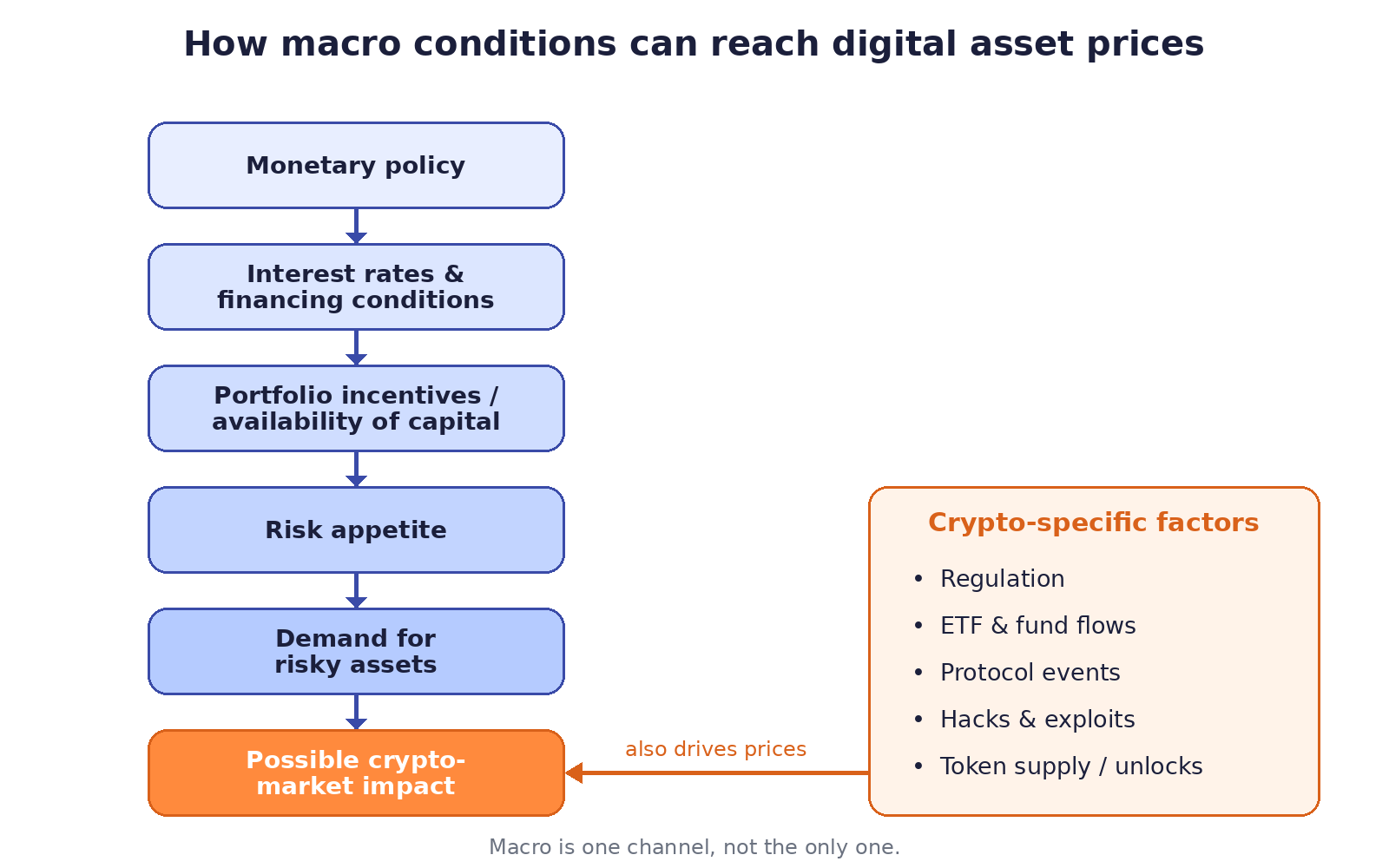
Because of how dynamic the crypto market is, many people tend to forget that Bitcoin and other altcoins don't float in some separate universe. They get bought and sold by the same money that pushes stocks, bonds and currencies around every day.
If rates go up, loans will naturally cost more. If big investors (institutional investors) get excited, demand for crypto tokens can wobble right along with all of it. Let's walk through how crypto has become macro.
Why Would Digital Assets Care About the Economy at All?
Back in 2015, Bitcoin was mostly forum chatter and a handful of brave miners. Now? It sits in hedge-fund books, spot ETFs and the same apps your cousin uses for Apple shares.
Same investors. Same portfolios. Same decisions. So when cash or bonds suddenly look like the smarter seat at the table, those investors shuffle things around. Tokens get swept into that shuffle too.
How Can Interest Rates Affect Crypto-Assets?
The first thing you need to understand is opportunity cost. Picture a boring government bill paying you 5% for doing basically nothing. Your token pays zero and can drop 10% before Friday.
When safe money pays well, every risky bet has to work harder to look worth it. There's a second hit, too. Tight policy means pricier loans, and traders running on borrowed cash start trimming.
Fewer borrowed dollars sloshing around? Usually fewer buyers. Lower rates can work in reverse. However, this is not always the case.
What Does "Liquidity" Actually Mean?
If you jump on crypto Twitter (X) right now, there's a 100% chance you'll come across the word liquidity. While it gets tossed around on X like confetti, people mean different things when they say liquidity.
The two main meanings of liquidity are:
- Market liquidity: can you sell a decent chunk without the price lurching? If the order book is thick and the spread is tiny, you're fine.
- Financial (or global) liquidity: this one's bigger. It's about how much cash and credit the whole system has to go around. Bank loans count. So does the Fed's balance sheet.
Why Does Risk Appetite Matter So Much?
Risk appetite is just your tolerance for a bumpy ride when there's a bigger payoff waiting on the other end. In risk-on mode, you may wander off into trading memcoins, stocks, and junk bonds.
Then somebody gets nervous (risk-off) and it runs home to trading only Bitcoin and Ethereum. Tokens live way out on the risky edge, so they usually feel the mood swing early. And hard.
Why Does Crypto Increasingly Move With Equities?
Because the same big players now hold both. The IMF crunched the numbers: Bitcoin and the S&P 500 barely moved together in 2017–2019. By 2020–2021? Correlation had climbed to roughly 0.36 — right as institutions showed up.
The link tends to be strongest with tech and smaller-company stocks. When a fund manager trims tech, tokens may get trimmed too.
Is a Rate Cut Always Bullish?
Short answer? No. A central bank might cut because inflation is cooling nicely. Call that a comfort cut. Or it might cut because growth is cracking or something in the financial system broke.
That's a "rescue" cut, and investors often go risk-off. Don't just ask whether the bank cut. Ask why. Plus, an expected cut is usually priced in long before it happens.
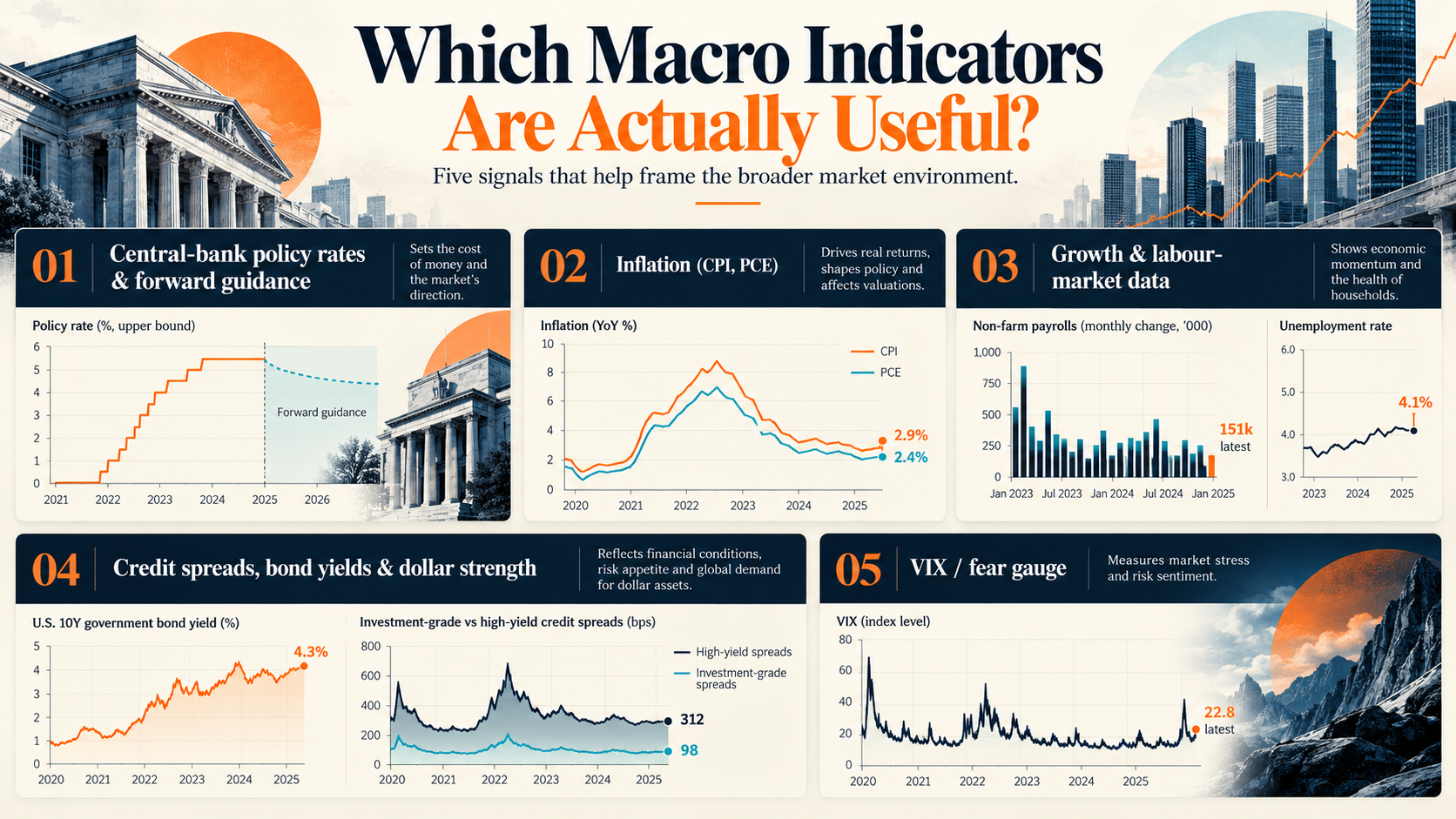
Which Macro Indicators Are Actually Useful?
The five major macro indicators to look at are:
- Central-bank policy rates and forward guidance
- Inflation (CPI, PCE)
- Growth and labour-market data
- Credit spreads, bond yields and how strong the dollar is
- The VIX, Wall Street's so-called fear gauge
Practical Scenario: One Token in Two Macro Regimes
Meet Zenith (ZEN), a made-up token we'll be using for two macro regimes.
- Regime A: Inflation is easing. Financing is getting less restrictive. Investors are warming up to risk again. ZEN may draw fresh buyers simply because cheaper money is hunting for returns.
- Regime B: Inflation surprises higher. Rates look set to stay restrictive. Credit tightens and funds cut risky exposure. ZEN may face steady selling.
Nothing about the project changed, just conditions. That's the macro channel at work.
When Does Macro Fail to Explain Price Moves?
Often, honestly. Macro sets the backdrop, but tokens have their own plot twists:
- Regulation and court rulings
- Exchange failures (FTX in 2022 is the textbook case)
- Protocol upgrades and forks
- Token unlocks or new issuance
- Hacks and security incidents
- ETF and fund flows
- Project-specific news
Any one of these can drown out the macro signal in a single afternoon.
What Does "Crypto Is Macro Now" Really Mean and What Doesn't It Mean?
Crypto is macro now simply means it's no longer self-contained. Global monetary policies, financing conditions and global risk appetite can now affect its moves and shape demand and valuations. However, it doesn't mean cryptos are just leveraged tech stocks, or that one Fed meeting decides everything. These correlations come and go, but crypto is no longer self-contained.
Disclaimer: The content provided in this article is for educational and informational purposes only and should not be considered financial or investment advice. Interacting with blockchain, crypto assets, and Web3 applications involves risks, including the potential loss of funds. Venga encourages readers to conduct thorough research and understand the risks before engaging with any crypto assets or blockchain technologies. For more details, please refer to our terms of service.