
Table of Contents
An altcoin, or an alternative coin, is simply any other crypto other than Bitcoin. While its meaning is simple, altcoins have developed a reputation for their "mooning abilities." They combine rapid price moves with incredibly thin liquidity, wide spreads, and concentrated ownership.
While crypto traders often share ideas for the next altcoins to buy them their next imaginary yacht, the reality of trading these incredibly volatile assets is harder than it looks. Entry may be easy, but the combination of volatility and thin liquidity makes getting out a real struggle.
But not altcoins drink from this cocktail. So, understanding altcoin trading risks starts with acknowledging this massive spectrum.
Why Altcoins Differ So Much
While the term 'altcoin' is mostly used for every non-Bitcoin digital asset, there are currently 10,000+ active altcoins, and they are not all built the same.
Altcoins differ wildly in market size, the platforms they trade on, and their foundational token design. Some have vast, decentralised networks of nodes. Others run on a handful of servers controlled by a single team.
Circulating supply, actual utility, and governance structures also change the risk profile entirely. A token used strictly to pay transaction fees on a busy network behaves differently than a governance token with no real-world application.
Treating all altcoins as identical financial instruments is a surefire way to miscalculate your exposure. You have to look under the hood of each specific project.
The Trading Pair and Venue Change the Risk
Trading the exact same token can be a completely different experience depending on what you are trading it against. Compare trading a token against euros versus a stablecoin, or even against another cryptoasset like Ethereum.
Your quote-asset risk changes dramatically. If you trade an altcoin against Ethereum, you are suddenly exposed to the price movements of both assets simultaneously. The venue matters just as much as the asset.
Liquidity isn't a global pool, it represents several smaller pools across different exchanges. Fragmented liquidity means the price on Exchange A might not match Exchange B. Furthermore, different venues have wildly different withdrawal rules, custody conditions, and downtime histories.
Low Liquidity Is More Than Low Volume

People often confuse low volume with low liquidity, but the two are not exactly interchangeable. Liquidity encompasses the spread, the depth of the order book, typical order sizes, and the overall turnover of the asset. Crucially, it defines your ability to trade without moving the price against yourself.
On the other hand, reported volume can be highly misleading. Across various venues, reported figures might be incomplete, inflated, or entirely unreliable due to wash trading.
When you encounter low liquidity, it means the market cannot absorb significant buys or sells. A token might show millions in "daily volume," yet a simple $5,000 market order could crash the price locally.
Market Capitalisation Does Not Equal Tradable Liquidity
A massive market capitalisation looks impressive on paper. However, a large reported market value can easily coexist with a shallow order book and limited circulating supply.
For example, if I create an altcoin with 1,000,000,000 tokens but only let 1,000,000 circulate, the market cap might look huge if that one million trades at a high price. But the actual tradable liquidity is practically non-existent. Here's how it plays out in reality.
How Thin Order Books Create Slippage
When you place a market order to buy or sell an altcoin, you are essentially telling the exchange: "Give me this token right now, at whatever the best available prices happen to be." If the order book is thin, your order will eat through the first price level and enter the next price level. Hence, the term, slippage.
This painful difference between your expected price and your actual filled price is known as slippage. Imagine you want to buy 1,000 tokens of "Token X". The quoted price flashing on your screen is $1.00. But here is what the sell side of the order book actually looks like:
- 200 tokens available at $1.00
- 300 tokens available at $1.05
- 500 tokens available at $1.15
So, when you click buy, you're not getting 1,000 tokens at $1.00. Instead, you get 200 tokens for $200, 300 for $315, and 500 for $575. Your total cost is $1,090. Your average fill price is $1.09, completely disconnected from the $1.00 you initially saw.
That 9% hit is raw slippage. In the world of altcoin trading, where prices can move very quickly, if the order book is thin, it will eat into your capital incredibly fast if you aren't paying attention.
Why Price Moves Can Be Violent
The crypto market as a whole is almost synonymous with volatility at this point. While it's a trait with cryptos, the price movement (both rise and drop) of smaller altcoins tends to be more violent than other altcoins. Why?
The extreme crypto volatility we see in smaller altcoins is usually the mathematical result of low depth combined with sudden market catalysts. Concentrated holdings mean that if just one early investor decides to exit, the entire order book can be nearly wiped out.
Also, automated liquidations in leveraged markets can force-sell assets regardless of the underlying demand, driving prices into the ground. The reason that triggers the violent price move can be a surprise exchange listing, sudden token unlocks, unverified news, or outright market manipulation.
Primary sources like blockchain analytics firms often share the main reason why certain altcoins are more volatile. The 40% daily drop is often more than "market sentiment." Analytics firms often post large whale cashing out, which sparks a massive drop for some altcoins.
Token Unlocks and Changes in Circulating Supply
Many altcoins launch with a fraction of their total supply in circulation. The rest is locked up for the team, early investors, and future emissions. Understanding vesting schedules and scheduled unlocks is non-negotiable in altcoin trading.
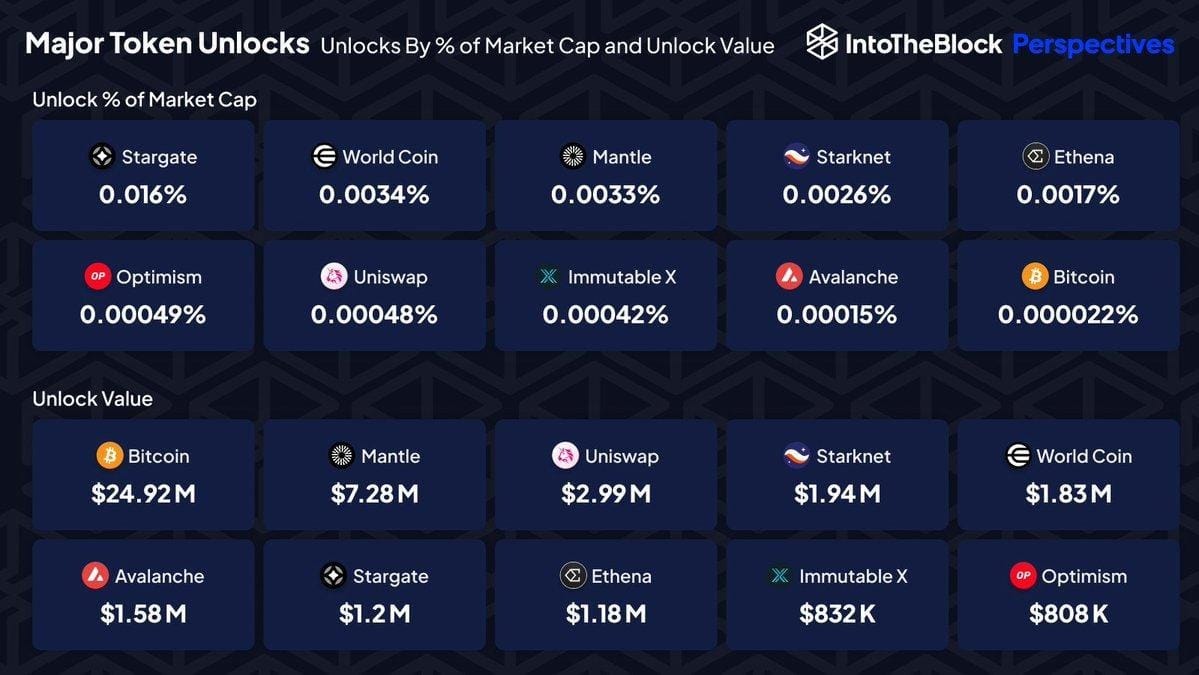
When locked tokens are finally released into the market, the available supply instantly inflates. If you don't track this, you are flying blind. For any concrete example, you must refer to the primary token documents and a dated release schedule.
If a project's whitepaper states that 10% of the total supply unlocks on the 15th of next month, you should expect downward pressure on the price around that date. The math is simple: more supply meeting the same demand lowers the unit price.
Common Errors in Altcoin Trading
Because of how unique the crypto space is, traders coming from trading traditional assets often carry over ingrained habits. While your strategy might still work, approaching crypto like traditional finance is one mistake that often backfires. So, here are some of the common errors people make in altcoin trading.
- The most glaring error in altcoin trading is opening a market order without taking two seconds to glance at the order book depth. Because of the sheer number of altcoins, you need to verify the order book depth before jumping in.
- Another incredibly common mistake is sizing a position based solely on the displayed quote price. If you buy big, you'll likely push the price up. If you sell big, you push it down in a thin market.
- People also frequently ignore the specific venue and trading pair, assuming prices are perfectly harmonised across the globe.
- Lastly, never assume a stop-loss order magically guarantees your exit at that exact price, and please, don't confuse an altcoin with a low unit price (like $0.00001) for a mathematically "cheap" valuation.
Leverage in an Illiquid Altcoin Market
Adding leverage to any altcoin that naturally suffers from high crypto volatility is a distinctly risky choice. Adding it to an illiquid order book is outright dangerous. When you are heavily leveraged, a surprisingly small price drop can trigger an automated margin call.
If the exchange liquidates your position, it fires off a forced market order. If the order book is thin, that automated sell order will suffer massive slippage, widening the bid-ask spread even further, and driving the price down harder.
This dynamic can instantly trigger other people's liquidations, creating a vicious domino effect. Lowering your leverage from 10x to 3x does not protect you if the market simply cannot physically absorb your exit.
If the bids aren't sitting there on the book, liquidity risk remains absolute, completely regardless of how conservative your margin ratio feels.
Market Capitalisation, Supply and Concentration
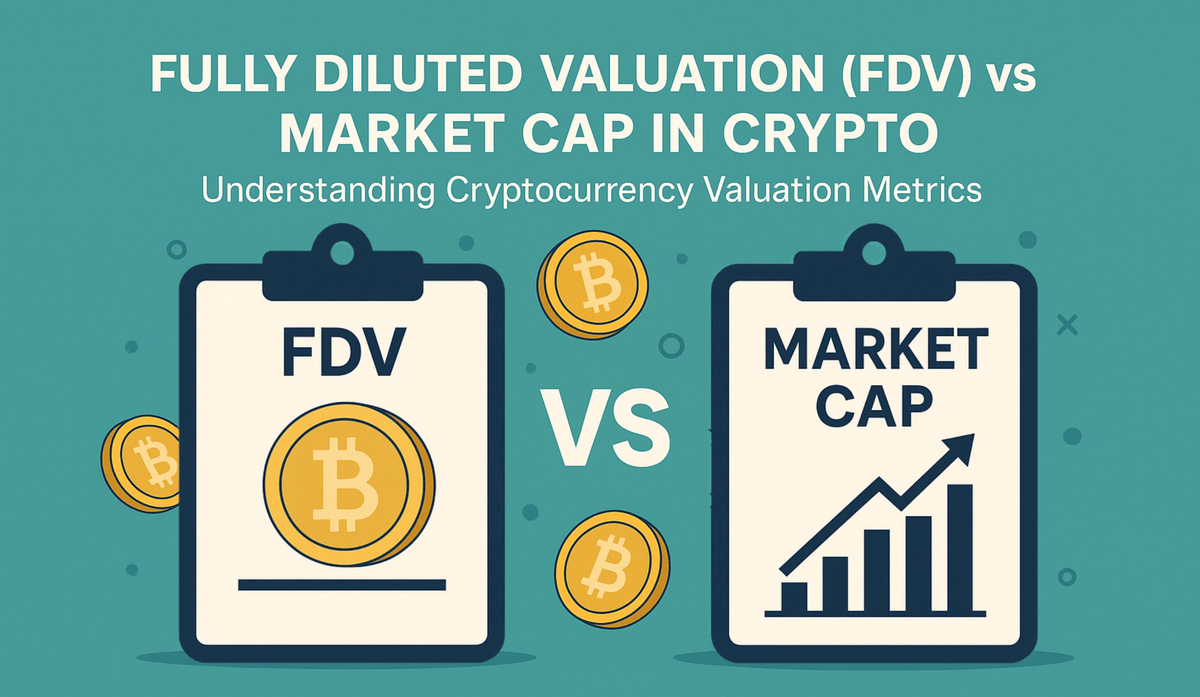
To be able to choose the right altcoin to trade to minimise your trading risk, you must differentiate between circulating supply and maximum supply. The Fully Diluted Valuation (FDV) calculates the market cap as if every single token that will ever exist is already in circulation.
A massive gap between current market cap and FDV is a glaring red flag for future inflation. Holder concentration is another critical metric. If three wallets hold 80% of the circulating supply, they control the market entirely.
However, interpreting on-chain holder lists requires details. The largest holder might actually be a centralised exchange's cold wallet or a smart contract holding liquidity for a decentralised exchange. You have to verify who actually controls those addresses.
Concentration, Manipulation and Conflicted Information
Where an altcoin has concentration of large holders in its market, the risk of manipulation follows closely. Large holders can coordinate to make the altcoin look more active than it is. This is referred to as wash trading - where entities simultaneously buy and sell to themselves to create fake volume.
Wash trading is very popular among smaller altcoins, as they use it to lure in unsuspecting investors. This artificially tightens the bid-ask spread on paper, luring in unsuspecting retail participants.
We also see coordinated promotions and undisclosed financial incentives. Influencers might be paid in the very tokens they are promoting, needing retail liquidity to act as their exit strategy.
Always separate verifiable on-chain ownership data from unproven allegations about a team's intent. The blockchain tells you exactly where the tokens are; human psychology tells you what they might do with them.
Execution Choices in a Thin Market
When the market is thin, how you execute your trade is just as important as what you trade. Market orders guarantee speed but surrender control over the price, exposing you to massive slippage.
Limit orders allow you to set your exact price, but they introduce cancellation risk, your order might simply never fill. Execution Trade-offs:
- Market Orders: You get the tokens now, but at the mercy of the order book.
- Limit Orders: You protect your price, but risk missing the trade entirely.
- Partial Fills: In thin markets, a limit order might only partially fill, leaving you holding half the position you intended.
Do not fall into the trap of thinking a limit order eliminates all loss. It merely dictates your entry or exit point; it does not guarantee the market will ever reach it. Managing liquidity risk means understanding these mechanical trade-offs.
Listings, Delistings and Fragmented Markets
The lifecycle of most altcoins heavily features venue hopping. When a small token gets a surprise listing on a major, top-tier exchange, the sudden access to a global user base temporarily spikes both volume and crypto volatility.
Conversely, a delisting announcement can destroy an asset overnight. When a venue removes a token, it radically reduces the available exit routes for holders. Always require dated venue announcements before trading on listing news.
For example, if an exchange posts a delisting notice for October 15th, liquidity will evaporate long before that date. Avoid assuming that prices will neatly converge across different, fragmented markets during these chaotic events.
Worked Scenario: Entry Looks Easy, Exit Does Not
Let's walk through a hypothetical small-cap token scenario, Kilonova. You see it trending with a gain of 150% over the last two days and decide to invest $10,000. The entry looks effortless, with a promising future.
You place your buy, the bid-ask spread is tight, and you secure your position. A week later, bad news hits. You want out immediately. You check the book, and the best bid is $2.00, but there are only $500 worth of bids at that level.
The next bid steps down steeply to $1.80, $1.50, and $1.00. If you hit market sell to exit your $10,000 position, you will burn through all those levels. Your realised result, after paying trading fees and enduring brutal slippage, might only be $6,500.
This isn't typical for every asset, but this specific sequence encapsulates one of the most dangerous altcoin trading risks. The door in was wide; the door out was a keyhole.
Operational and Regulatory Risks
Beyond the mechanics of the order book, altcoin trading consistently exposes you to a wide host of structural and operational threats. Trading venues routinely suffer complete outages right when market crypto volatility fiercely spikes.
Blockchain networks can become so intensely congested that your supposedly instant transfer gets stuck in digital limbo for hours. There are also severe smart contract vulnerabilities to consider; a single, well-executed exploit can drain a liquidity pool instantly, dropping the token price to zero in an instant.
Regulators across the EU, such as the European Securities and Markets Authority (ESMA), constantly and loudly highlight these systemic altcoin trading risks. Under upcoming operational frameworks like MiCA (Markets in Crypto-Assets), there are finally clearer lines being drawn between regulated services and the unregulated wild west.
However, keep in mind that even using a fully regulated broker does not shield you from the intrinsic, fundamental risk of a highly volatile altcoin going to zero.
When the Trade Does Not Fit
You may have a strategy with a high win rate and a perfect set-up to execute, but sometimes, the smartest, most profitable move will be to simply walk away from trading an altcoin.
If you cannot accurately verify the market depth of an altcoin, or if the token is entirely dependent on a single, highly obscure exchange, the structural risk might simply be far too high to justify the trade.
If you can't find clear, reliable data on the token's actual circulating supply, you are flying completely blind. More importantly, if you cannot truly afford the potential loss, or if you realistically might need immediate, frictionless access to your funds in fiat currency, engaging with altcoins chronically suffering from low liquidity is a stark mistake.
Keep your internal decision-making completely neutral and focused strictly on the cold mechanics of the trade. Navigating the world of altcoins is ultimately an ongoing exercise in managing market friction.
Conclusion: Check the Exit Before the Entry
When it comes to trading altcoins, the underlying challenge isn't just picking the right altcoin with the best technology; it's about mastering the deeply connected web of liquidity risk, token concentration, and execution mechanics.
High crypto volatility can easily make you look like an absolute genius on paper, but a massive bid-ask spread and punishing slippage will quickly and aggressively humble you when you actually try to realise those paper gains.
Always remember the singular, golden rule of navigating altcoin trading risks: the quoted price flashing on the screen matters a whole lot less if your intended order simply cannot be filled anywhere near it. Always meticulously plan your exit before you ever decide to click buy.
Disclaimer: The content provided in this article is for educational and informational purposes only and should not be considered financial or investment advice. Interacting with blockchain, crypto assets, and Web3 applications involves risks, including the potential loss of funds. Venga encourages readers to conduct thorough research and understand the risks before engaging with any crypto assets or blockchain technologies. For more details, please refer to our terms of service.