
Table of Contents
Are you ready to learn how to buy a Bitcoin ETF? Let’s get started!
If you are interested in learning how to buy a bitcoin ETF or how to invest in crypto ETFs in general, you have come to the right place. Interestingly, the first Bitcoin ETF became available in 2021 so they really haven’t been around that long. In fact, some people have toothbrushes that are older than the first Bitcoin ETF (but seriously though if you are using a five year old toothbrush you might want to think about replacing it.)
In just a few short years, Bitcoin ETFs and other crypto ETFs have grown in popularity, offering a simple way to take part in buying Bitcoin without needing to have a crypto wallet. Many people are more comfortable using stock brokerages because they have been around longer than crypto exchanges and now they can gain exposure to Bitcoin through the same brokerage account that they trade stocks in. Investors can now gain crypto exposure without directly buying bitcoin.
Some people think buying Bitcoin and figuring out how to store it is as intimidating as joining a circus as a tight rope walker without any experience with learning how to balance on a string 50 feet in the air. So now these types of people can gain exposure to Bitcoin and crypto without actually buying Bitcoin. That’s just one of the appeals to buying spot bitcoin etfs or investing in crypto etfs. But what is a Bitcoin ETF actually? Keep reading to find out!
What Is a Bitcoin ETF?
ETFs usually hold a collection of stocks, bonds, or other securities in one fund or have exposure to a single stock or bond through a single-security ETF. ETFs are popular because they combine the flexibility of stocks with the portfolio diversification of mutual funds. ETFs trade throughout the day while mutual funds show their price once per day and usually have higher minimums for investing. Mutual funds have also been around longer than ETFs. A Bitcoin ETF is just an ETF that tracks Bitcoin rather than a stock or collection of stocks.
Benefits of Investing in a Bitcoin ETF
Bitcoin ETFs provide easy access to Bitcoin through brokerage accounts. They can allow investors to diversify their portfolios simply. Another benefit of Bitcoin ETFs is that they simplify tax reporting and investment management when compared to holding Bitcoin directly. Why wouldn’t you want to own the easier option!?
Step-by-Step Guide to Buying a Bitcoin ETF
So how exactly do you buy a Bitcoin ETF? It’s actually pretty simple.
Step 1 - Choose a Brokerage Account
First you want to choose a brokerage account. Good options are Fidelity, Schwab, and Vanguard.
Step 2 - Open and Verify Your Account
You can do this through an online broker like Fidelity, Schwab, or Vanguard. For this example we will use Schwab. A) Click on Open an Account.
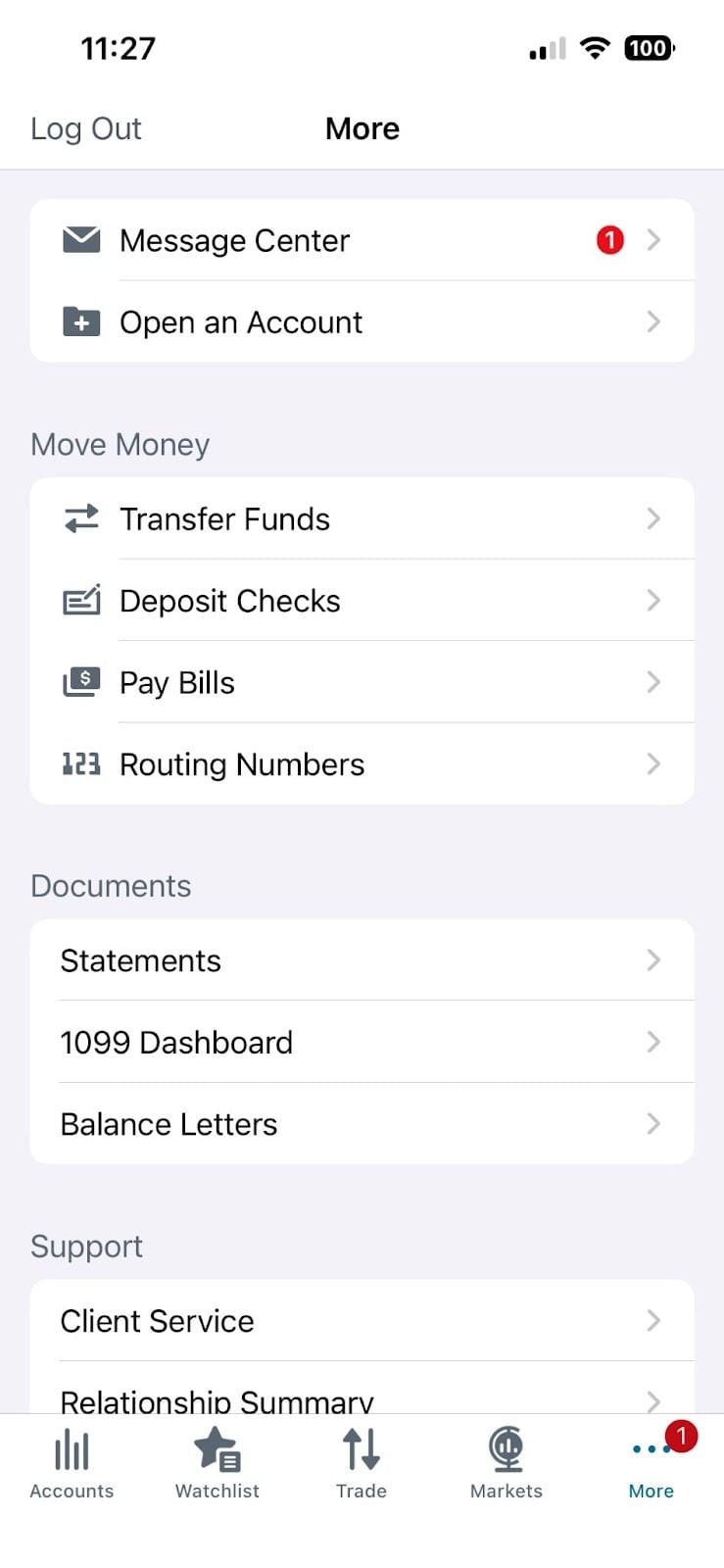
B) Select Brokerage
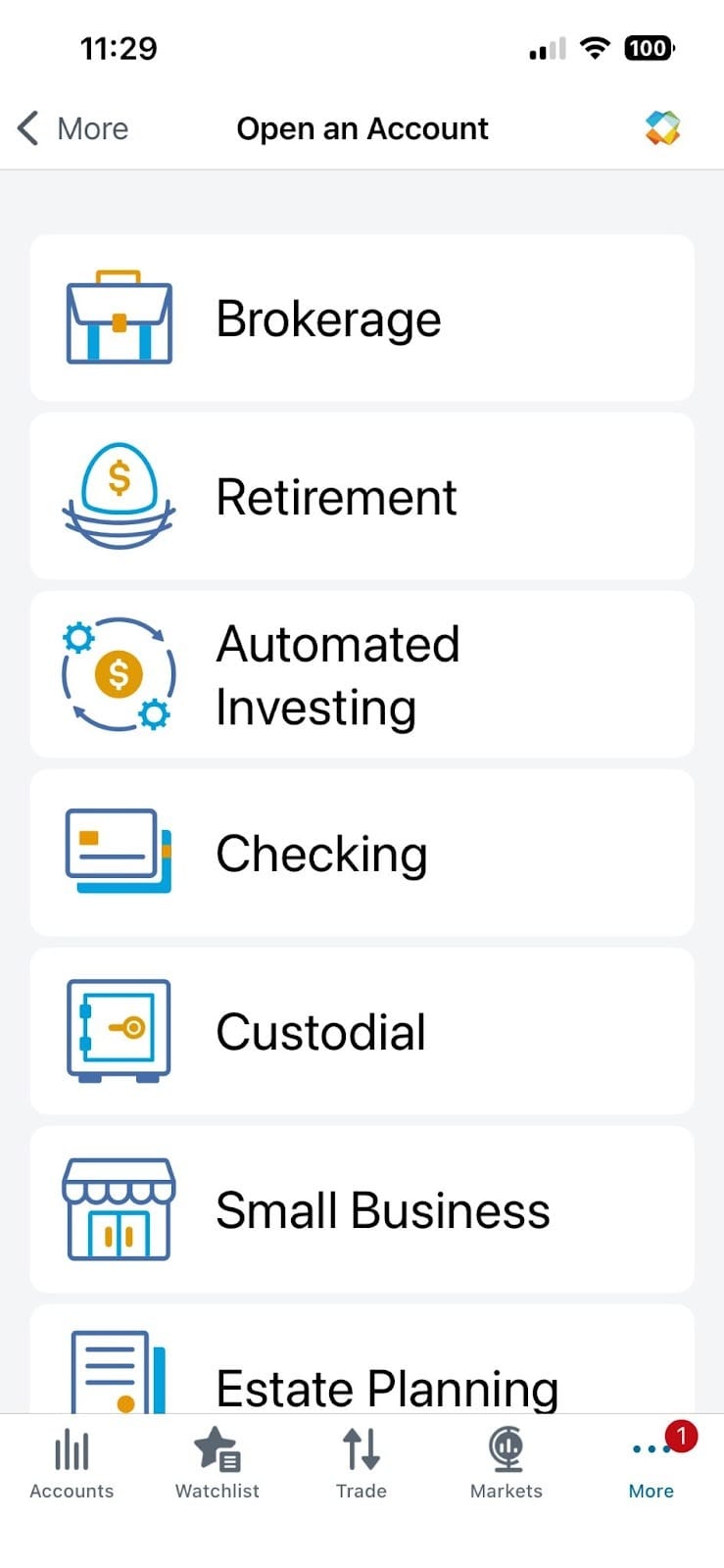
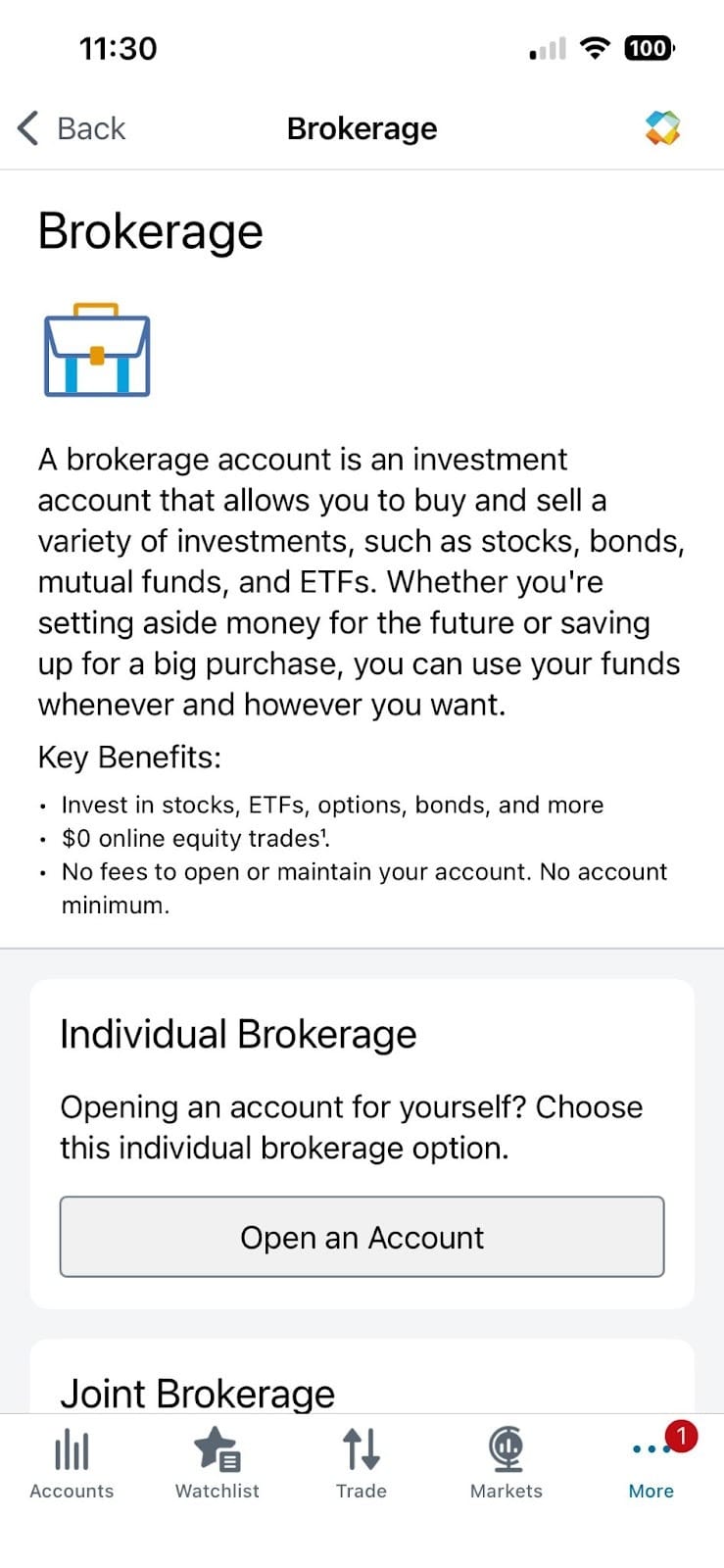
C) Select Open an Account under Individual Brokerage. Follow the prompts and answer the questions to open an account.
Step 3 - Fund Your Account
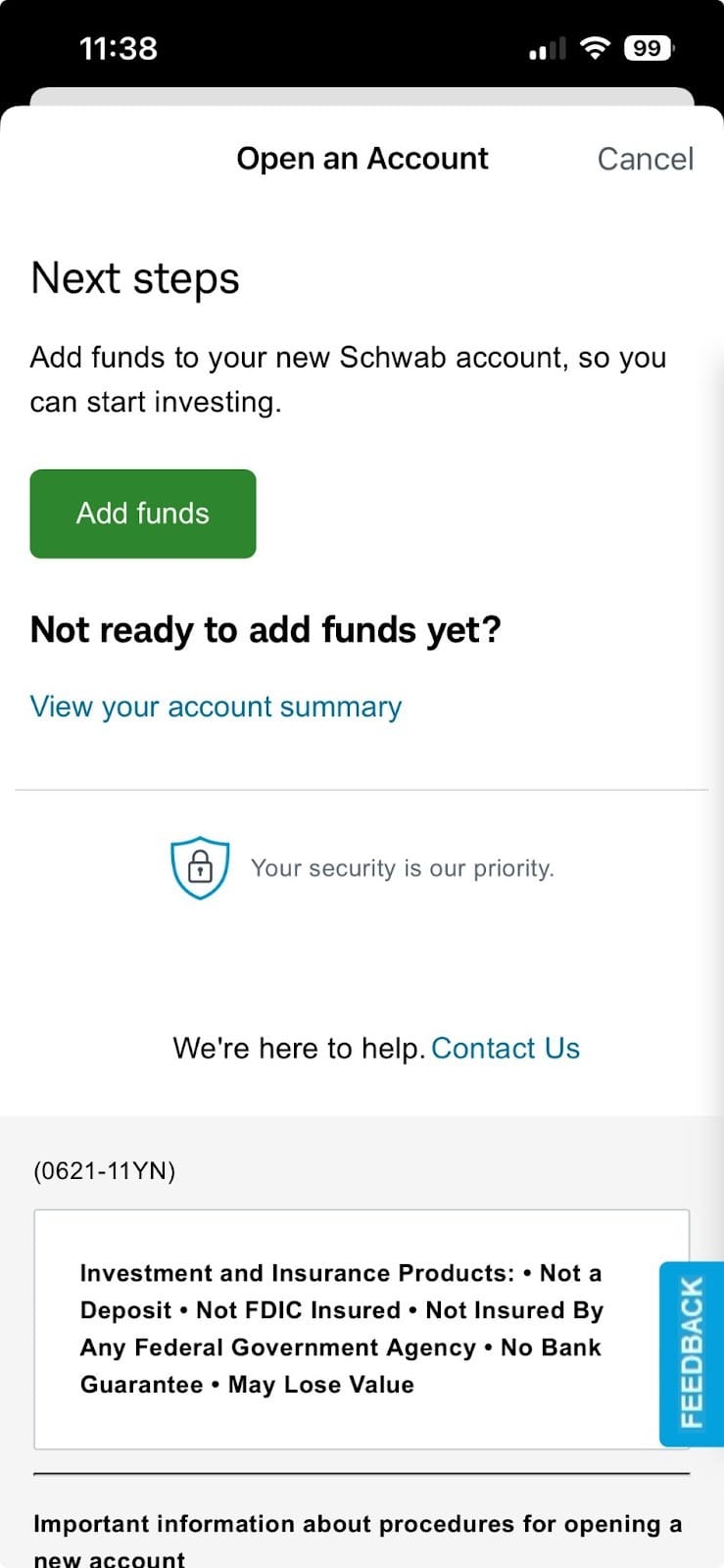
Click on “Add funds” and follow the prompts to add money to your account.
Step 4 - Research Available Bitcoin ETFs and Select One
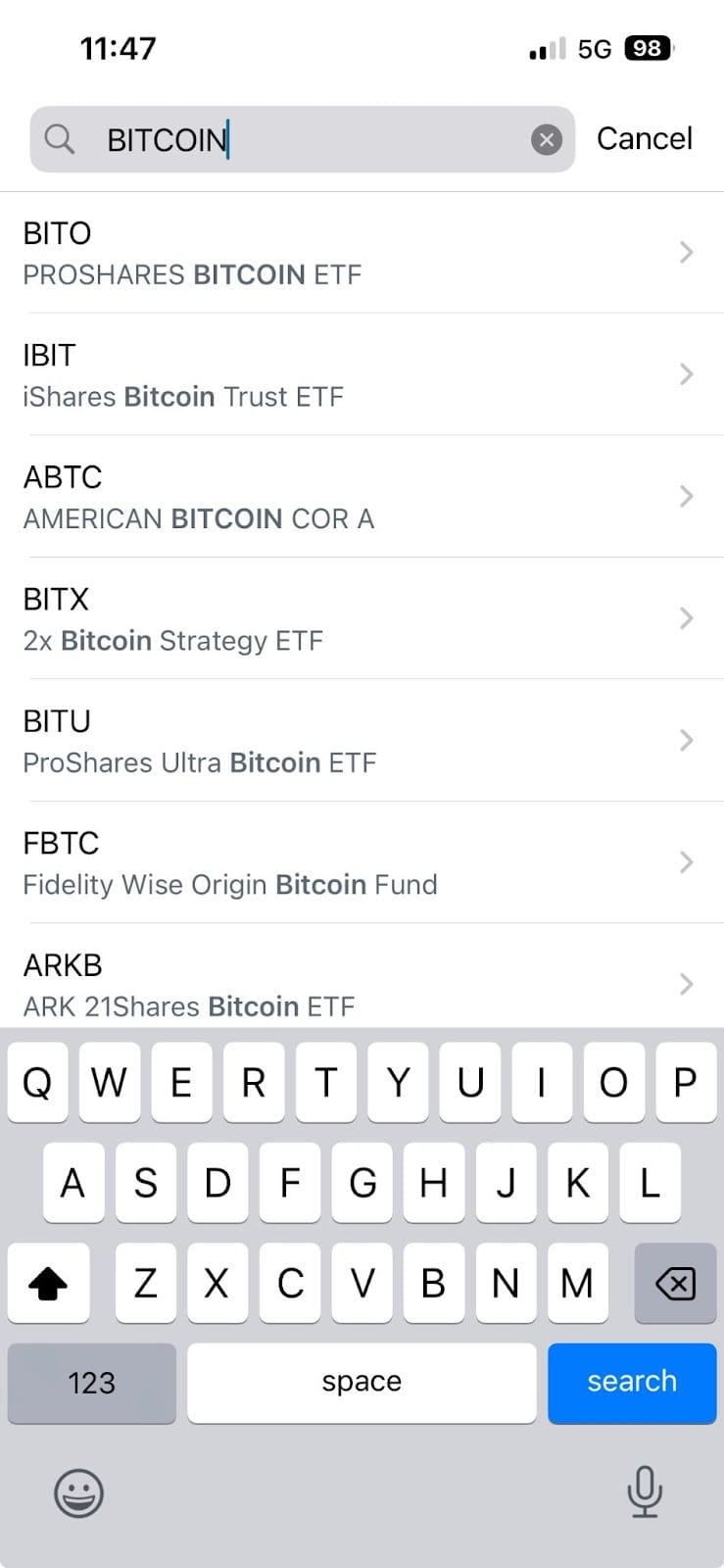
Click on the search icon in the top corner of your account and type “Bitcoin” in the search bar. Then select a Bitcoin ETF from the options listed below. In this case we will select IBIT. Before you choose an ETF you want to research issuer reputation, expense ratio, assets under management, liquidity, and structure (spot vs. futures). Use these metrics to compare Bitcoin ETFs so you are confident you are selecting one that fits with your investment goals.
Step 5 - Place Your Order
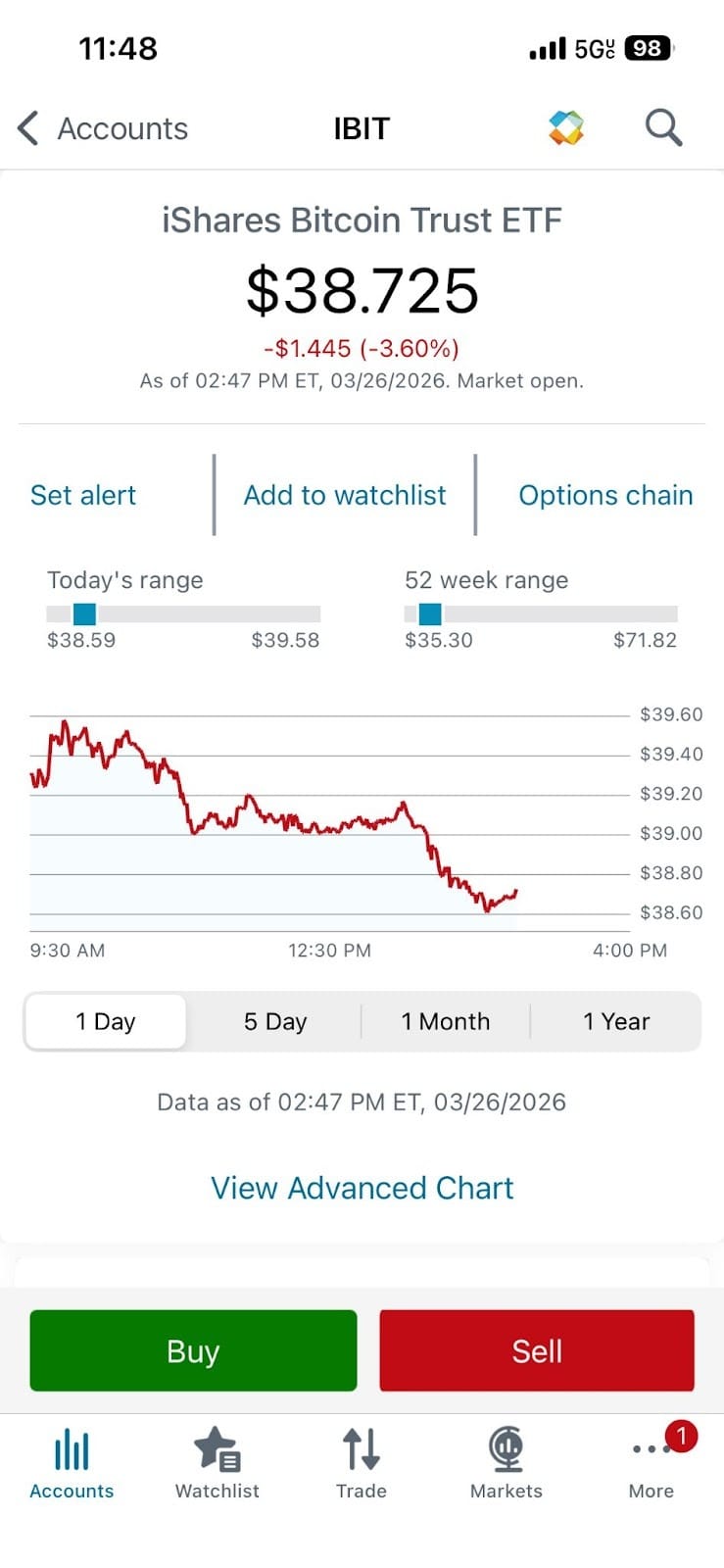
Click on the BUY Button to purchase the Bitcoin ETF.
You are done! It is as easy as that!
Step 6 - Monitor and Manage Your Investment
After making an investment you want to be sure to track your portfolio and watch your investments. Different traders and investors have different long-term holding or trading strategies so it’s important to research what types of strategies you want to use for your Bitcoin ETF investment before you buy.
Tips for First-Time Bitcoin ETF Investors
Bitcoin is a volatile asset. It’s important for first-time Bitcoin ETF investors to be aware of this and prepared to ride the waves. You should think about whether you want to hold your ETF long term and absorb the ups and downs of the market or just invest for a shorter term. Many crypto investors try to hold or as is often stated in the industry “HODL” their bitcoin (or in this case Bitcoin ETF) long term for hopefully larger gains. But everyone has their own strategy so it’s important to set yours.
Decide what you are hoping to achieve with your first Bitcoin ETF investment. Try not to get caught up in the fear if the ETF drops suddenly or aggressively. As I mentioned earlier, Bitcoin is very volatile so your investment is likely to see many ups and downs. For many investors, it’s tempting to try to time the market, but this is also an easy way to lose money.
Here are some tips to help you with your investment.
Start with Small Allocations
Be cautious with your first Bitcoin ETF or cryptocurrency ETF investment. In other words, don’t put all of your money into something you don’t yet fully understand. It’s always important to keep in mind the old saying “only invest what you are willing to lose”. Investing is risky and you don’t want to invest your lunch money when you need that for your food for the week or month. Start with a small investment of money you don’t need for something else.
Use Dollar-Cost Averaging
Dollar-Cost Averaging is the process of investing a set dollar amount on a regular basis, like weekly or monthly, regardless of the share price. It is beneficial in volatile markets because it forces you to not make decisions according to the share price but rather continue to invest wether your investment is down or up from the price that you originally bought it for. It can help investors avoid mistakes of selling at a low point etc.
Understand Long-Term Thesis
As a new investor in Bitcoin ETFs, you might want to consider conducting research into the fundamentals of Bitcoin and holding/HODLing your Bitcoin ETF for the long-term rather than conducting short-term speculation. By holding for a long-time regardless of market fluctuations you are likely to avoid making investment mistakes that can be costly.
Avoid Emotional Trading
Dollar-Cost Averaging and adopting a long-term thesis can help you avoid emotional trading where you might make a quick decision based on your emotions at the time and end up losing money over time. Steady investing over the long-term usually beats making short-term emotional decisions based on the current share price.
How to Choose the Best Bitcoin ETF
In this section we will discuss a deeper evaluation framework for the ETF section to provide a better understanding of Expense Ratio, liquidity and trading volume, fund provider reputation, and Assets Under Management (AUM).
Expense Ratio Comparison
An expense ratio reflects how much crypto ETFs pay for portfolio management, administration, marketing, and distribution as well as other expenses. Lower expense ratio fees matter over time because if an ETF has a very high expense ratio, your overall profits will be less because the cost is taken out of the overall returns. You can find a fund’s expense ratio in its prospectus and compare expense ratios by referring to the prospectus of each ETF you are considering investing in.
Liquidity and Trading Volume
In trading, bid-ask spreads show the highest price that a buyer is willing to pay and the lowest price that a seller is willing to accept. The bid represents demand for an asset and the ask represents supply. In this case, the bid-ask spread is a measure of market liquidity. High friction between supply and demand creates a wider spread, and the tigher the spread, the more liquid the market is for that ETF. It’s important to keep the bid-ask spread in mind when placing a buy order to make sure it executes successfully.
Fund Provider Reputation
Make sure that the asset manager for the ETF is established, has a good operational track record, and has gained the trust of other investors who have already invested in the fund. You don’t want to buy an ETF that isn’t managed by a trustworthy person who has a proven track record. That’s how people end up accidentally investing in something managed by sketchy people / scammers.
Assets Under Management (AUM)
Larger funds with greater assets under management (AUM) provide more stability and tighter spreads, usually making them a better bet, especially for people new to Bitcoin ETFs. So look for larger, more established funds.
Bitcoin ETFs Are A Great Alternative
Bitcoin ETFs are a great alternative to directly buying Bitcoin and storing it in a wallet, especially for people who are new to cryptocurrencies. If you are looking to buy Bitcoin, it’s a good idea to consider checking out Bitcoin ETFs as well. For many people, they represent an easy way to gain exposure to Bitcoin without the hassle and risk of owning and storing Bitcoin directly. If you are thinking of buying a Bitcoin ETF, make sure to do your research first, but once you have gotten that step out of the way it is remarkably easy to do!
Disclaimer: The content provided in this article is for educational and informational purposes only and should not be considered financial or investment advice. Interacting with blockchain, crypto assets, and Web3 applications involves risks, including the potential loss of funds. Venga encourages readers to conduct thorough research and understand the risks before engaging with any crypto assets or blockchain technologies. For more details, please refer to our terms of service.