Table of Contents
Traditional finance systems have rulebooks and a team that can implement updates, while blockchain networks lack a “boss” figure. So, what happens when a blockchain network requires an update or a new bug needs to be addressed?
This process is handled by a system of blockchain governance, which defines how rules are made and enforced in a decentralized way. Strong governance is essential for ensuring a network's stability, fairness, and long-term sustainability
When the governance is strong and clear, people start trusting the network. It guides upgrades, reduces chaos during emergencies, and keeps participants aligned as the technology moves quickly. When that alignment breaks down, forks can split the network and the attention of its users.
What Is Blockchain Governance and Why Does It Matter?
Blockchain governance is a set of mechanisms coded to the blockchain itself to determine its future. It determines the protocol's future and how stakeholders can have a voice in its evolution
Why Governance Is Essential for Decentralized Systems
In decentralized networks, governance acts as the coordination layer, maintaining trust and transparency. It aligns everyone on protocol rules and upgrades. As there is no central boss, decisions must be open and verifiable.
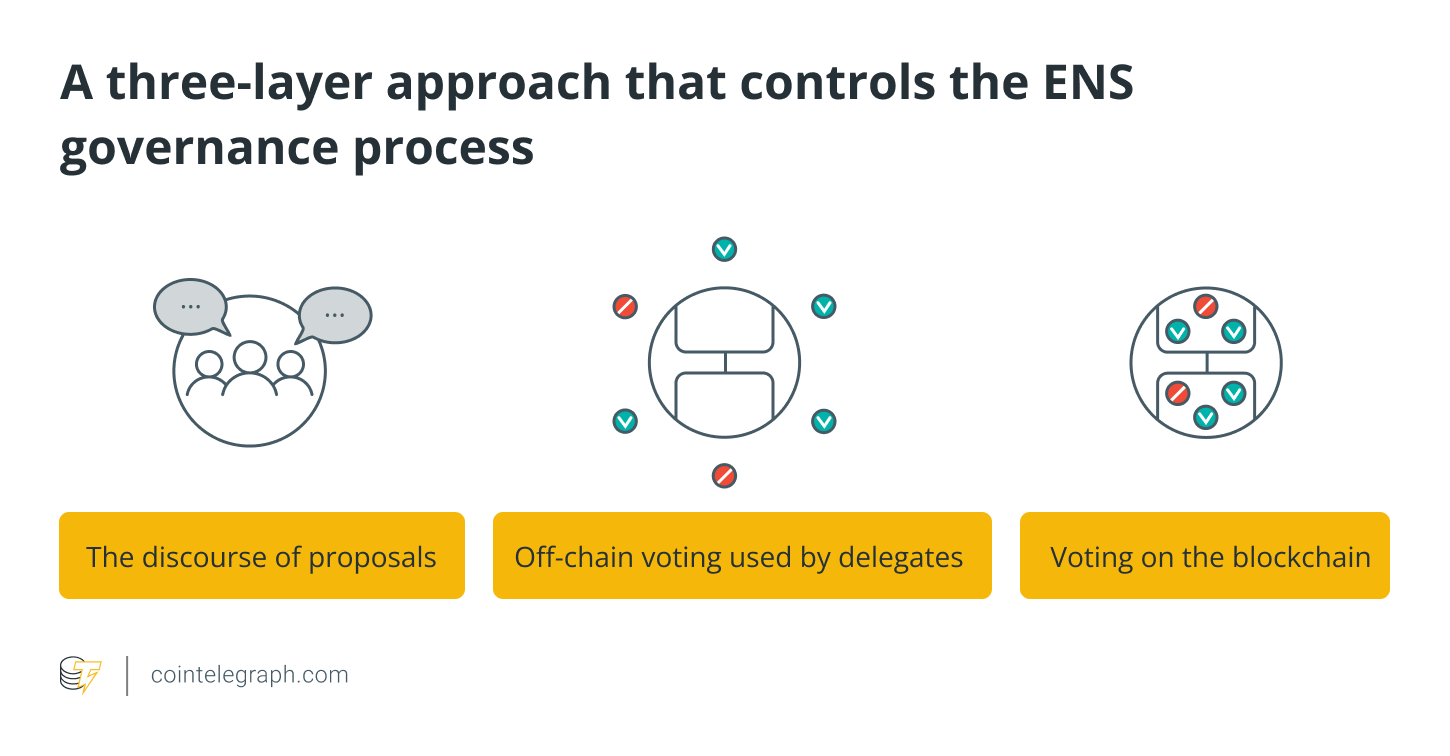
Governance matters because, without it, upgrades become messy and networks splinter. It provides the basic ground rules that keep nodes aligned so the chain can evolve without chaos. The actual discussion about updates or future steps often proceeds in forums or calls.
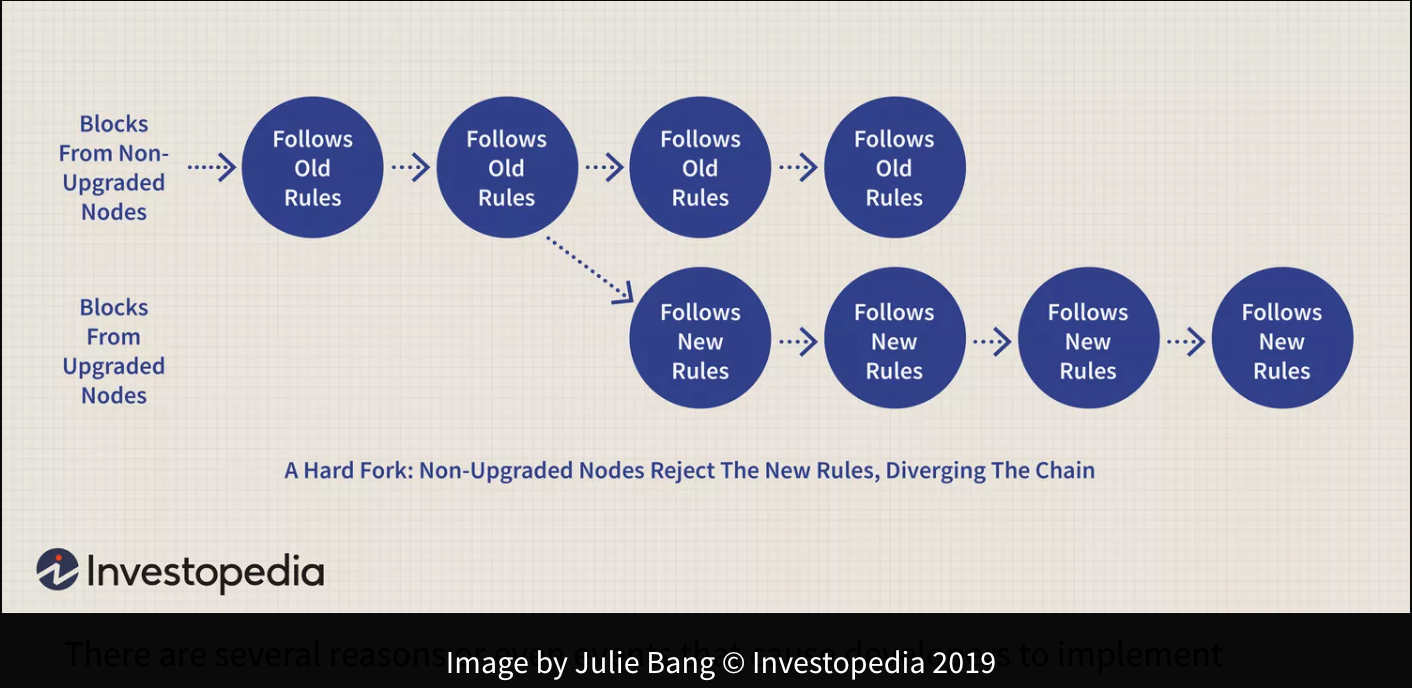
Once it’s settled, a proposal with an exact action plan is published and voted on the blockchain. When consensus fails between different developer groups or across nodes, that network gets “forked” by splitting into two different blockchains with different rules. This is what happened with Bitcoin and Bitcoin Cash.
Key Challenges: Coordination, Transparency, and Power Balance
Designing governance that feels fair to developers, validators, and token holders is not easy and requires a multi-disciplinary approach. Coordination is the first challenge. Getting thousands of globally distributed participants to agree on changes takes time, and extended debate can stall momentum and create factions. Dispute resolution remains difficult; without courts or a CEO, disagreements often result in stalemates.
If alignment breaks, communities can splinter into competing versions (forks), and this fragments liquidity, tooling, and attention. Transparency and inclusivity pose the next challenge. In theory, votes and forums are open to all. In practice, many holders do not engage, and only a small minority ultimately steer outcomes.
Power balance is the third challenge. Token voting can tilt toward concentration of power because wealth often translates into votes. Off-chain, core developers or validators can dominate because they hold context and time. Without necessary counterweights, a “decentralized” system can centralize over time.
How Does Decentralized Governance Work?
Decentralized governance allows public blockchains to decide and implement changes without a central administrator. They do this through community consensus across open processes. Decision paths differ by chain, but in every case, upgrades stick only when the network visibly converges.
The Role of Developers, Validators, and Token Holders
In blockchain governance, the work is split three ways by design. Developers draft proposals and write the code for upgrades or fixes. They act as custodians; ideas ship after public review and broad acceptance.
Validators or miners secure the network and “vote with their nodes.” They choose which client version to run, or they cast explicit on-chain ballots in proof-of-stake systems. Their incentives favor safety and uptime, and they scrutinize changes that could destabilize consensus.
Token holders provide the community’s economic will. They can vote, delegate their vote, or submit proposals (that often come with deposits or thresholds) to surface ideas. In this case, delegation helps address voter apathy while preserving inclusivity. Upgrades stick when these groups converge.
Decision-Making in Permissionless Networks
permissionless networks, where anyone can join, governance faces a unique challenge: upgrades are voluntary. Node operators must actively choose to adopt new software.
Therefore, decision-making relies on achieving visible agreement for a change to be implemented. As legitimacy comes solely from community adoption, this method ensures that no single group can force an update on the network.
On-Chain vs. Off-Chain Governance Models
To achieve consensus, two primary governance systems have emerged: on-chain and off-chain. These models are used to determine where and how decisions are made. Most modern ecosystems try to find a middle ground between the two, going for decisions that are both transparent and flexible.
On-Chain Governance: Smart Contracts, Voting, and Automation
On-chain governance involves voting on the blockchain itself directly. Proposals arrive as transactions, which the smart contracts (rules on a public ledger) tally stakeholder votes for according to fixed thresholds such as supermajority and timing.
Because every ballot sits on the ledger, results are transparent and immutable. Anyone can audit who voted, how, and when. The key feature is automation. When a proposal passes, the protocol can schedule and execute the change, often as a forkless upgrade, and the process does not require manual coordination. Debate usually starts off-chain, yet the final say and the execution occur on-chain.
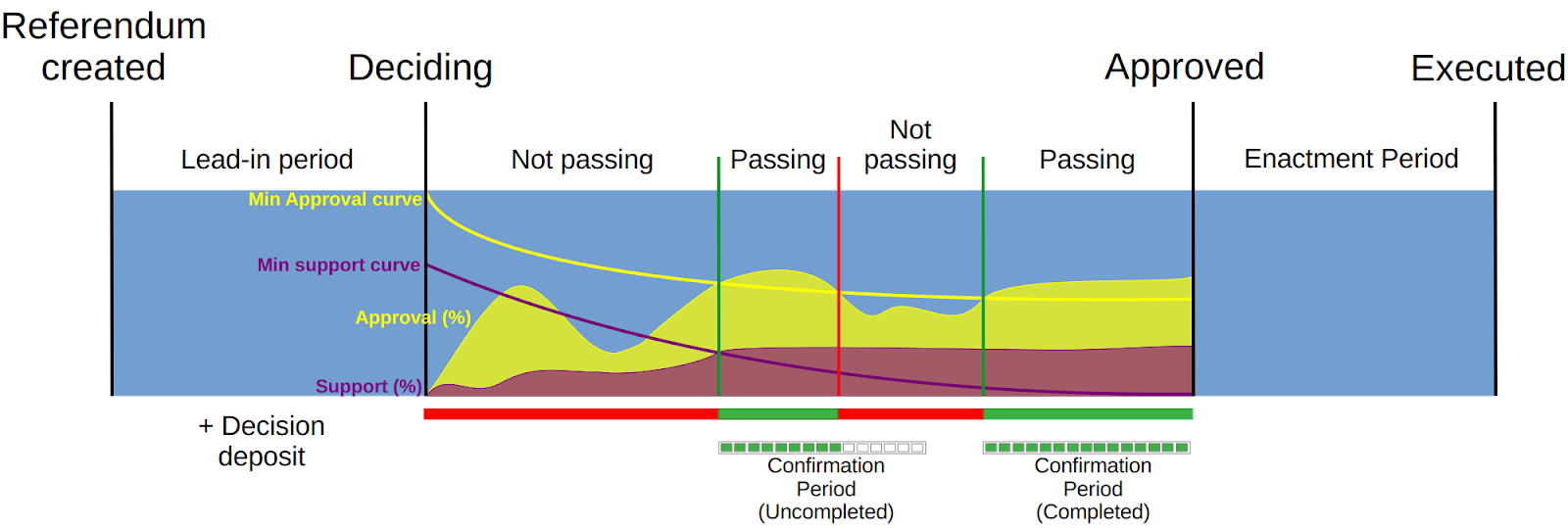
Projects like Polkadot and Tezos are known for pioneering this model. On Polkadot, for example, token holders can propose and vote on referenda. If a proposal passes, the protocol's code is designed to autonomously schedule and execute the update. This allows for complex upgrades without a fork or manual intervention.
Off-Chain Governance: Community Consensus and Social Coordination
Off-chain governance is the human layer. Bitcoin and Ethereum are the most prominent examples of the off-chain governance model. Communities debate in forums and hold public calls. More significantly, they publish Improvement Proposals (like Bitcoin’s BIPs or Ethereum’s EIPs), which are specifications for protocol changes before code ships.
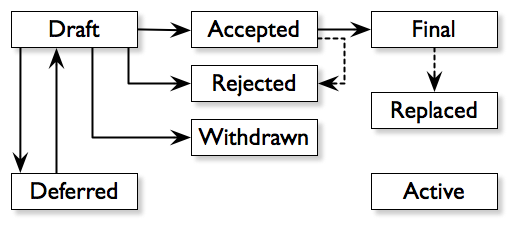
Legitimacy comes from social consensus. If most node operators adopt the new client, the rules become the de facto standard. If alignment fails, proposals stall, and contentious forks can appear. This social consensus model was on full display during Ethereum's upgrade to Proof-of-Stake ("The Merge"), which required years of off-chain research, debate, and coordination among developers and node operators before the new software was voluntarily adopted.
This model offers flexibility and nuance. Stakeholders can work through trade-offs without rigid on-chain timers. The trade-offs are slower and fuzzier finality and potential opacity, which happens if the influence is concentrated around core teams or well-funded actors. Many ecosystems pair off-chain deliberation with on-chain signaling or execution to keep decisions accountable and enforceable.
Advantages and Limitations of Each Approach
Both governance models carry trade-offs. On-chain emphasizes automation and auditability. Off-chain emphasizes human nuance and speed. Most healthy ecosystems mix the two.
- On-chain system’s advantages: Every proposal and vote appears in smart contracts, so outcomes are transparent, immutable, and tamper-evident. Passed proposals can trigger automated upgrades without a fork, which reduces coordination overhead and ambiguity. Low-friction voting (a token transaction or delegation) can widen participation and make finality clear.
- On-chain system’s limitations: Voting power often tracks token holdings, so influence can concentrate into a plutocracy if safeguards are weak. Formal voting windows and proposal templates add process rigidity, which is awkward in emergencies. Turnout can be low, which raises legitimacy questions. Technical complexity can exclude less experienced users.
- Off-chain system’s advantages: Deliberation is flexible. Communities can debate, revise, and negotiate across forums and calls before they touch code. This invites expertise beyond token weight — researchers, client teams, app builders — and it can unblock time-sensitive fixes without waiting for on-chain timers.
- Off-chain system’s limitations: The consensus process may be slower. Influence spreads across conversations and meetings. Execution still relies on developers and validators. If a small group disagrees, they can refuse to upgrade, which could cause forks that are hard to resolve.
- Pragmatic approach: Pair off-chain ideation with on-chain signaling and execution. Utilize code for transparency and finality purposes, and use people for context and compromise.
Hybrid and Emerging Governance Models
Projects are adopting hybrid systems to overcome the limitations of pure on-chain or off-chain models. These models blend automation with human judgment.
Beyond hybrids, DAOs and liquid democracy push participation further. Members vote directly or delegate fluidly to trusted experts. The aim is to get more people voting, with a better context.
Combining On-Chain Transparency with Off-Chain Flexibility
Hybrid governance pairs coded voting with community debate. Communities refine ideas in forums and calls, and they publish a formal on-chain proposal that smart contracts tally. If the proposal passes, the system executes it automatically. This approach provides transparency, immutability, and clear finality.
The split keeps processes efficient and inclusive. Routine tweaks can move quickly through on-chain pipelines. High-impact changes receive extended off-chain deliberation. Some projects add elected committees to triage emergencies, and they record referenda on-chain to preserve legitimacy. The net effect is a loop that is verifiable in code and responsive to real-world context.
DAOs and Liquid Democracy as Innovative Governance Frameworks
DAOs turn communities into owners. Smart contracts hold rules and treasuries, and members can propose and vote on actions such as funding and upgrades directly on-chain. Every ballot is auditable, and approved moves can execute automatically, meaning that collective intent turns into code without a middleman.
Liquid democracy adds flexibility. Any voter can participate or give their voting power to a trusted expert. The voter can also revoke that delegation at any time. This model combines direct and representative governance, which helps busy or less technical users stay engaged while it elevates informed voices. DAOs and liquid democracy work together to widen participation and sharpen decisions. The outcomes remain transparent and enforceable.
Main Governance Structures in Blockchain Projects
Most networks split governance into two tracks. Protocol governance guides the code so the chain evolves in a safe and predictable way. Treasury governance allocates shared funds from fees or inflation to builders, audits, and public goods through community-approved spend proposals.
Governance also differs in who decides. Some systems are validator-centric. Operators or miners signal which software to run and can gate upgrades. Others push community-centric processes in which token holders propose and vote, and validators implement the outcome. In practice, projects blend both. Validators safeguard execution and liveness, and the broader community sets direction and budgets.
Protocol and Treasury Governance
Protocol governance covers the code: consensus rules, parameter changes, client releases, and new runtime versions. Proposals are drafted, discussed in public, and, depending on the chain, approved by token votes or validator signaling. The goal is controlled, predictable change so the chain evolves without surprise forks.
Treasury governance covers communal funds. The community allocates budgets for builders, audits, bug bounties, education, and other public goods. Stakeholders submit spend proposals, debate scope and impact, and vote to release funds with on-chain tracking. Many networks separate tracks and thresholds. A minor patch may pass quickly, while a large grant may require a stricter quorum or review. In practice, these tracks interlock. Funding enables upgrades, and upgrades can enable funding mechanisms.
Validator and Community-Driven Governance
In some networks, validators or miners set the tone by choosing which client software to run or by casting weighted votes in proof-of-stake systems. This can be efficient and security-aware, yet it can introduce gatekeeping if a small set dominates.
Other networks are community-centric and push decisions to token holders. Anyone can propose, vote, or delegate, and validators implement the decision in code. This method makes the system more legitimate and ensures the policy is in line with users' wishes, although it needs to be coordinated to avoid apathy or capture. Most projects combine both styles. Validators safeguard liveness and execution, and the broader community sets policy and budgets.
Conclusion
Governance is the spine of a blockchain. It gives the protocol posture when markets swing and narratives shift. A chain can stay resilient over the years when it has the right balance of transparency, inclusivity, and execution speed. Communities thrive when they can see how proposals evolve, how votes count, and how results are enacted without drama.
On-chain tools deliver clarity and auditability. Off-chain forums deliver nuance and social context. With signal checks first and binding votes later, hybrids give projects the best shot at both. DAOs and liquid democracy add practical mechanisms for real communities with limited time and varied expertise.
Treat governance as the foundation of long-term trust in Web3. Communities that ship with clear rules, strong records, and open doors tend to hold together through forks, fads, and bear markets — which is how great networks compound.
Disclaimer: The content provided in this article is for educational and informational purposes only and should not be considered financial or investment advice. Interacting with blockchain, crypto assets, and Web3 applications involves risks, including the potential loss of funds. Venga encourages readers to conduct thorough research and understand the risks before engaging with any crypto assets or blockchain technologies. For more details, please refer to our terms of service.