
Table of Contents
Bitcoin hit the spotlight in 2017 when it surged to nearly $20,000 — and became a global phenomenon overnight. This caught the interest of so many people in investing in Bitcoin mining to generate BTC for their computational efforts. But even if the miner is all about money, mining does more than provide the potential to earn a historically appreciating crypto.
Bitcoin mining is the backbone of Bitcoin’s security and transaction verification system. The process creates new Bitcoins through block rewards, prevents fraud, and makes the blockchain practically tamper-proof. In this article, we have gone into detail on how you can mine Bitcoin.
What Is Bitcoin Mining?
Bitcoin mining is the process that keeps the Bitcoin blockchain going. Miners don’t really go to the mines with their pickaxes, but the "gold" they find is very real. The miners are rewarded for the act of mining itself. It also benefits all Bitcoin users by verifying and securing transactions.
However, this isn’t like earning passive income just by turning on your computer. It’s a decentralised and competitive process where miners utilise their computational power to solve complex mathematical puzzles. Imagine a guessing game with a set of 100 numbers starting with 0 and only one with 00. 10 people enter the competition, and the first one to identify the right number, can mine the next.
Another thing worth noting here is that it’s not a kind of puzzle that you can solve by having a formula, skill, or intelligence. Using powerful equipment, they’re essentially making millions or billions of guesses on a 64-digit password every second until one arrives at the correct result.
Through mining, more Bitcoins are added into the system. And since all miners participate here, every transaction is verified by multiple parties autonomously.
Why Mining Matters for Bitcoin’s Security
Bitcoin mining does more than give BTC as a reward, it also secures the network. Without it, Bitcoin will be highly vulnerable to double spending and other types of fraudulent activities.
A very important concept for understanding how Bitcoin security works is the hash rate. Hash rate refers to the aggregate computing power of all the miners globally, all of which are attempting to solve the crypto puzzles created by Bitcoin. Picture thousands of independent machines worldwide teaming up and racing to guess the correct digital key.
Source: Wired
In other words, any hacker willing to defraud someone’s transaction in the Bitcoin blockchain has to face the total computing power of every miner in the world. However, instead of having one gigantic institution, the entire system is decentralised. Because there’s no single miner in charge of verification, the network becomes more resilient and less prone to manipulation.
How Bitcoin Mining Works — In Simple Terms
Imagine there’s a worldwide competition to solve a complex mathematical equation. This isn’t a schoolbook equation—it’s more like trying to crack a 64-digit lottery code by brute force. The first to solve it receives the privilege of adding writing to the public ledger, plus a prize. Then, the game repeats after 10 minutes. That’s what happens in the Bitcoin network.
However, it’s more than a contest. Every transaction is recorded and locked behind a hash. Think of it as a unique fingerprint. Then, miners take all those transactions, bundle them into a block, and try to find a special kind of hash — one that starts with a certain number of zeros – to add it to the blockchain.
This is where it gets tricky. There’s no shortcut to finding that number. Miners just have to keep trying until they guess right. It is similar to trying different combinations on a lock until you get the click. Now that we have covered the base concept, we can get into more detail.
The Role of Hashes and the SHA-256 Algorithm
A hash is a string of numbers with a fixed number of digits, serving as a digital fingerprint for the data. When Bitcoin mining, hashes are very important. They help not only in securing the network but also in verifying the transactions.
Here, a Secure Hash Algorithm (SHA-256) is used. And in practice, here’s how it works:
- Each block is associated with a unique hash. The miners process all transactions that are part of the block using the SHA-256 algorithm. The resulting outcome is a 64-digit code that is unique to the block.
- Bitcoin sets the standards of what a valid hash looks like. Usually, this means that the hash will contain a certain number of zeroes. Finding the correct hash requires changing a small part of the block called a nonce and hashing repeatedly until the miners identify the one that works.
- Bitcoin adjusts the level of difficulty. This difficulty level is adjusted every two weeks or the time it takes to create 2016 blocks. The goal is to maintain a block creation time of 10 minutes. Typically, this fluctuates based on the number of miners.
SHA-256 is highly flexible without compromising efficiency and security. It adjusts based on external conditions like the hash rate while still maintaining the integrity of the blockchain.
What Are Blocks and the Blockchain?
Behind Bitcoin, there's something called a blockchain. This is a public record of every Bitcoin transaction that was ever completed. Instead of logging each transaction individually, Bitcoin groups them into bundles called blocks. Think of each block as a page in a digital ledger. Once it's full of verified transactions, it's sealed and added to the chain, hence the name “blockchain”.
Miners are responsible for collecting new transactions, organising them into blocks, and adding those blocks to the existing chain. Once a block is added, it becomes part of Bitcoin’s permanent history. The linking structure isn’t just for organisation. It’s also the very reason that Bitcoin stays secure.
Because each block depends on the one before it, you can use the blockchain to verify the timeline of transactions. It prevents tampering, removes the need for a central authority, and allows the entire system to run on consensus. Thousands of computers around the world keep identical copies of the blockchain transactions, so that everyone can independently confirm the details.
Why Mining Consumes So Much Energy
Not everyone is happy with the energy consumption required for Bitcoin mining. Some try a different approach, like Ethereum and their proof-of-stake approach. Still, the process will require a lot of power for a number of reasons:
- Constant trial-and-error to find valid hashes. As talked about, there’s no way around finding the hash to secure the network. This means that your equipment will require trying billions of hashes every second, so it needs to be working nonstop.
- Increasing network difficulty. The block time is set to be around ten minutes. And with more miners joining, Bitcoin needs to readjust the difficulty of the puzzle to maintain the ten-minute block creation time. The increased difficulty means that more power will be required to solve it.
- Use of specialised hardware. The equipment now used to mine Bitcoin is incredibly efficient. However, it also comes with an increased use of electric power compared to preceding technologies.
Another thing to remember is that mining happens 24/7. So, like any appliance that’s never turned off, the power consumed will accumulate more quickly. Imagine having an air conditioner on 24/7 in an environment that’s naturally 40 degree Celsius! That’s why, for long-term sustainability miners should use renewable sources of energy. Nevertheless, Bitcoin mining only accounts for a very small portion of the total energy consumption in the world, and when put into comparison with other major technologies like AI, we actually realize that its consumption is not as high as we believe.
How Mining Secures the Bitcoin Network
Bitcoin mining isn’t just a way to create new Bitcoins. It is a core security mechanism that makes sure that the entire Bitcoin network is reliable and secure. This is done by:
- Preventing double-spending: the network doesn’t have a central authority that prevents entities from spending the same currency twice. Still, fraudsters are discouraged from doing this because it will require re-mining the same block and all subsequent blocks. This makes double-spending way too expensive to be done.
- Creating proof of work: these proofs of work are blocks. The longer ago the transaction was finalised, the deeper into the blockchain it became whichmakes it harder to alter. So, six blocks or approximately an hour after a transaction, it's considered confirmed.
- Promoting decentralisation: Bitcoin mining is an activity that anyone can participate in. Therefore, the control is spread throughout the globe. Everyone who has ever mined Bitcoin contributes to the hash power of the network. Unlike banks, where control is centralised, the BTC network benefits from not having a single point of failure.
- Incentivising mining: Meanwhile, mining generates rewards in the form of BTC and transaction fees.
When you mine, you contribute to the network’s security. You’re helping create blocks as part of the BTC blockchain that disincentivise fraud and double-spending. Plus, you get the opportunity to profit from doing so.
Who Can Mine Bitcoin: Then and Now
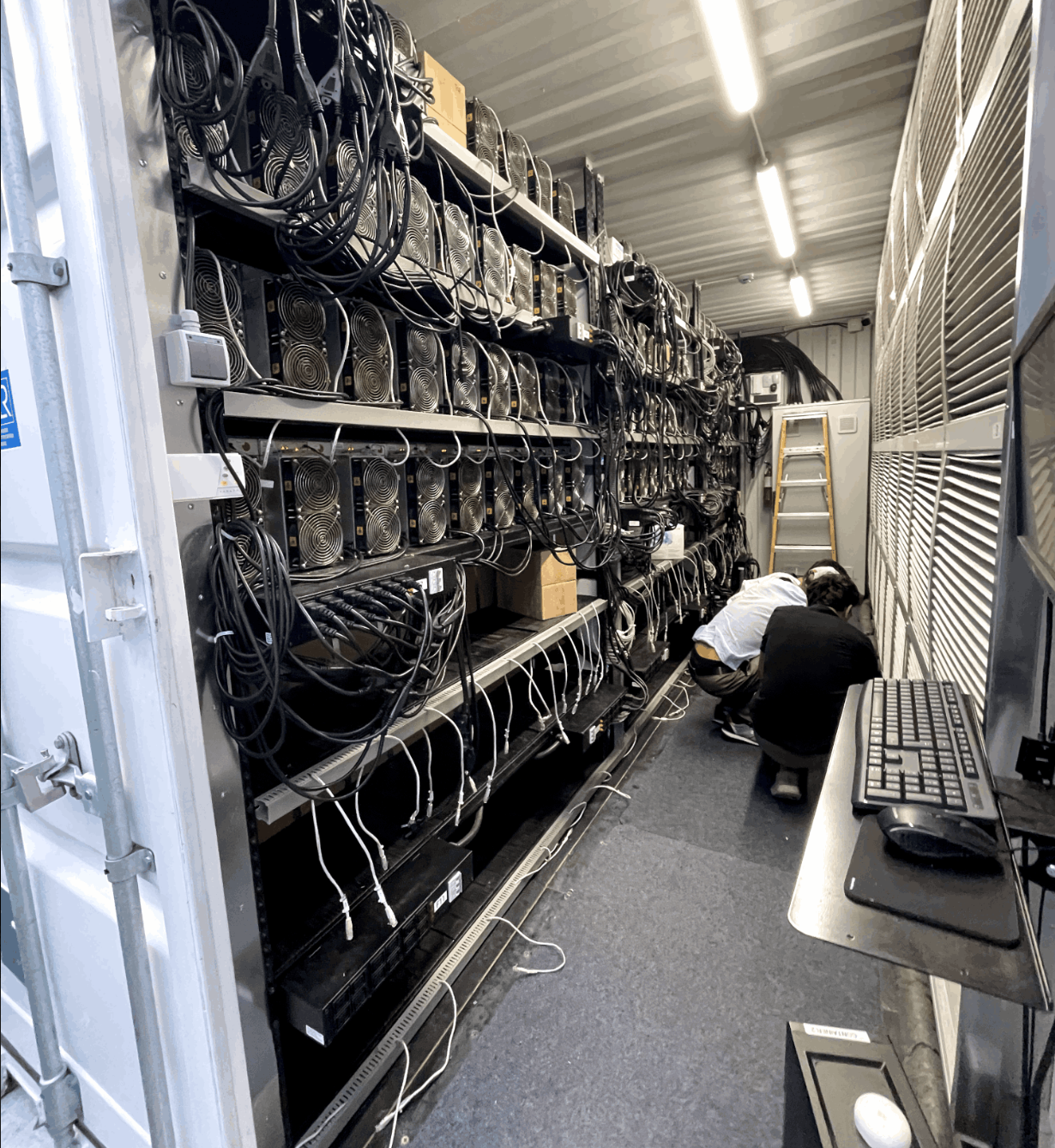
Technically, anyone can participate in Bitcoin mining in the same way that anyone can join a marathon. It’s possible, but only a small percentage will be able to go the distance. How practically it would be at an individual level has changed throughout the years with how the mining ecosystem evolved. With the high prices of the right mining equipment,solo mining nearly becomes obsolete, while mining farms built as data centres are now more present - this way it takes the “guessing game” to the next level.
With the large teams of miners, the practice has become more efficient because more advanced technologies have been introduced. There are a few key factors behind this:
- Technical knowledge is needed to participate. Setting up a mining operation today means an understanding of complex technologies and setups that the average person may not understand.
- Financial investment requirement. In Bitcoin’s early days, hobbyists mined using standard PCs. However, when the tech required to mine efficiently evolved, a miner was now necessary to put money into participating.
- The growing interest of large companies in Bitcoin mining. Put simply, individual miners are no match for huge companies that can allocate a significant investment to this endeavour. That's why they dominate the Bitcoin network today.
Despite these roadblocks, it doesn’t mean that individual miners are entirely out of the picture. Thanks to mining pools, small-time miners can pool their resources to enhance their computational power. This workaround has enabled to reduce the financial roadblock today while maintaining competitiveness against larger mining operations.
From CPU to ASIC: A Brief History of Bitcoin Mining
The idea behind mining Bitcoin has always been the same: to solve mathematical problems and receive a reward for doing so. However, the equipment used to accomplish this has faced drastic changes throughout the years.
What used to be a hobbyist’s activity that could be done on a regular computer now requires powerful equipment. Let us take a closer look at the equipment used and its impact on miners:
Throughout every stage of mining equipment evolution, the primary motivation has been to enhance mining efficiency. But as Bitcoin mining evolved, so did the technical and financial barriers to entry. The more complicated and specialised the technology involved is, the more impractical it becomes for a single miner to do it on their own.
What Is a Mining Pool and Why Is It Important?
Bitcoin mining today has evolved into a completely new enterprise. There are now entire companies dedicated solely to mining, making it challenging for the average miner to compete. This is the reason why many miners are trying to combine their computing power to increase reward consistency through mining pools. Today, these are essential because they:
- Stimulate fairer competition. An average person may not have a chance against huge companies with millions of dollars worth of computing resources. However, if all miners combine their assets, they’ll be able to match the power of these large companies.
- Reduce the financial risk for miners. Instead of devoting a larger budget to the Bitcoin mining setup, you'll be able to start with less. Since many people will pool their resources, limited resources wouldn't necessarily mean limited profitability.
- Improve mining efficiency. The entire mining pool will be able to find blocks more often. This means everyone gets rewarded more often.
Unless you can match what giant corporations can shell out, individual Bitcoin mines may not be sustainable today. However, with this alternative, you can still win even on a small-time budget.
How to Mine Bitcoin Today
A layperson’s understanding of crypto mining may be far simpler than what’s happening on the ground. In the early days, you would just develop the code and then get it started. But today, you need specialised equipment set up in a dedicated space. This can be costly.
That’s why, even though it’s still technically possible, solo Bitcoin mining is rarely profitable now. The enormous costs required just to get started are not feasible for most aspiring miners today.
What You Need to Start Mining
To get started, you will need to have the following:
- Application-Specific Integrated Circuit (ASIC) miner - This is a specialised device designed for Bitcoin mining.
- Power supply - This will provide the power to run your ASIC and must meet the requirements of your equipment.
- Stable internet connection - Although it doesn’t have to be the fastest, it should have a reliable uptime to keep the ASIC connected to the pool.
- Cooling system - Cooling is required to keep your device performing optimally. So, you need a way to counter the intense heat generated from Bitcoin mining.
- Mining software - This is what you need to connect your ASIC to the Bitcoin network.
Unlike when Bitcoin mining was more of a hobby than a profitable endeavour, a typical laptop or desktop won’t work anymore. Therefore, there is no way around getting started unless you're willing to invest in the equipment from the start.
Take into account as well that this is also an energy-intensive activity. If the energy costs are too high, mining can be a too costly activity. So, explore renewable sources that will help drive costs down.
You should also have a separate space for your ASICs. These run loud and hot, so it’s usually not a good idea to keep them in living spaces. Solo miners today may use a garage or basement, while larger-scale operations use industrial facilities.
Joining a Mining Pool
As mentioned earlier, a mining pool refers to a group of miners that combine their computational power to mine Bitcoins more efficiently. Since it’s practically impossible now to be a successful miner using just your laptop, most miners use this option because of:
- Reduced variance - One of the biggest perks of joining a mining pool is the reduced variance. If you push through with Bitcoin mining on your own, it’s possible to go weeks or even months without an income. With this alternative, you can get a steadier and reliable income.
- Improved efficiency - By combining their computing power, various miners will be able to compete with larger-scale operations. This means a higher level of Bitcoin mining efficiency.
To join, sign up with a reputable mining pool provider. You'll also need an ASIC miner and mining software. Once your equipment is connected to the pool, you can start earning. The reward is typically paid in proportion to the hash rate you contribute, minus the pool's fee.
Cloud Mining and Its Risks
Today, there is another way to become a miner even without investing a huge amount in equipment. With cloud mining, you instead rent the computing power of a remote data centre. Essentially, you purchase a contract with a mining farm that owns the data centre so that they can do the work for you. Then, you receive the rewards.
Although this method of Bitcoin mining may sound promising on paper, it is considered highly controversial. There are a lot of potential risks involved, such as:
- Scams and fraud - The idea that you can mine Bitcoin by simply paying a fee attracts many people who want to get started but cannot afford the necessary equipment. Sadly, there are many scams that promise unrealistic returns or simply disappear overnight, leaving the miner’s money unaccounted for. Be careful and only choose a reliable platform.
- Low profitability - Even with a legitimate provider, profits aren’t guaranteed. With the fluctuating price of Bitcoin and high service fees, it’s still possible to end up in the negative or just break even. This often occurs when the contract lacks stipulations to account for mining difficulty or the BTC price.
- Lack of control - There’s no way for you to verify what hash power is being used to generate Bitcoins. You don’t even know for sure if the provider is delivering on their end of the deal.
Due to these reasons, experts are strongly opposed to the practice. The cloud miners may likely end up losing their funds unless they work with a highly reputable provider.
Mining Rewards and the Halving Process
The biggest reason behind the interest in Bitcoin mining is monetary. To compensate you for your effort, you receive a fixed number of newly created Bitcoins for every block added.
However, it is important to note that this fixed number undergoes a halving process, which halves the reward every four years. In 2009, miners were given 50 BTC for every block. Four halving processes have occurred since then, and the compensation is now 3.125 BTC.
This isn't done just to diminish the value of the mining in securing the Bitcoin network. Halving helps control inflation by reducing the number of new Bitcoins added to the system. Every halving event has also been associated with a massive surge in the token's fiat exchange rate. As a result, mining can still be profitable.
It’s also worth noting that it’s not just through the creation of new Bitcoin that a miner can profit. You also receive a transaction fee for including the exchange details in the blockchain. And when the supply of 21 million BTC is reached by 2140 and the reward becomes zero, this may be the only way people can earn money from mining.
Legal and Environmental Aspects of Mining
Despite its potential to generate revenue for their respective countries, many have decided to regulate the activity. Various leaders have pointed to these three issues:
- Unauthorised energy use - The miners may be using subsidised energy intended for more conventional uses. As a result, they may be straining the local grids and causing blackouts.
- Carbon footprint concerns - Fossil fuels remain the primary source of electricity today. Because of this, there is concern about how Bitcoin mining is significantly contributing to the depletion of this limited resource.
- Public pressure - Due to criticism surrounding the use of non-renewable energy for mining, some countries have developed policies regulating its use.
Due to these factors, countries such as Kazakhstan and Sweden have increased taxes on energy used for mining purposes. Meanwhile, others, such as Paraguay and China, have banned the activity altogether.
Despite the pushback against Bitcoin mining, many countries continue to support it. For example, the United States and Canada encourage the use of renewable and low-cost energy. In El Salvador, it is even considered legal tender. These countries enjoy surplus energy, so they don't need to be more conservative about how it's used.
Conclusion
The motivation may be monetary for miners, but it does more than give you the chance to earn Bitcoins every 10 minutes. It’s also a key activity that helps maintain Bitcoin’s decentralised and trustless system. Since 2009, the equipment and expertise required to participate in mining have become more complex and inaccessible.
However, despite the competition, mining can still be a profitable endeavour. Although it may no longer be feasible for solo miners to engage in this activity, alternatives can still deliver steady returns. With mining pools, small-time miners can combine their resources to generate more consistent and reliable Bitcoin rewards. Bitcoin mining is not dead, it’s just evolving.
Disclaimer: The content provided in this article is for educational and informational purposes only and should not be considered financial or investment advice. Interacting with blockchain, crypto assets, and Web3 applications involves risks, including the potential loss of funds. Venga encourages readers to conduct thorough research and understand the risks before engaging with any crypto assets or blockchain technologies. For more details, please refer to our terms of service.