

Table of Contents
There are two approaches when making a cryptocurrency trade. The trader can either plan for the long term and hold on to the investment for a while, or constantly pursue brief movements to catch and capitalize on.
Which approach to take depends on the desired outcome and whether the cryptocurrency fits that approach. Short-term trading can amplify returns by exploiting fast price swings, but it also amplifies risk, because those same moves can reverse in minutes.
Before deciding on the approach, a trader has to define the goal of the trade, evaluate intended cryptocurrencies according to certain criteria and assess the risks involved. This article offers a guide on how to choose a cryptocurrency for short-term trading, along with the current best picks.
Why Is It Worth Trading Cryptocurrencies in the Short Term?
Crypto is no place for the unhurried. These assets are notorious for being volatile, and catching an opportunity is often a matter of timing.
Cryptocurrencies are traded without any regional or time limits. Markets are always open, operate globally and there are no delays in executing an order or receiving the proceeds.
This market structure makes cryptocurrencies prone to sudden price movements. The news of a lawsuit could cause a cryptocurrency to drop like a stone in a very short time, just like a positive development could take it to the moon.
Remember the days when Elon Musk was actively praising Dogecoin back in 2021? The memecoin was frequently posting double-digit gains in a day. A single suggestive post from him could send DOGE up by as much as 70% in 24 hours.

Moves like these rarely last, but short-term traders aim to capture the spike rather than hold through the fade. The same logic applies to more fundamental catalysts, like major exchange listings, network upgrades, regulatory headlines, or token unlock/burn events: each can create short-lived volatility that’s tradeable.
Let’s take Bitcoin (BTC), the most mature cryptocurrency, as an example. It started 2025 at around $94,000 and has closed the year down about 6%. Regardless of the direction, the change seems small, and that has a lot to do with the timeframe.
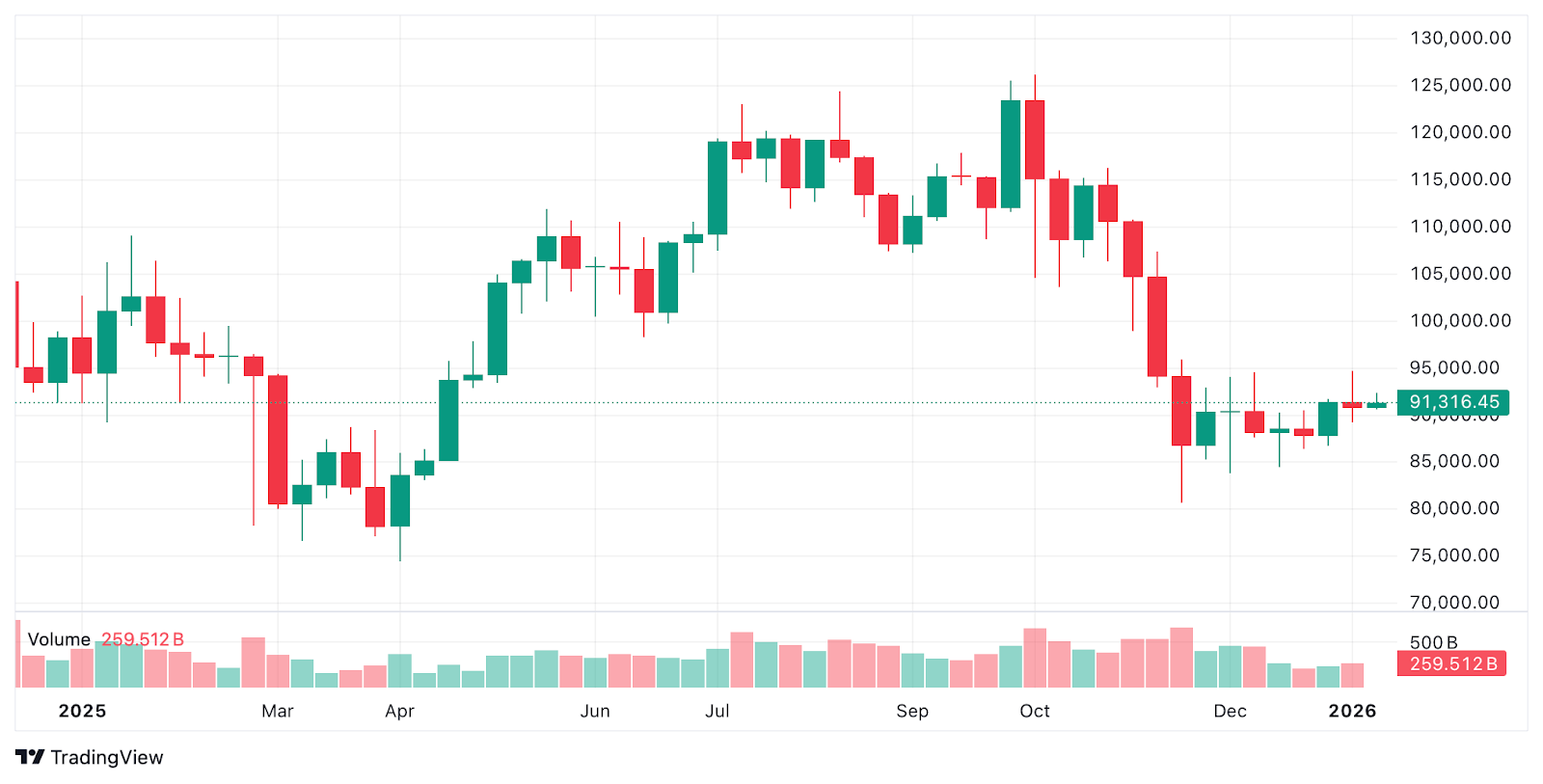
Bitcoin was actually sailing on a rough sea all year; at some point, it went down to $76,000, only to recover above $100,000 a month later. A short-term trade made within that month would have delivered a 35% gain rather than a 6% loss.
Though hodling is also an effective strategy for investing in most cryptocurrencies, taking a short-term approach could help maximize returns in some cases.
How to Choose a Cryptocurrency for Short-Term Trading
Once you’ve decided short-term trading fits your goals and risk tolerance, focus on the factors below to shortlist coins with tradeable moves.
Market Volatility and Volume
Of course, high volatility is the first box to tick in this decision. Investing in tokens with low volatility means tying up capital for no imminent gain while also missing out on other opportunities that pop up briefly.
However, volatility by itself is not enough to justify a trade. It can also be the result of a small group moving the price in a low-volume market, and misleading traders to assume there is a real hype around it. Volume serves as a reality check; it shows whether volatility reflects wider interest.
Liquidity on Exchanges
Volatility and volume only matter if a trader can actually act on them. Short-term trades require fast entries and fast exits. Liquidity ensures this.
In liquid markets, traders can see their orders getting filled quickly. Slippage is kept limited, and orders are often executed at levels close to the intended price. High liquidity also reduces the odds of manufactured moves as it takes more capital to push the price around.
News, Events, and Trends
Short-term trading runs on sudden spikes, and news are what triggers them. Cryptocurrencies are highly reactive to news and developments as they have a community active on social media constantly spreading information in a market that never sleeps.
A listing announcement on a major exchange means a quick rally for a cryptocurrency, while the rumors of a lawsuit can cause a token to plummet and lose most of its value in minutes. Short-term traders should follow market developments closely and pay attention to cryptocurrencies with clear catalysts.
Market Cap and Recent Performance
These two are useful filters in choosing a cryptocurrency. Short-term traders need movement, and lower-cap coins tend to move more and faster. That matters for short-term traders as it determines the magnitude of intraday swings.
Meanwhile, recent performance shows which tokens have been active as of late. A coin that has outperformed the broader market during that window is more likely to stay in focus, while a coin that has gone quiet is less likely to offer a short-term setup.
Still, recent performance also needs to be read through the chart to be reliable. A cryptocurrency may change direction if it is about to hit a resistance level. Technical indicators help traders judge whether a trend will hold or crack.
Tokenomics and Market Circulation
The circulating supply and tokenomics have a big influence on the short-term price action of a cryptocurrency. Two assets can trade at similar prices and still behave very differently if one already has most of its supply in the market, while the other is still releasing tokens in phases.
The difference is actually the inflation rate of a cryptocurrency. New tokens are released through mechanisms like staking, mining and vesting. And a high emission pace can limit the upside potential in the short term, as it adds fresh supply into the market that needs to be absorbed with more interest.
Token burns affect the price in the opposite way. These programs remove tokens from the circulating supply, reduce inflation and can even disinflationary effect on a cryptocurrency when burns exceed issuance. Short-term traders should consider supply dynamics before making a selection and plan their trades accordingly.
The Most Attractive Cryptocurrencies for Short-Term Trading
Toncoin (TON)
Toncoin is the cryptocurrency of TON blockchain. Launched by social media company Telegram, the governance was later left to the community, and TON currently runs as a community-driven, decentralized initiative.
Thanks to its Telegram integration, TON opens the doors of blockchain to daily internet users, a factor that has a positive effect on usability and demand.
The project came to the spotlight with a new addition to the ecosystem. Tokenized equity platform xStocks went live on the blockchain in mid-December and introduced tokenized stocks and exchange-traded funds (ETFs) from the US market to Telegram.
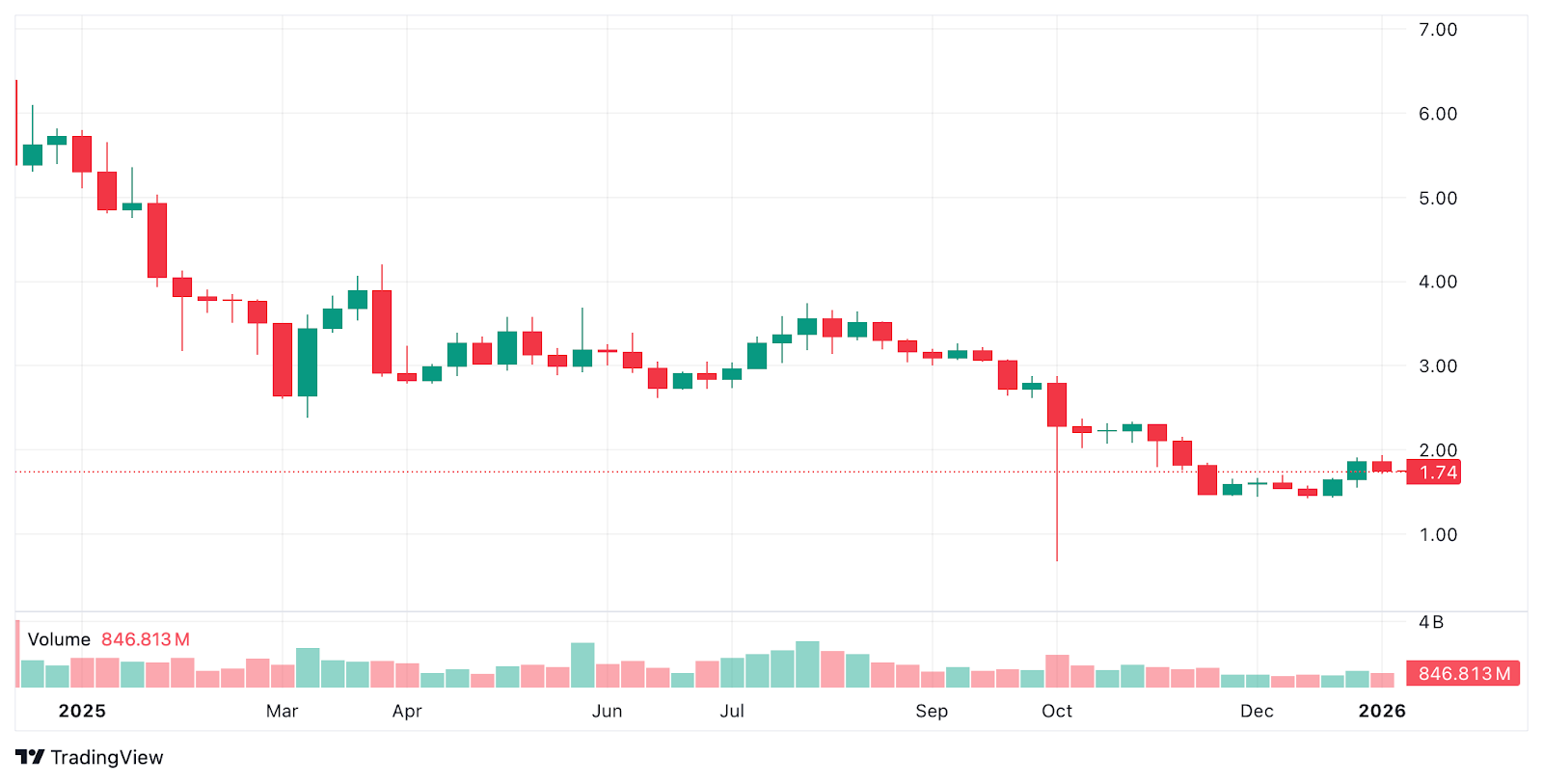
The cryptocurrency gained around 13% within a seven-day timeframe. With a market cap of $4.07 billion, it occupies the 26th place in the list of largest cryptocurrencies.
BNB (BNB)
BNB, the 4th largest cryptocurrency by market cap, is the native cryptocurrency of BNB Chain. It enables transactions on the blockchain and grants access to governance.
BNB Chain ecosystem will kick off the year with a major scheduled event. The blockchain is expected to activate the fermi hard fork on January 14. The hard fork will have a dramatic effect on block interval times, which are planned to go down from 750 milliseconds to 250 milliseconds. The upgrade includes some other scalability improvements as well.
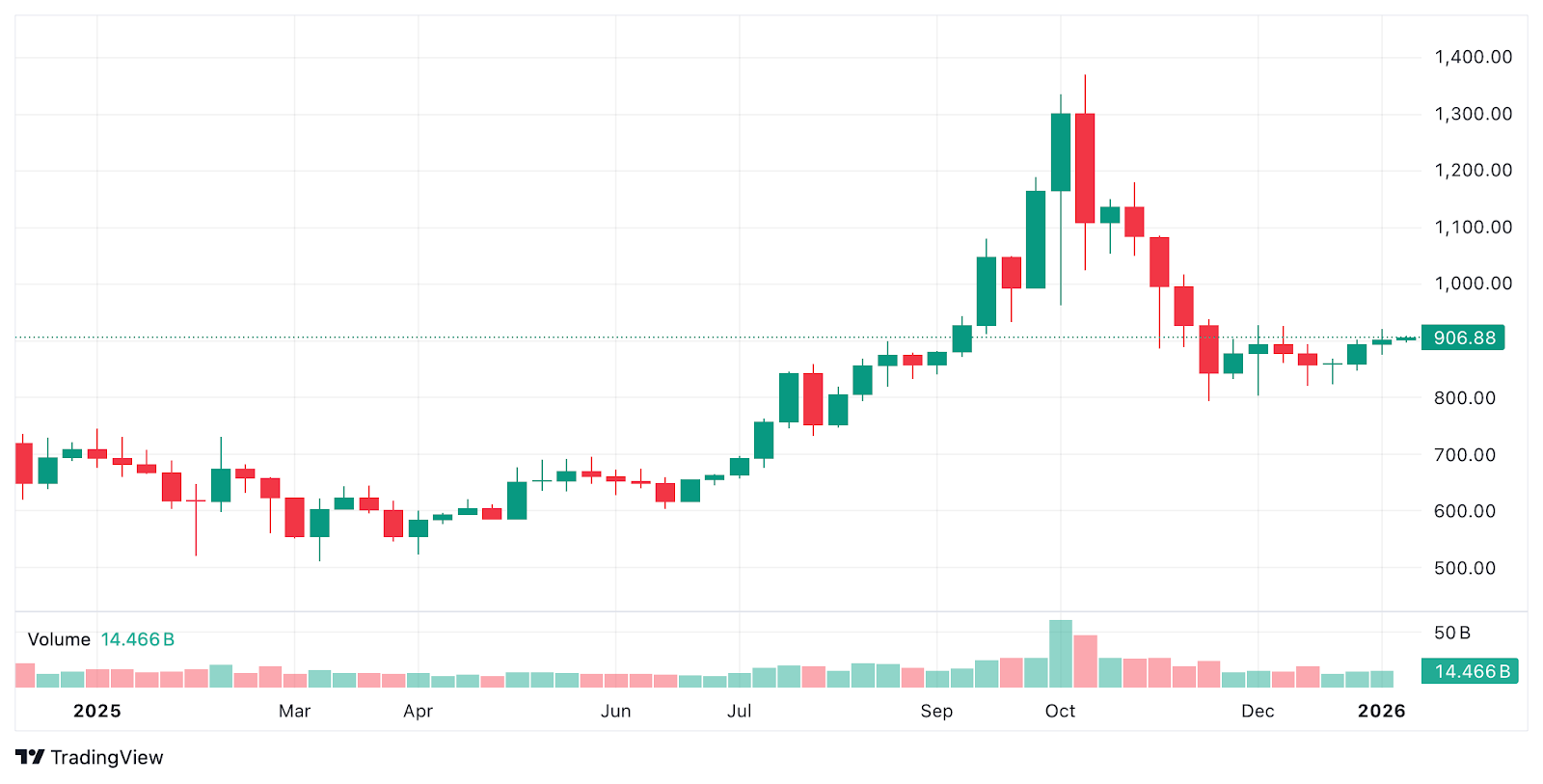
BNB Chain powers a wide variety of Web3 applications, and an improvement in scalability and usability could result in increased demand for the cryptocurrency. Binance, the builder of the blockchain, has also launched liquidity programs throughout the year to support assets traded on the chain, like the Altcoin LiquidityBoost Program. BNB will be under the radar of short-term traders in early 2026.
Bittensor (TAO)
Bittensor is a blockchain for machine learning; it offers network participants a decentralized way to provide and access resources for artificial intelligence development. TAO, its native currency, is used to execute transactions on the network and pay rewards.
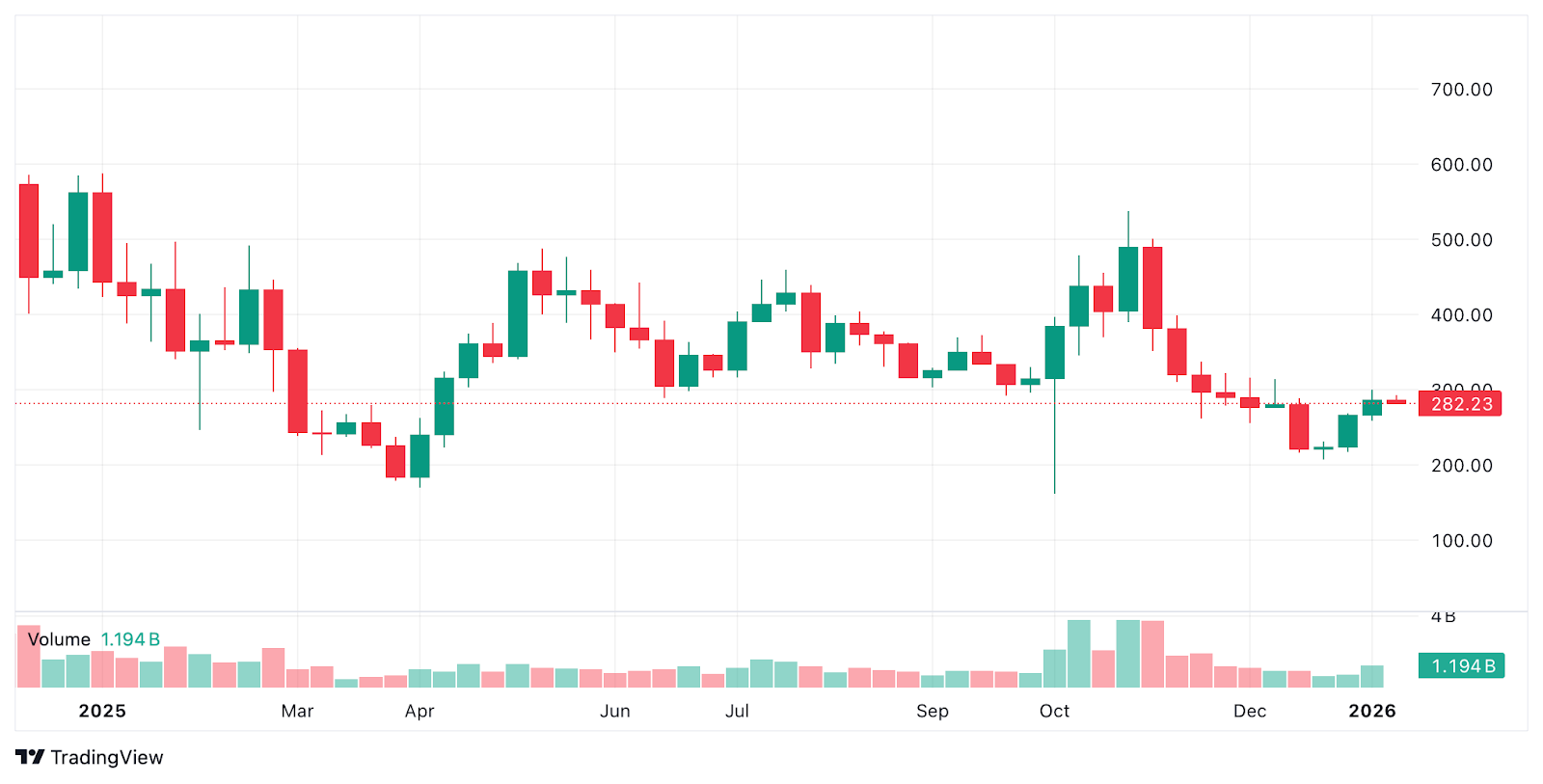
The blockchain completed its first halving mid-December. The halving cut miner rewards per block from 1 to 0.5 TAO. Prices tend to rise following the halving events, as they reduce the token issuance rate and create disinflationary effect.
TAO’s total market cap stands at around $2.3 billion as of December 2025. According to CoinMarketCap, the cryptocurrency is the 35th largest coin by market value.
Ondo (ONDO)
Ondo is a decentralized finance (DeFi) platform for tokenizing real-world assets (RWAs). The platform brings traditional financial assets, like stocks, ETFs, and treasury bonds, on-chain.
Ondo places importance on cross-chain interoperability; it has been live on many major chains like Ethereum and BNB Chain. The project plans to extends its products to Solana in early 2026.
ONDO, the native coin of the blockchain, has seen a sizable increase in activity recently, with daily volume rising by 50%.
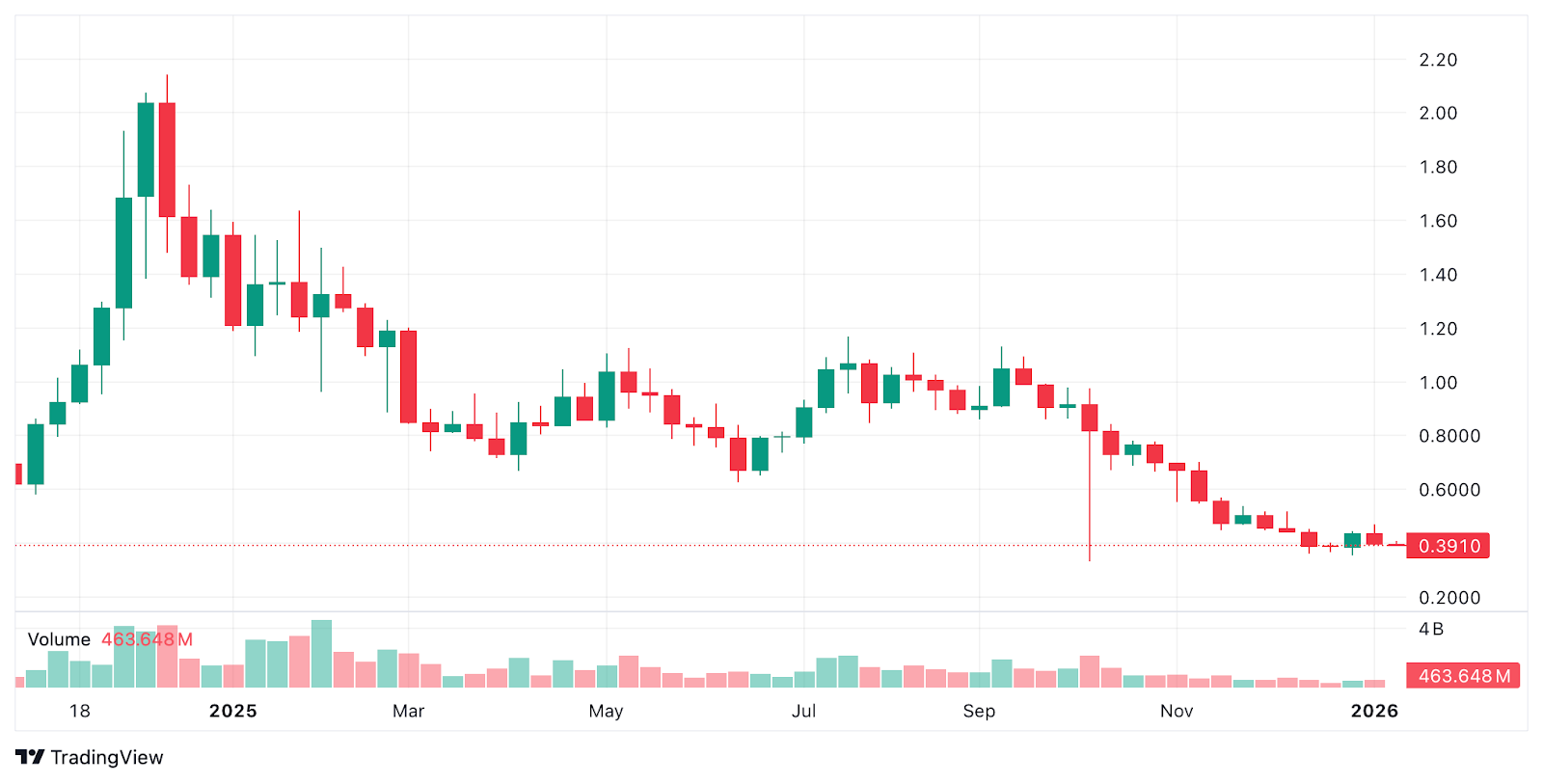
Sei (SEI)
Sei is an Ethereum-compatible blockchain that focuses on providing high scalability. The Sei Development Foundation, the organization behind the blockchain, recently announced that a crypto wallet and discovery app is under development.
The new app, which is expected to hit the market by mid-2026, will launch with the support of a major manufacturer. All Xiaomi smartphones will come with the app pre-installed. The integration serves as a gate that connects everyday users to Web3, and could attract users to the Sei ecosystem.
SEI recently turned its direction upwards and gained around 2% in seven days. With a market cap of around $735 million, it is currently the 70th largest cryptocurrency, according to CoinMarketCap.
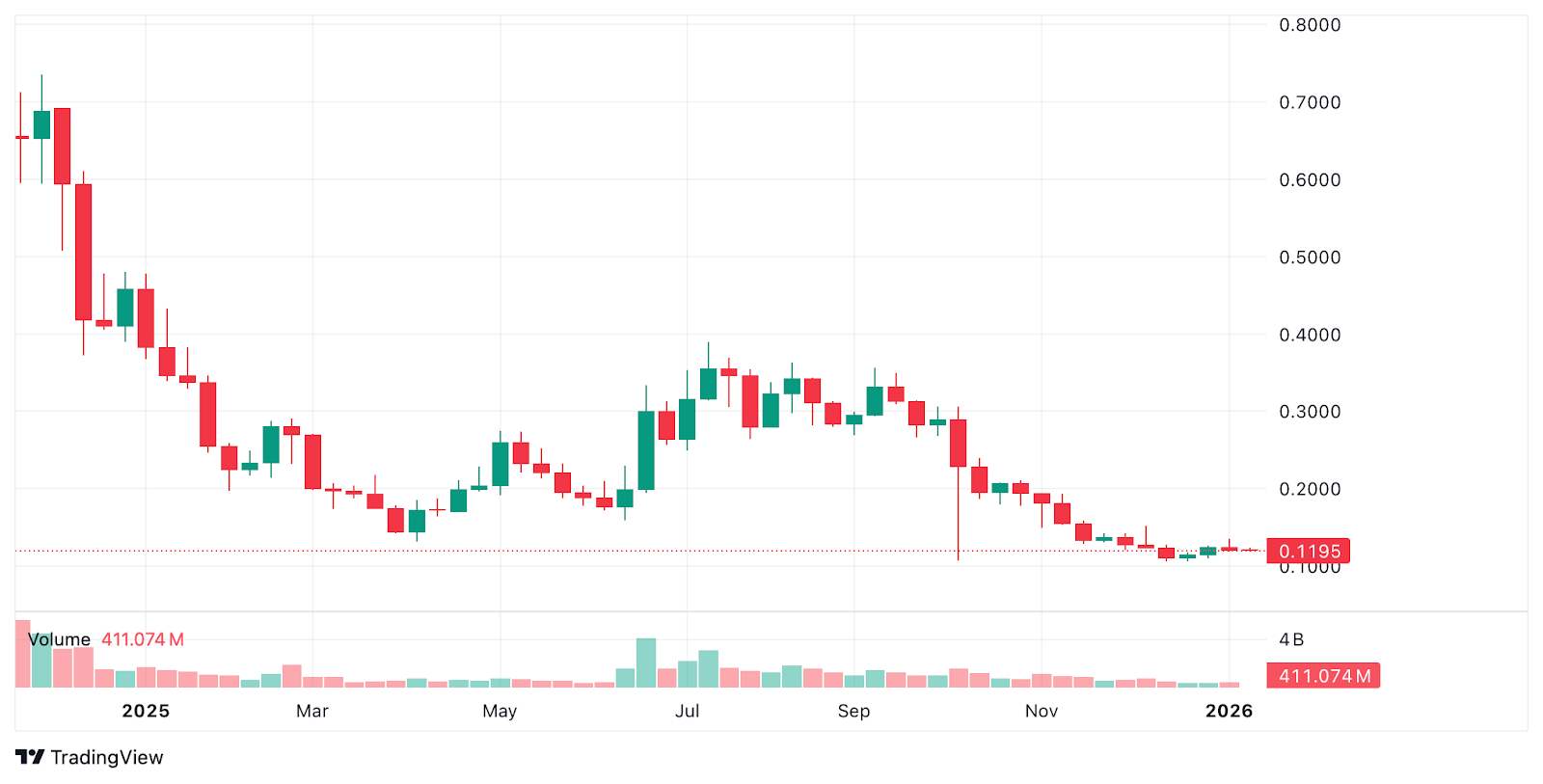
Telcoin (TEL)
Telcoin is a blockchain for payments and remittances. The project offers a mobile-first experience through its integrations with telecom operators. TEL is the native token of the ecosystem.
Telcoin recently gained regulatory approval to conduct banking operations in the United States. Nebraska granted a charter to Telcoin Digital Asset Bank, its newly established banking subsidiary, on November 12. The bank started operations on December 26 while also launching a stablecoin, eUSD.
TEL price reacted positively to the developments. The cryptocurrency jumped over 10% within a seven-day timeframe, and joined the top 100 in the list of largest cryptocurrencies by market cap.
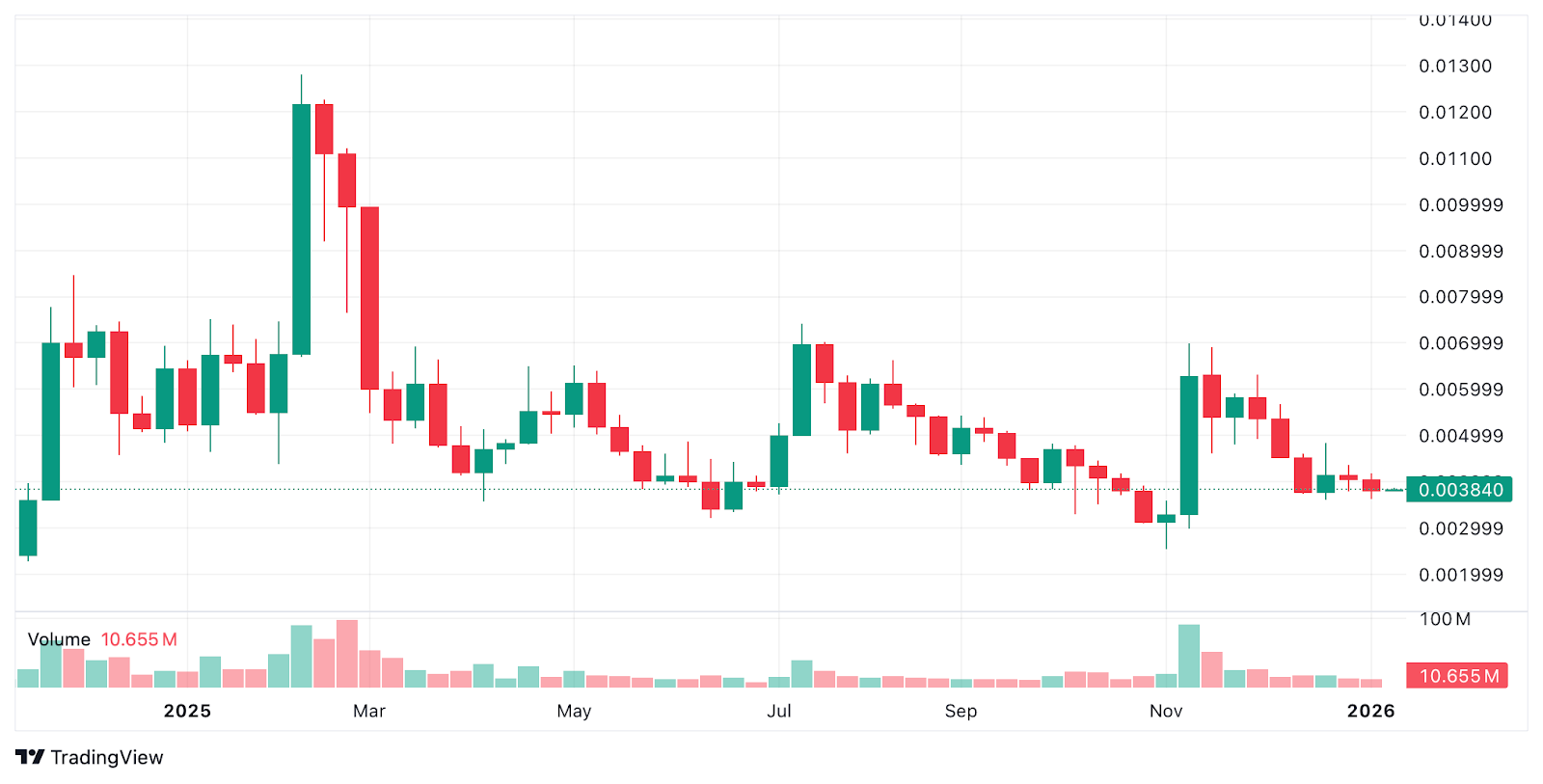
Uniswap (UNI)
Uniswap is an Ethereum-based decentralized exchange (DEX) protocol, and UNI functions as its governance token. It is a widely used automated market maker, and its token UNI stands as the 28th largest cryptocurrency with a market cap of $3.76 billion.
Governance participants recently passed a proposal called “UNIfication” to introduce a burning mechanism to the blockchain. As mentioned before, burning removes a portion of the supply from circulation permanently, and reduced supply means more value per coin.
Uniswap completed the first burning round on December 28. A total of 100 million UNI was burned, taking the circulating supply down to 630 million UNI.
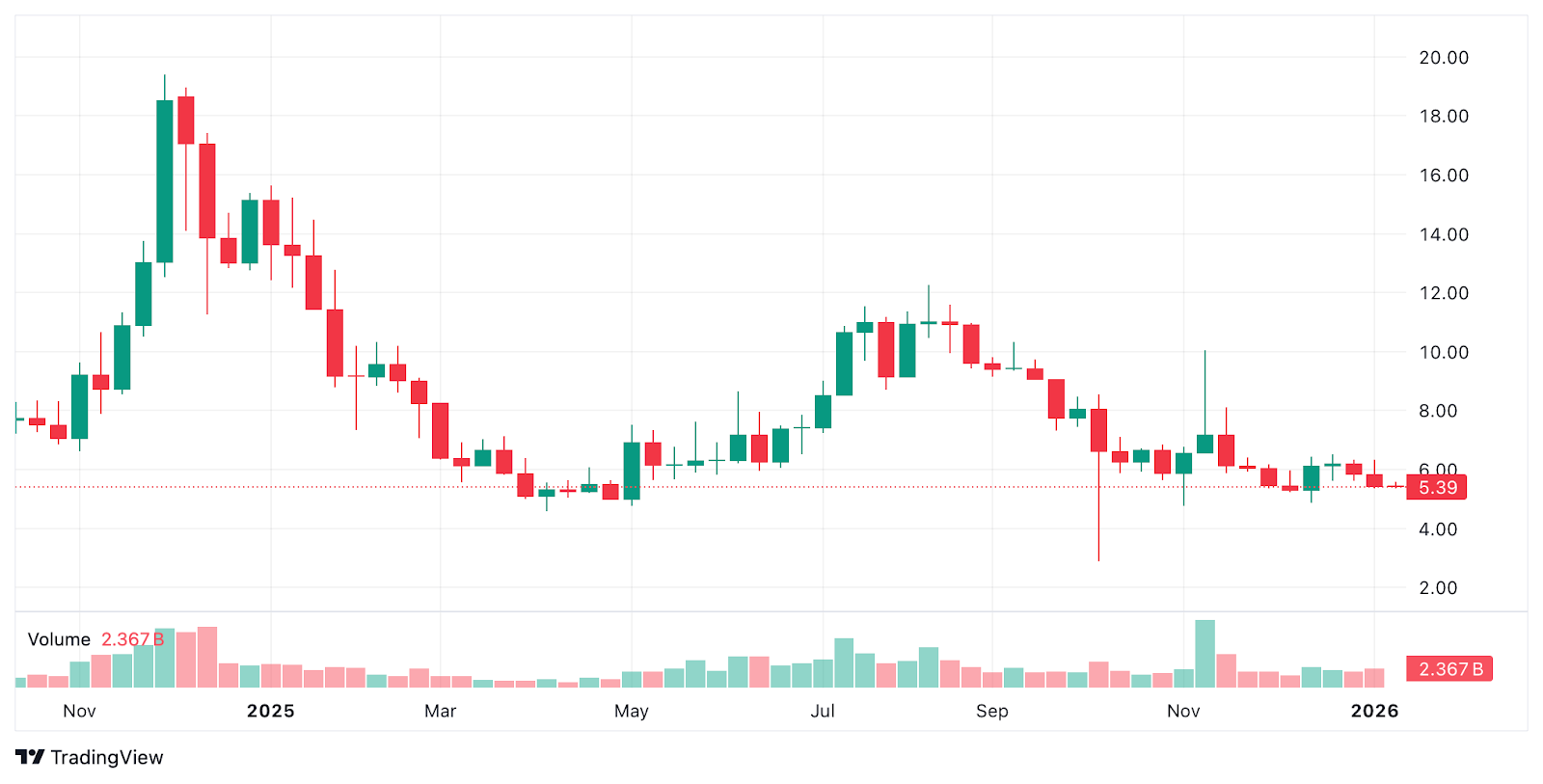
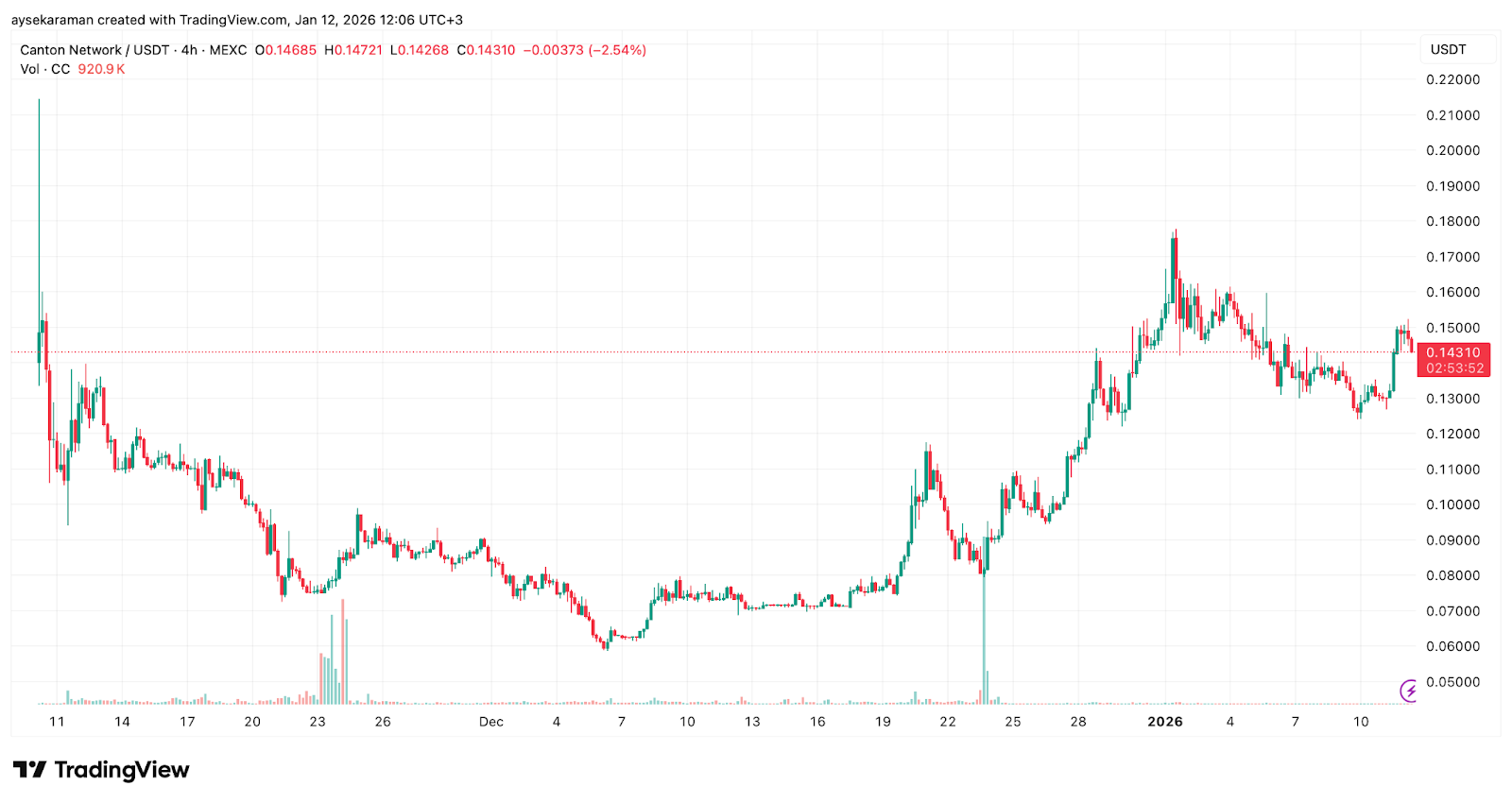
Canton Coin (CC)
CC is the native cryptocurrency of Canton Network, a layer-1 blockchain built for RWAs. It is used to pay for transactions, decentralized application (dApp) operations and distribute participation incentives.
Canton made the headlines earlier this month with a partnership. Financial infrastructure company Depository Trust and Clearing Corporation announced that it will start tokenizing US Treasury securities on Canton blockchain. The first tokens are expected to hit the market in the first half of 2026.
CC reacted with a rally and gained over 50% in a month. Its market cap stands at just over $4.75 billion as of December 2025, making it the 24th largest cryptocurrency, according to CoinMarketCap.
Midnight (NIGHT)
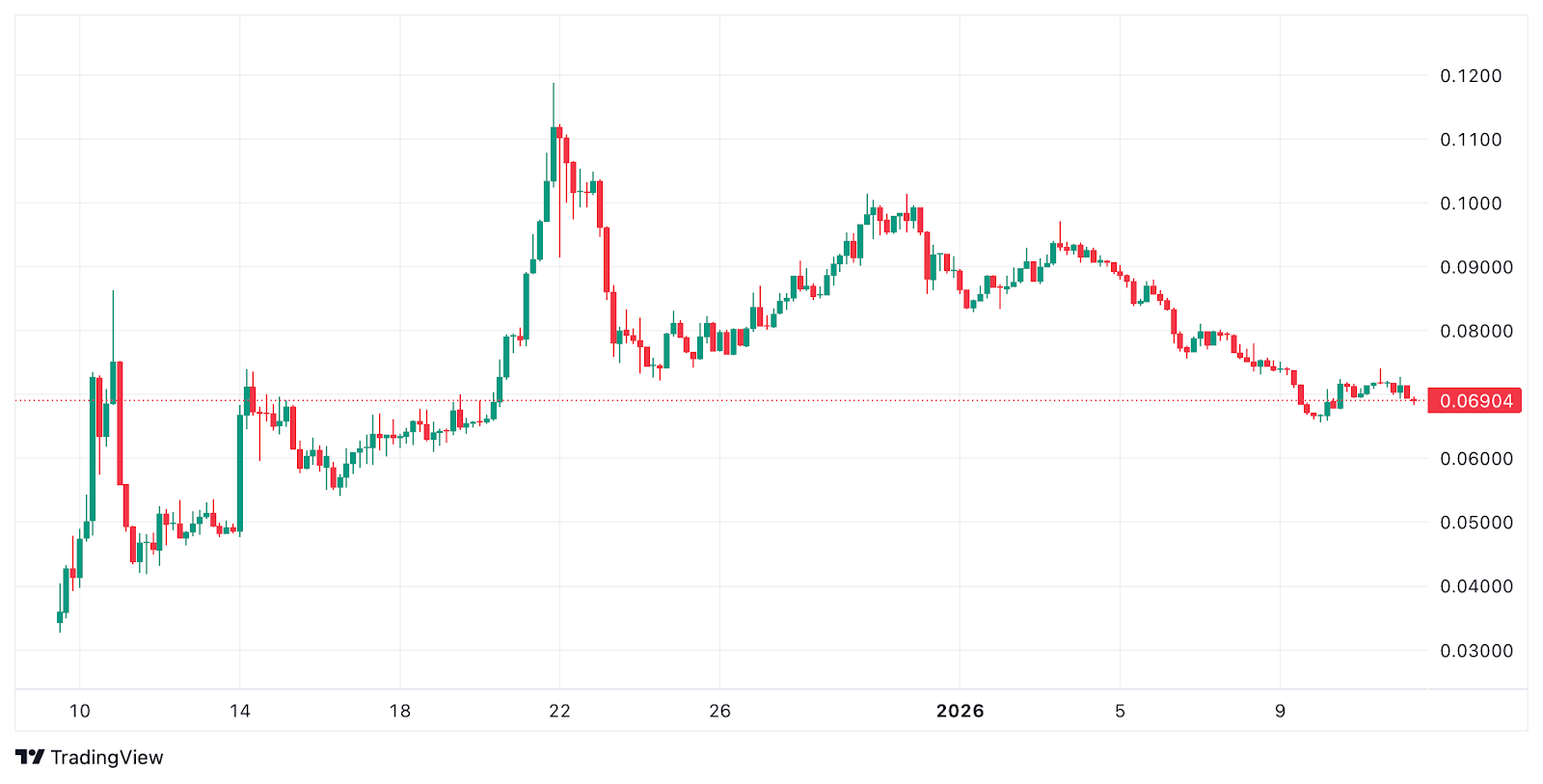
Midnight is a privacy-focused blockchain with smart contract functionality. It employs a dual token system; NIGHT grants access to governance while it earns holders DUST, the cryptocurrency used for paying transactions and running applications on the ecosystem.
Midnight plans to launch its mainnet and create its Genesis block in Q1 2026. NIGHT, currently live on Cardano, recently turned its direction upwards and saw a 10% increase in its price over 24 hours.
The cryptocurrency has already achieved high levels of liquidity pre-mainnet, as it has been listed on major exchanges, like Binance, Kraken and Bybit.
Risks of Short-Term Trading
The main motivation of short-term traders is to pursue higher rewards, and that comes with higher risks. Below are some factors to consider before deciding on a short-term trade.
High Exposure to Volatility
Volatility is the two-edged sword in short-term cryptocurrency trading. It is what makes the trade appealing and also threatening. A move that would not affect longer timeframes much can invalidate the short-term strategy in minutes. The tight window leaves little room to adjust position.
Short-term traders use tactics like bull and bear traps to catch unprepared players off-guard. Price can visit levels where stop orders cluster, only to return to where it started and take out positions built on a “clean” breakout or breakdown.
Macroeconomic events can cause a similar effect. Bitcoin price, for example, nearly halved in minutes during the Covid crash, and turned back to the same price within a week. The cost in the futures market, however, was $1.2 billion wiped out.
Traders should weigh their tolerance for a cryptocurrency’s volatility before making a short-term trade. Wider stop and limit levels and being careful with position size and leverage can help reduce risk.
Possible Rapid Losses
Short-term trades can go wrong fast. Crypto is a volatile market that never sleeps, and the price can change direction quickly due to market events, macroeconomic developments and a resulting liquidation cascade.
A large position, sized beyond the risk tolerance, can be a big hit for the trader. Similarly, undiversified portfolios leave little room to absorb a sudden change, as a single token can dictate the outcome of the entire account.
Requires Time, Attention, and Experience
This trading style requires spending more time on the screen than a long-term approach. Short-term traders can not just buy and wait; they have to constantly monitor the market for profitable entry and exit points to capitalize on them.
Identifying these opportunities demands experience. A successful short-term trade takes technical reading, information about the market state and good risk management. Traders should factor in whether they have the time and experience needed to make a short-term investment.
Conclusion: Is It Worth Investing in Cryptocurrencies for the Short Term?
Each trading style has its own advantages and disadvantages. Short-term trading allows traders to catch opportunities that appear briefly and generate higher profits than long-term trading. But factors like volatility, less time to adjust and the need for technical knowledge make it a way riskier (and more stressful) approach.
As discussed, short-term trading requires market expertise so that trades can be built on a solid strategy and stick to it. Of course, following a fast-paced strategy demands spare time as well. So, short-term trading can be a good fit for active, experienced and risk-tolerant traders rather than beginners or less involved traders.
Short-term traders should adhere to classical safeguards in trading. A good starting point would be developing a clear strategy. Never allocate more than you can afford to lose. Portfolios tied to a single token or a small group of cryptocurrencies are more sensitive to price changes. Diversifying can reduce that sensitivity by spreading risk among assets.
Disclaimer: The content provided in this article is for educational and informational purposes only and should not be considered financial or investment advice. Interacting with blockchain, crypto assets, and Web3 applications involves risks, including the potential loss of funds. Venga encourages readers to conduct thorough research and understand the risks before engaging with any crypto assets or blockchain technologies. For more details, please refer to our terms of service.