
Table of Contents
Remember the last bull market? If you were trying to move ETH or swap tokens on Uniswap during the peak of the mania, you definitely remember the pain. During times of high gas congestion, users had to pay over $100 USD just for a single transaction. It was brutal, but also demonstrated why layer 2 blockchains are necessary.
We realized that while blockchains are secure and decentralized, there are often limitations to their speed. You can’t build a global financial system if it costs an arm and a leg to send a transaction in order to buy a coffee. This is exactly why blockchains added layers.
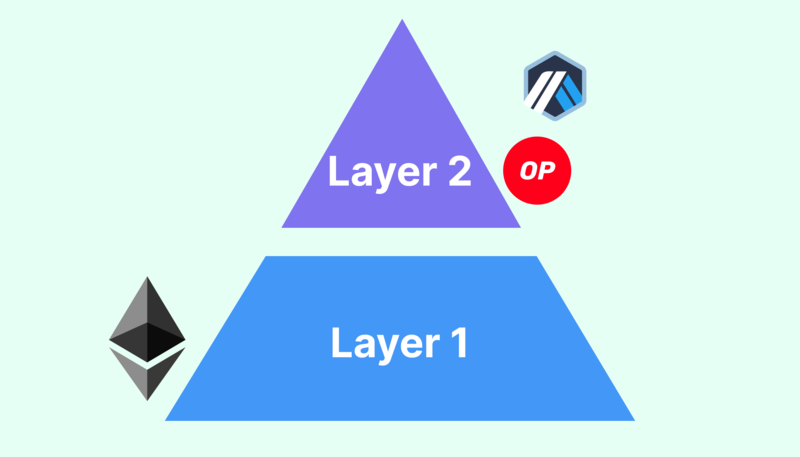
You can think of blockchain layers similarly to floors of a building. The penthouse on the top floor can’t be built on shaky material. You need a foundational layer first. Layer 1 blockchains are a bedrock. They’re the heavy-duty foundation ensuring everything stays standing with security. Layer 2 blockchains are the floors built on top, designed for speed, efficiency, and more bespoke use cases.
The different layers aren’t designed to compete with each other. They work together to make blockchains fast enough for different types of real-world use cases without compromising on security.
What Are Blockchain Layers and Why Do They Exist
Why are layer 2 chains even necessary? Couldn’t layer 1 chains like Bitcoin and Ethereum just operate faster?
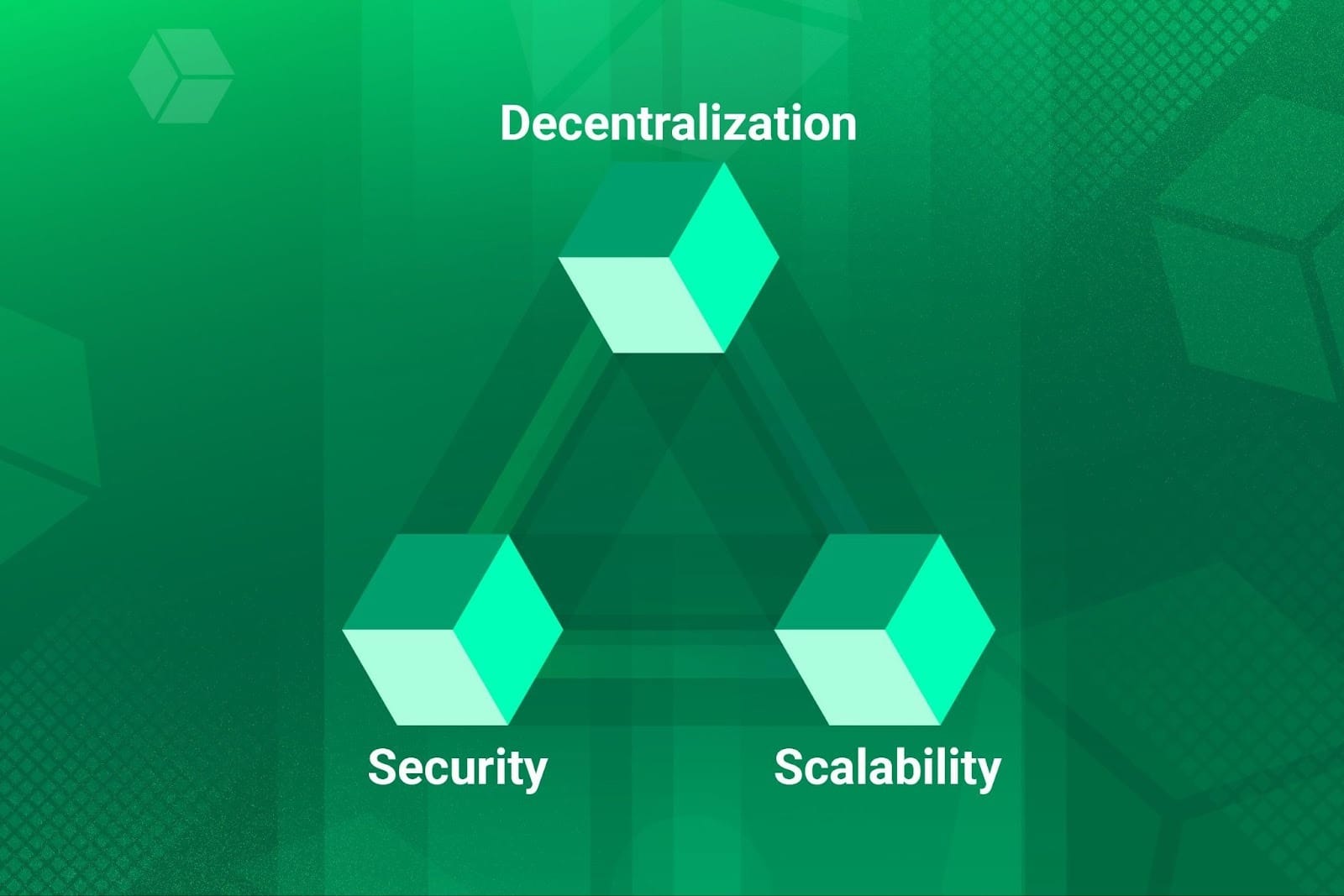
Blockchains have an issue that is referred to as the blockchain trilemma. Chains can optimize for two out of the three factors of decentralization, security, and scalability, but not all three.
With the original blockchain in Bitcoin, Satoshi Nakamoto optimized decentralization (making sure no single person or entity could control the network), and security (making sure a hack on the network would be impossible / financially unfeasible). Bitcoin wasn’t trying to compete with Visa’s transaction throughput, and its why speed (scalability) took a backseat.
Why Blockchain Infrastructure Needs Multiple Layers
In the early days, this wasn't an issue because few people were using the network. But as adoption exploded, the "single-lane highway" of early blockchains got jammed. The solution that developers came upon was modularity: separating the work into different layers.
The Layered Structure of Modern Blockchain Technology
Today, we look at blockchain architecture like a tech stack.
- The Base Layer (Layer 1): Also known as the settlement layer. The goal here is to be secure, and immutable.
- The Execution Layer (Layer 2): Operates on top the base layer. The goal here is to process a large number of transactions, and to do it quickly.
By decoupling these functions, we get the bank-vault security of the main chain, plus the swipe-of-a-card speed of a modern app.
Layer 1 Blockchains: The Core Foundation
These networks run their own distinct consensus mechanisms, and validate their own transactions. If you hold BTC, you are holding a coin native to the Layer 1 chain. Every transaction settles directly on this ledger.
Understanding Consensus Mechanisms (PoW, PoS, and Others)
Most popular consensus mechanisms:
- Proof of Work (PoW): Used by Bitcoin. Miners use computing power to solve cryptographic puzzles for network security. It’s highly secure but slow and energy-intensive.
- Proof of Stake (PoS): Used by Ethereum (post-Merge). Validators lock up (staking) their crypto for network security instead of miners. It’s more energy-efficient and allows for easier scaling, but also introduces new economic complexities.
There are other, less popular, consensus mechanisms such as Solana’s Proof of History, but the goal remains the same: security and truth.
Balancing Scalability, Security, and Decentralization
Imagine the blockchain trilemma as a triangle with Scalability, Security, and Decentralization at each point.
The theory goes that you can only pick two.
- If you want Security and Decentralization (like Bitcoin), you sacrifice Scalability.
- If you want Scalability and Security, you usually end up with a centralized network (like a traditional bank database).
Layer 1 networks generally refuse to compromise on security or decentralization. They accept slower speeds because maintaining the integrity of the ledger is more important, allowing for layer 2 networks to build on top of them for scalability.
Main Advantages and Limitations of Layer 1 Networks
Layer 1 networks have unmatched security. It’s practically impossible for anyone to break or hack a major Layer 1 chain like Bitcoin. They are also highly decentralized, meaning that one person or entity can shut down the network. With this, they are immutable, meaning that no one can delete or alter the blockchain history.
However, layer 1 networks also slow down considerably during peak usage times and are prone to congestion. One symptom of this congestion is high fees, particularly as limited blockspace exists on layer 1s. One cause of this inefficiency is that every node needs to process every transaction.
Layer 2 Blockchains: The Scalability Layer
Layer 2s are designed to fix the trilemma by handling the heavy lifting of transaction processing off the main chain. Layer 2 solutions exist specifically to solve the scalability problem without compromising Layer 1's security.
What Are Layer 2 Solutions and How Do They Work
Only the opening and closing transactions settle on Layer 1. This makes them incredibly fast and cheap but requires locking up funds and works best for direct peer-to-peer payments.
We see this most prominently on Ethereum. Networks like Arbitrum, Optimism, and Base are Layer 2 chains. You bridge your funds over, do hundreds of swaps or transfers for pennies, and the L2 handles the math.
Improving Transaction Speed, Efficiency, and Costs
By utilizing Layer 2s and moving the transaction calculation off the mainnet blockchain, Layer 2 networks can process much higher transactions per second (TPS) than their Layer 1 counterparts, leading to higher efficiency and lower costs. Bitcoin does ~7 TPS. The Lightning Network (Bitcoin’s L2) can theoretically handle millions.
How Smart Contracts Enhance Automation and Usability
Layer 2 isn't just for simple transfers. On Ethereum L2s, specifically "Rollups," you have full smart contract capability. This means you can run complex Decentralized Finance (DeFi) apps, NFT marketplaces, and gaming logic directly on the L2.
Automation becomes viable again. On Layer 1, you might only trade if you're moving significant value because the fee percentage is too high otherwise.
Strengthening Security, Trust, and Interoperability
Here is the critical distinction: Layer 2 solutions inherit the security of the Layer 1.
If you use a "sidechain" (which is a separate blockchain entirely), you are trusting that sidechain's validators. If they go rogue, you lose money. But with a true Layer 2 (like a Rollup), the data is posted back to Ethereum. If the L2 tries to cheat, the math on the L1 proves it and rejects it. You don't have to trust the L2 validators; you just have to trust the L1 code.
Pros and Cons of Different Layer 2 Scaling Approaches
Layer 2s take different approaches to scaling. Here are the main types, and their differences:
- Rollups (Optimistic & ZK):
- How they work: They "roll up" hundreds of transactions into a single data packet and post it to L1.
- Pros: High security, full smart contract support. They have shorter finality times in optimistic scenarios but longer finality if fraud proofs are challenged.
- Cons: Can have withdrawal delays (Optimistic) or high computational costs (ZK).
- State Channels (Lightning Network):
- How they work: Two users open a private channel and transact back and forth instantly.
- Pros: Instant, near-zero fees.
- Cons: You have to be online; limited smart contract utility.
- Sidechains (Polygon PoS):
- Note: Often grouped with L2s, but technically distinct because they have their own consensus.
- Pros: Very fast, independent.
- Cons: Lower security compared to rollups as sidechains don't fully inherit L1 security like rollups do.
Layer 1 vs. Layer 2: Understanding the Key Differences
Layer 1s are like the Supreme Court in a judicial system. It is slow and expensive, but has final authority and sets the rules. It creates the native asset (like BTC or ETH) and sets the rules of the game.
Layer 2 is the local district court. It moves fast, handles the day-to-day traffic, and only escalates to the Supreme Court when absolutely necessary to finalize the record.
How Layer 1 and Layer 2 Collaborate Within the Blockchain Ecosystem
While there are arguments that Layer 2s and Layer 1s ultimately compete for users, their original design was that of a collaboration.
Ethereum, for example, has pivoted its entire roadmap to be "Rollup-centric." The developers of Ethereum have essentially said, "We will focus on making Layer 1 the best possible security anchor and data availability layer, and we will let Layer 2s handle the user interface and speed."
Layer 2s return the favor by taking transaction load off Layer 1. If everyone trying to use blockchain applications had to do so on Layer 1, the network would be overwhelmed and fees would be astronomical.
This symbiosis allows blockchains to scale to billions of users. The L1 provides the trust; the L2 provides the performance.
Beyond Layers 1 and 2: The Rise of Layer 3 Solutions
If L1 is the foundation and L2 is the scaling infrastructure, then the Layer 3 is the specialized application layer. These are highly customized networks built on top of Layer 2s.
What Layer 3 Adds to the Blockchain Stack
Why go three layers deep? Customization. Layer 3 solutions are still pretty early, but the idea is that they handle application-specific logic and cross-chain communication without needing their own robust consensus mechanism.
A high-frequency trading app or a massive multiplayer blockchain game might need specific rules that don't fit a general-purpose L2. They might need zero gas fees for players, or instant privacy compliance. Layer 3 allows developers to spin up a "chain" dedicated to just ONE app. It settles to the L2, which settles to the L1.
How to Identify Whether a Project Is Layer 1, Layer 2, or Layer 3
- Is it Layer 1? Does it have its own native coin used for gas? Does it rely on its own validators or miners for final security? (e.g., Bitcoin, Ethereum, Kaspa, Sui).
- Is it Layer 2? Does it pay gas in an L1 token (mostly)? Does it post its data back to an L1 for settlement? (e.g., Arbitrum, Lightning, Starknet).
- Is it Layer 3? Is it built on top of a Layer 2 chain? Does the chain have one specific application and not a general purpose chain (e.g. a gaming chain)?
Conclusion: Building a Scalable and Interconnected Blockchain Future
We are moving from a clunky, experimental phase to a robust, layered economy. Whether you are interacting with DeFi on Arbitrum or holding Bitcoin in cold storage, you are utilizing this layered architecture. It’s complex, but it’s building a Web3 that is actually ready for the real world.
Disclaimer: The content provided in this article is for educational and informational purposes only and should not be considered financial or investment advice. Interacting with blockchain, crypto assets, and Web3 applications involves risks, including the potential loss of funds. Venga encourages readers to conduct thorough research and understand the risks before engaging with any crypto assets or blockchain technologies. For more details, please refer to our terms of service.