
Table of Contents
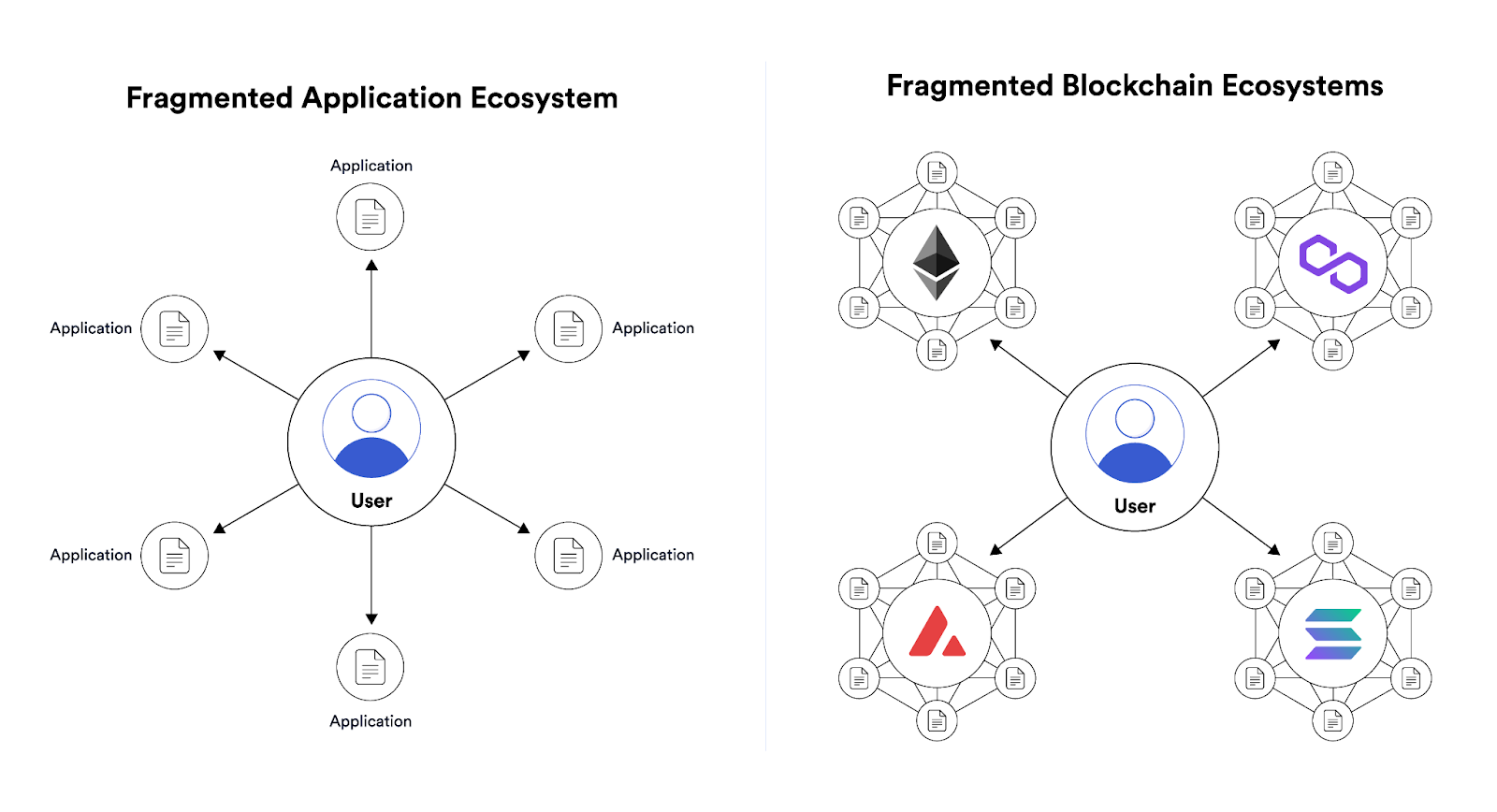
Crypto has a “too many options” problem. And not the fun kind of options unfortunately. The annoying kind where your money is on the wrong network, your favorite decentralized application (dApp) is on another, and the token you want is sitting somewhere else as you solve riddles trying to figure out how to get there.
The situation would be better if all these options were easily accessible. But they’re not, because blockchains are “siloed.” It’s a massive pain to move from blockchain to blockchain. Great for blockchain independence. Bad for actually getting things done.
This is where cross chain technology enters. With this technology, you can move assets, send messages, and trigger actions across networks without going through a centralized middleman. This potentially raises the value prop of crypto exponentially. Instead of trying to make everything work on one blockchain, you can use the best dApps and features of each chain by making them more easily accessible.
What Exactly Does Cross-Chain Mean?
“Cross-chain” means two (or more) blockchains can interact. That interaction can look like a few different things:
- Moving tokens from one chain to another
- Passing data between chains (like a message: “User did X on Chain A”)
- Triggering actions on another chain (like calling a function on a contract)
Value and information can move across ecosystems instead of being trapped inside one network. Cross-chain is what makes it possible to build multi-chain apps, move liquidity efficiently, and stop forcing users to bridge their entire life savings just to use one protocol.
As you may have guessed, most of this relies on smart contracts. They’re the glue that makes a lot of cross-chain mechanics possible.
Why Is Cross-Chain Communication So Important for Blockchain?
Anyone who’s tried to use 2 or more chains will know the challenges of moving from chain to chain, and wonder why everything feels so fragmented. Without cross-chain interoperability, every chain ends up with its own:
- Liquidity pools
- Users
- Versions of the same assets
This fragmentation creates a multitude of problems. First, liquidity gets sliced into pieces. A DEX on Chain A might have great UX, but shallow liquidity. Meanwhile Chain B has liquidity, but fewer apps. Cross-chain connections make it easier to route capital to where it’s useful.
Second, user experience becomes painful. People shouldn’t have to learn five wallets, three gas tokens, and a new set of bridging steps just to do something basic.
And finally, innovation slows down. When chains can’t communicate, developers rebuild the same features on every network instead of composing them together.
That’s the promise: cross chain interactions turn isolated networks into a connected system. More composability. Bigger markets. Less worrying about what chain you’re on.
How Does Cross-Chain Technology Work in Practice?
Here’s the simple model:
- You initiate a transfer or message on a source chain.
- Something verifies that event that you initiated (a relayer, validator set, oracle, or proof system).
- The destination chain receives the verified message and executes the result.
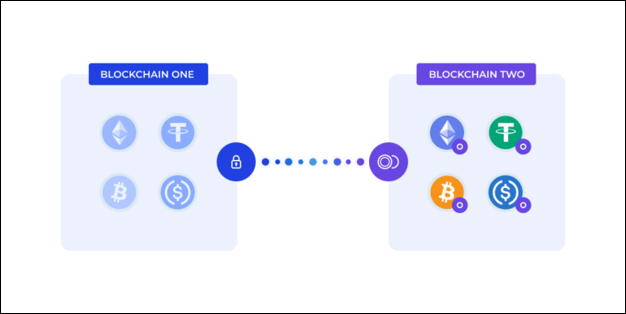
For assets, the classic mechanism is lock and mint:
- Tokens are locked on the source blockchain.
- A representation (wrapped token) is minted on the destination blockchain.
- When you move assets back to the source blockchain, the wrapped token is burned and the original is unlocked.
This is the core idea behind most bridge designs.
What Types of Cross-Chain Bridges Exist?
Some bridges are simple. Some are fancy. Some are viewed as too high risk. Below are the main categories you’ll see when exploring cross-chain bridging.
Trusted Bridges
Trusted bridges rely on a centralized party (or small group) to custody assets and process transfers.
In other words: you send tokens to an address controlled by someone, and they send you the equivalent on the destination chain.
Pros: Smooth UX, fast, easy to support across many networks.Cons: You’re trusting the centralized operator not to get hacked, go bankrupt, or disappear.
If you’ve ever used a service and thought “Wait… I didn’t even sign a bunch of transactions,” you were probably using something closer to a trusted bridge system.
Trustless Bridges
Trustless bridges aim for minimal reliance on a centralized operator.They typically use some combination of the following in order to achieve this:
- Smart contracts to lock/mint/burn
- Cryptographic proofs, or
- Decentralized validator networks that verify events
In theory, this is closer to the ethos of blockchain: don’t trust humans, trust math.
In practice though, it’s technically hard. Cross-chain verification is complex, and complexity can add exploitable bugs. A trustless design can fail if the code is flawed or if the validation assumptions are weaker than users realize.
Federated Bridges
Federated bridges sit somewhere between the trusted and trustless bridge designs. Instead of one centralized custodian, a group of validators (a federation, hence the name) collectively manages transfers. This is essentially multi-sig custody but scaled up level..
Pros: Reduces single-point-of-failure risk, and decentralizes the process, to an extent. Also often faster than full proof-based designs.Cons: Still trust-based and potentially centralized, depending who the committee consists of.
The quality of a federated bridge relies on who the validators are. How independent are they, and could they potentially collude with each other?
Liquidity Networks
Liquidity networks skip the lock-and-mint model entirely. Instead, they use liquidity pools on different chains. When moving assets, you’re effectively swapping into liquidity that already exists on the destination chain.
Pros: Fast transfers. Avoids wrapped token complexity which can lead to better UX.Cons: Relies on sufficient liquidity. pricing and routing can get messy as a result. Robust security assumptions are still required.
This model is popular because you bridge and receive native tokens quickly without waiting for mint / burn flows.
What Are the Benefits and Real-World Use Cases of Cross-Chain Bridges?
Once users are able to move assets and data across networks, they stop treating each chain as a closed box. This has a number of beneficial network effects. We’ll investigate a few below:
Seamless Asset Transfers Across Different Blockchains
This is the obvious one. Users want the freedom to move tokens between chains without having to sell, or withdraw to an exchange, and then having to re-buy the asset on another network. A good cross chain bridge skips all of these steps and accomplishes transfers in minutes.
It also enables enonomically practical behavior:
- Move stablecoins to a chain with cheaper fees
- Shift collateral to where lending rates are better
- Bring assets onto a chain where your favorite dApp lives
Boosting Liquidity and Expanding DeFi Opportunities
Cross-chain connections let liquidity flow to the locations where there is demand. This is why bridges are tightly linked to success metrics such as DEX volume, lending markets, and yield strategies.
Cross-chain functionalities also enable smarter routing. Instead of relying on just one liquidity pool on a chain, a user might execute a trade that touches multiple liquidity pools on multiple chains behind the scenes, using cross chain interactions to find the best price and deepest liquidity. This is where cross chain technology becomes more than just token transfers.
We should note at this point that although DeFi composability is powerful, bridging can increase risk: Bridge risk. Smart contract risk. Network risk. A number of bridges have been exploited in the past.
Cross-Chain NFTs, Gaming, and Digital Collectibles
In a simple sense, you can think of NFTs as little ownership receipts stored on a blockchain. A problem that NFTs face is that marketplaces, communities, and games aren’t all on the same chain. So your NFT can end up isolated on a network that has no buyers, no liquidity, and no social layer.
Cross-chain systems allow NFTs (or at least the rights tied to them) to move across networks, allowing for broader markets, easier onboarding for users, and fewer “Oh no, I’m on the wrong chain” headaches
Gaming is a big driver behind the development of these technologies. Games want low fees and fast transactions with access to the liquidity hubs to provide a better experience for their gamers.
Multi-Chain DApps and Interoperable Smart Contracts
Imagine a lending protocol where collateral sits on one chain, the borrowing transaction happens on another chain, and liquidation logic runs on a third chain optimized specifically for liquidations. The power of cross-chain technology lies in the potential of applications coordinating across networks, not just transfers.
As we mentioned previously however, while these technologies are powerful, the risk increases as complexity increases. Execution would require reliable cross chain interactions and robust messaging standards, along with smart contracts that can safely process incoming messages and enforce rules.
Reducing Fragmentation Across the Blockchain Ecosystem
On a high level, bridges reduce tribalism. Instead of “Ethereum vs Solana vs Cosmos vs new chain ABC,” the ecosystem starts working together and exponentially increasing network effects.
Users move where the UX is best. Developers deploy where costs are low. Liquidity follows demand. When cross chain bridge infrastructure becomes boring and reliable, users stop thinking about chains and start thinking about outcomes.
Conclusion
Blockchains will keep multiplying. Layer 2s will keep growing. New app-specific chains will keep launching. And all of that only works smoothly if cross chain interactions can happen safely.
Cross chain technology is how the ecosystem grows from islands into a continent. But like any infrastructure, bridges need good engineering as not all bridges are built the same. There are serious risks associated with faulty bridges. On this note, we’ll end with one last takeaway: Cross-chain bridging can make your life easier, but you should never cut corners on risk management and due diligence.
Disclaimer: The content provided in this article is for educational and informational purposes only and should not be considered financial or investment advice. Interacting with blockchain, crypto assets, and Web3 applications involves risks, including the potential loss of funds. Venga encourages readers to conduct thorough research and understand the risks before engaging with any crypto assets or blockchain technologies. For more details, please refer to our terms of service.