
Table of Contents
In 2025, crypto kinda began to be a bit more like your friend in his late 20s who stopped partying every single weekend and rather started being more serious about laying down the path for its future. Maybe not the best metaphor, but you get the point — still fun, but way more serious.
The year wasn’t defined by non-stop price explosions. Instead, it was about structure, maturity, and a clear shift in who actually drives the market.
Bitcoin grew up
This past year wasn’t all about crazy price pumps, but it was a turning point as Bitcoin officially moved into mainstream territory.
Big institutions, ETFs, and even governments are now the ones setting the tone, while the traditional four-year cycle everyone loves to argue about seems to be less and less impactful. Bitcoin started behaving less like a purely crypto-native asset and more like a macro asset, reacting to global liquidity, financial conditions, and political decisions.
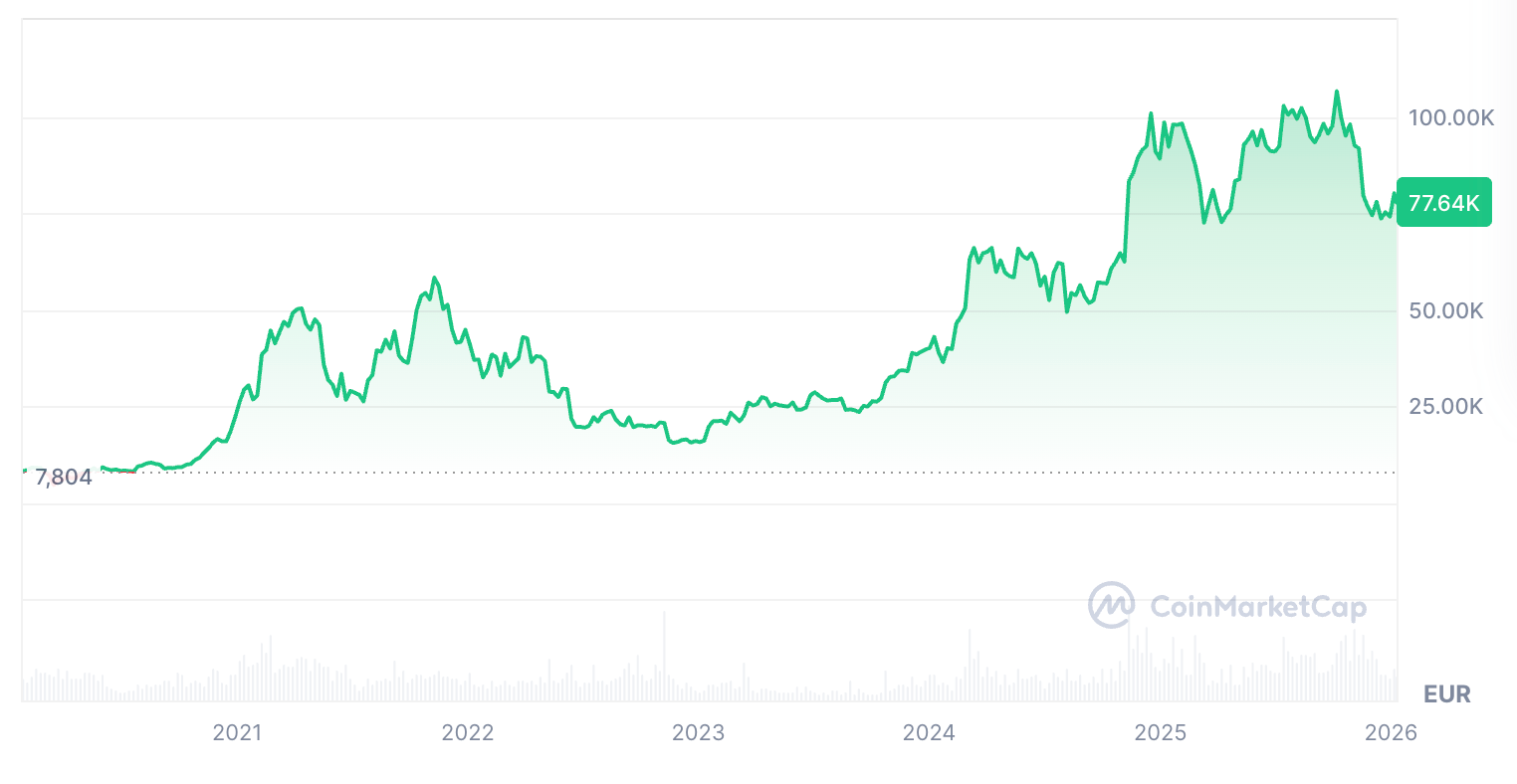
Bitcoin hit new highs (around €108k or $126k), kept a market dominance of about 60% for the entire year, and even landed a U.S. Strategic Bitcoin Reserve. That move alone showed how far Bitcoin has come — from a speculative experiment to something governments now treat like digital gold. So, not a calm year, even if it cooled down toward the end.
Altcoins mostly… didn’t
While Bitcoin was getting serious, most altcoins stayed stuck. Money didn’t waterfall down like it used to, and the famous alt season didn’t really show up.
One of the clearest signals was the wave of new tokens launched throughout the year, many of which were dumped almost immediately after launch. Liquidity was limited, investor patience was low, and narratives alone weren’t enough anymore.
So the vibe this year was clear: if a project doesn’t actually make money or do something useful, the market isn’t interested anymore. Not a bad thing when thinking long term, but definitely painful for anyone mainly relying on hype.
Big money showed up
Institutions came strong in 2025, but they didn’t rush to buy random tokens. On the contrary, they took their time and focused on major, safer on-chain assets like stablecoins, tokenized Treasuries, and private credit.
This is why Real World Assets became one of the biggest themes of the year. Tokenization started to look less like a buzzword and more like a practical bridge between traditional finance and crypto.
DeFi quietly shifted as well — from wild yield farming toward more chill, sustainable returns — reinforcing the idea that the ecosystem is becoming more long-term focused.
On the regulation side, things also moved forward. In the U.S., the regulatory landscape stopped being pure doom and finally got clarified, allowing a clearer path ahead. In the European Union, MiCA officially came into action and is expected to become even more crucial in 2026.
What about DeFi?
Regarding Ethereum, great technical progress was implemented into the network through the latest Fusaka upgrade. These improvements weren’t flashy, which explains the rather shy price reaction, but they were fundamental steps toward building the future of the web's infrastructure.
The rest of the DeFi ecosystem didn’t rest either. To sum things up quickly:
- On-chain trading leveled up, especially perpetuals, and got closer than ever to centralized exchanges
- Protocols started sharing revenue and buying back tokens, acting more like real businesses
- Prediction markets made a comeback and turned out to be weirdly useful
- Memecoins went full chaos mode, hacks came back strong
- And crypto got very… political
We’ll leave it at that.
So, what does this mean for 2026?
2025 wasn’t really the moon year most people were hoping for. It was more of a “clean your room and figure your stuff out” kind of year with Bitcoin becoming a major asset in global finance, DeFi finding its place, and the market stopping to reward empty promises.
Not the most flashy year, but probably one of the most important ones.
Disclaimer: The content provided in this article is for educational and informational purposes only and should not be considered financial or investment advice. Interacting with blockchain, crypto assets, and Web3 applications involves risks, including the potential loss of funds. Venga encourages readers to conduct thorough research and understand the risks before engaging with any crypto assets or blockchain technologies. For more details, please refer to our terms of service.